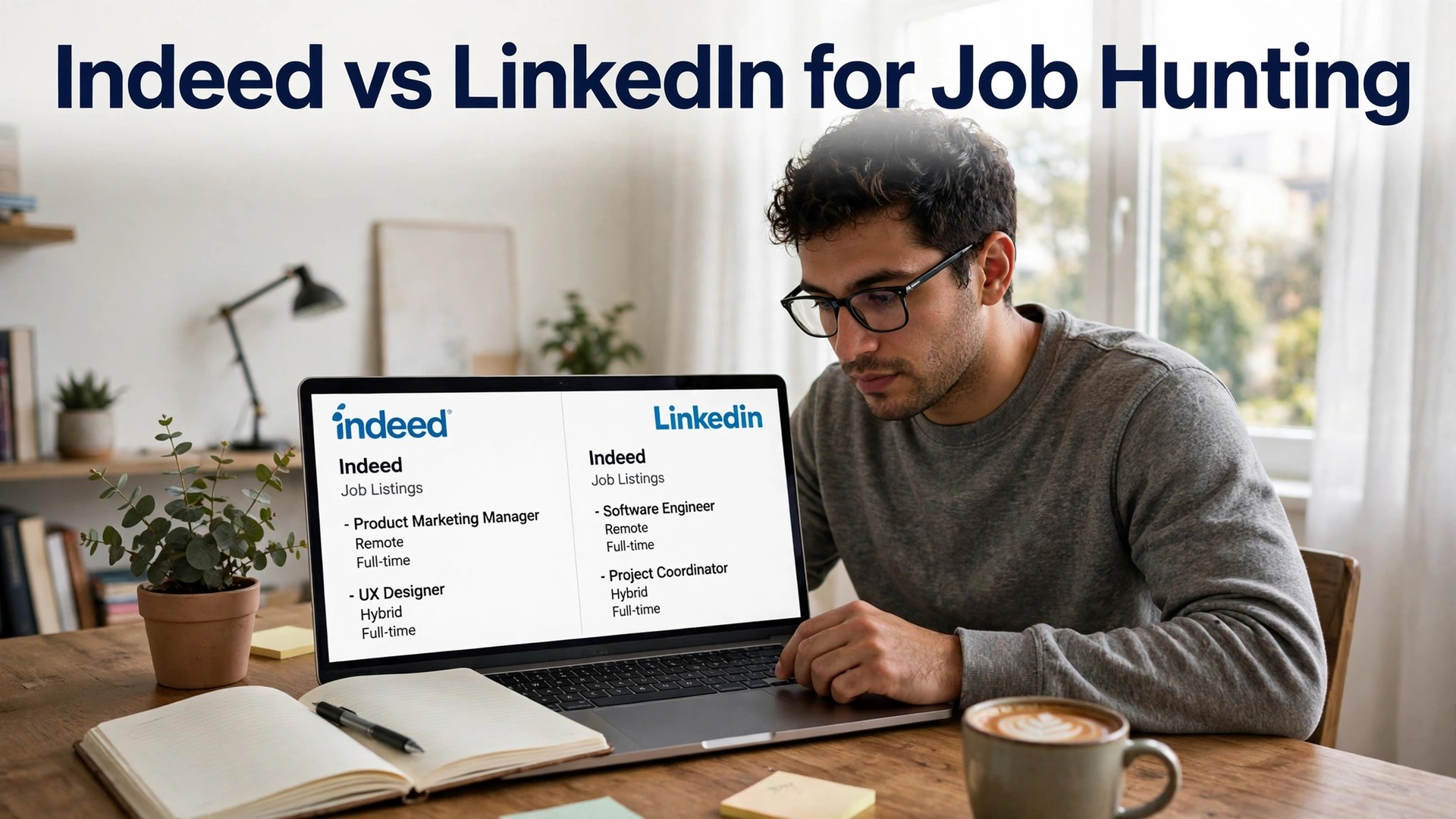
Indeed and LinkedIn are the two biggest job sites in the world, and most job seekers use both without thinking about which one does what better. Indeed vs LinkedIn for job hunting is a choice between volume and network, and the right pick depends on the kind of role you want and how you want to be found.
Indeed lists more jobs than any other site. LinkedIn reaches more recruiters than any other network. This guide compares them on listings, applications, recruiter reach, salary data and alerts, so you can pick where to search first and where to spend your time.
Quick jump
- Quick Answer. Indeed vs LinkedIn for Job Hunting in 30 Seconds
- Listings. Indeed Has More Jobs, LinkedIn Has Better Ones
- Applying. Both Are Fast, Neither Is Enough Alone
- Recruiter Reach. LinkedIn Wins, and It Is Not Close
- Salary Data and Reviews. Indeed Is Free and Broad
- Networking and Alerts. LinkedIn Is a Network, Indeed Is a Board
- The Strategy That Uses Both
- Where Senior Roles Actually Get Filled
- How to Follow Up After Applying
- How to Use Indeed Alerts Properly
- Building a Network While You Search
- When to Apply on the Company Site Instead
- How to Use Indeed and LinkedIn Together
- Related Guides
- Frequently Asked Questions
- The Bottom Line
Quick Answer. Indeed vs LinkedIn for Job Hunting in 30 Seconds
If you want the answer before the detail, here it is. Indeed wins for finding roles, with the biggest listing volume in the world and the widest coverage of employers. LinkedIn wins for being found, with the recruiter reach and network that fills roles before they are posted. The best strategy is to search on Indeed and be found on LinkedIn, using each for what it does best.
Indeed vs LinkedIn for job hunting is not a choice you have to make once. Use Indeed to find the roles, and LinkedIn to reach the people, and you cover the market from both sides.
The rest of this guide proves that short answer, with a full comparison table, a dimension-by-dimension test, and answers to the questions job seekers ask most.
| Dimension | Indeed | Winner | |
|---|---|---|---|
| Listing volume | Largest in the world | Large, but smaller | Indeed |
| Applying | One-click apply, resume upload | Easy Apply, profile apply | Tie, both fast |
| Recruiter reach | Recruiters search resumes | Recruiters search profiles | |
| Salary data | Salary on most roles, reviews | Salary insights on Premium | Indeed, free and broad |
| Alerts | Email and app alerts | Job alerts and notifications | Tie, both good |
| Networking | None | The whole network | LinkedIn, by far |
| Best for | Finding roles fast | Being found by recruiters | Depends on your stage |
Listings. Indeed Has More Jobs, LinkedIn Has Better Ones
Indeed is the largest job board in the world, and it aggregates listings from company sites, agencies and other boards, so the volume is unmatched. If a role exists anywhere, it is probably on Indeed, and its search covers more employers, more locations and more job types than any rival. For a job seeker who wants maximum choice, Indeed is the first stop.
LinkedIn lists fewer roles, but the roles it lists tend to be higher quality, with more professional and knowledge-worker positions and fewer low-quality postings. LinkedIn also shows you who posted the role, who works at the company, and who in your network can introduce you, which Indeed cannot do.
The listings winner is Indeed for volume, and LinkedIn for quality. A job seeker who needs a role fast should search Indeed daily, and a job seeker who wants a specific company or a senior role should search LinkedIn, where the network adds information no board can match.
Applying. Both Are Fast, Neither Is Enough Alone
Indeed lets you apply with one click using your uploaded resume, and it stores your applications so you can track them. The process is fast, and the volume is the point, because you can apply to twenty roles in an hour. The downside is that a one-click application is easy to ignore, and many Indeed applications go into a pile that no human ever reads.
LinkedIn Easy Apply works the same way, letting you apply with your profile in one click, and it shows you how many people applied and where you rank if you have Premium. The advantage is that the recruiter sees your profile, your network and your activity, not just a resume file, which gives them more reason to look.
The applying winner is a tie, because both are fast and both are weak on their own. A one-click application should be the start, not the end, and the job seekers who get interviews follow up with a message, a connection, or a tailored resume, on whichever platform they applied through.
Recruiter Reach. LinkedIn Wins, and It Is Not Close
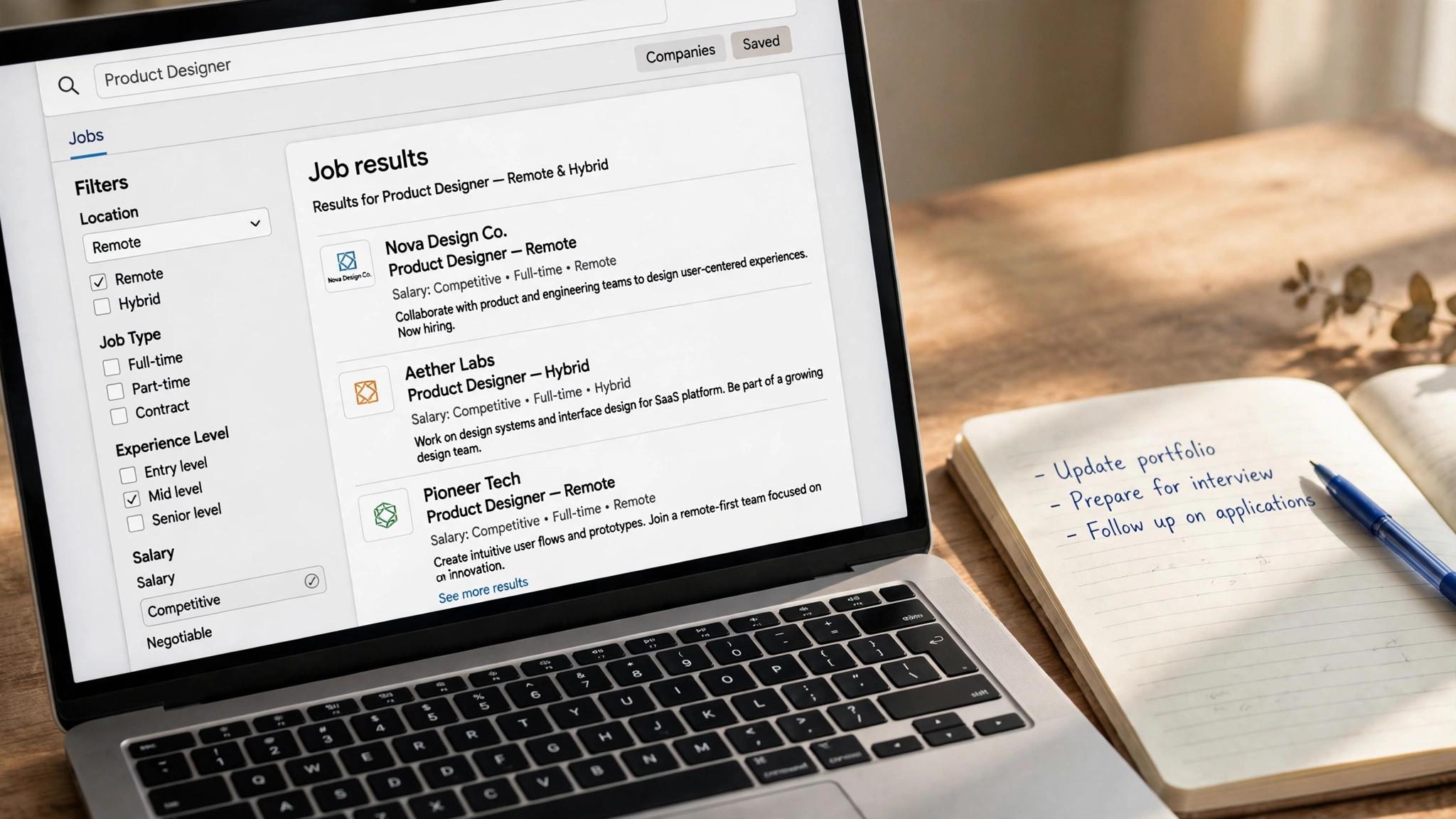
LinkedIn is where recruiters live. They search profiles with keywords, filter by experience and skills, and message candidates directly, often before a role is ever posted. A strong LinkedIn profile gets found, and a recruiter who finds you is a warmer lead than any application you send. No other platform gives you that reach.
Indeed has a resume database that recruiters can search, and it is large, but it is not a network. Recruiters find resumes, not people, and they cannot see your activity, your posts, or your connections. The reach is real, but it is thinner, and it depends on your resume being in the database and matching the search.
The recruiter winner is LinkedIn, by a wide margin. If you want to be found, LinkedIn is the only platform that matters, and the time you spend on your profile pays off in recruiter messages. Indeed is the platform for finding roles, and LinkedIn is the platform for being found.
Salary Data and Reviews. Indeed Is Free and Broad
Indeed shows salary information on most roles, with company reviews, interview reports and benefits data alongside. The data is free, it is broad, and it helps you judge a role before you apply. The reviews are the largest collection anywhere, and they tell you what it is actually like to work somewhere, not just what the posting says.
LinkedIn shows salary insights on Premium, with applicant insights that tell you where you rank, but the salary data is thinner than Indeed, and the reviews are fewer. LinkedIn strength is the network, not the data, and its salary insights are a helpful extra rather than a core feature.
The data winner is Indeed, because the salary and review data is free and broad. Use Indeed to check pay and culture, and LinkedIn to check the people, and you get the full picture before you apply anywhere.
Networking and Alerts. LinkedIn Is a Network, Indeed Is a Board
LinkedIn is a professional network first and a job board second, and that is its real advantage. You can follow companies, connect with hiring managers, comment on posts, and build relationships that lead to roles before they are posted. Many senior roles are filled through the network and never appear on a board at all, and LinkedIn is where those conversations happen.
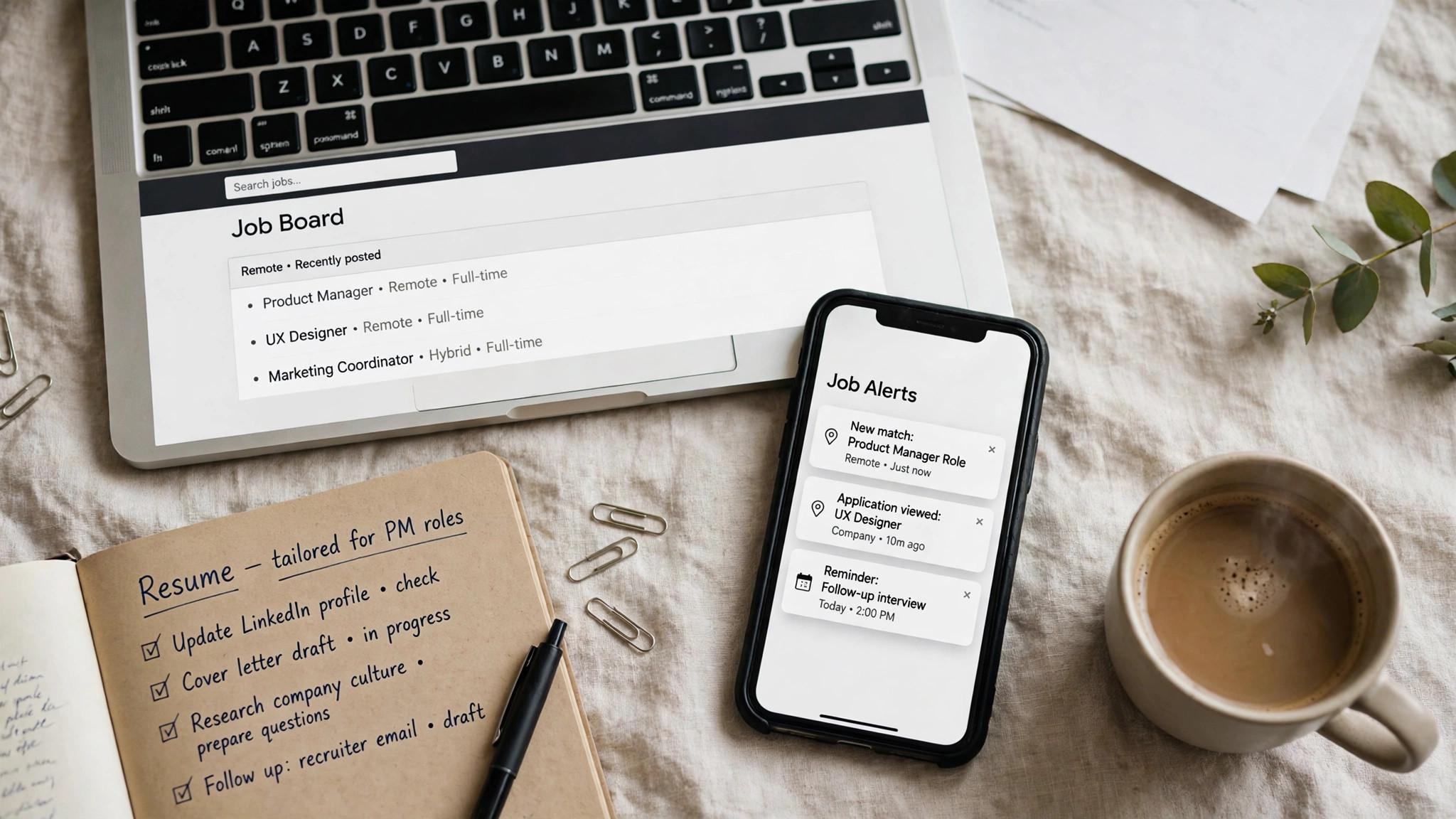
Indeed is a job board, and it does that job well, with email and app alerts that tell you when a matching role appears. The alerts are good, and the search is fast, but there is no network, no relationship, and no way to reach the hiring manager except through the application.
The networking winner is LinkedIn, by far, and the alerts are a tie. Use Indeed alerts to find roles fast, and LinkedIn to build the relationships that fill the roles Indeed never lists.

Indeed in Depth
Indeed is the largest job board in the world, and it earns that title on volume alone. It aggregates listings from company sites, agencies and other boards, so the coverage is unmatched, and its salary data, company reviews and interview reports help you judge a role before you apply. Applying is fast, with one-click apply and a stored resume, and the alerts keep you informed of new roles daily.
The weaknesses are quality and competition. Stale and duplicate listings are common, many roles labelled remote are actually hybrid, and a one-click application goes into a pile with hundreds of others. Indeed is the best tool for finding roles, and the worst tool for standing out, so use it to find the job, then stand out somewhere else.
LinkedIn in Depth
LinkedIn is the largest professional network in the world, and its job search sits inside that network. You can search roles, filter by remote and salary, use Easy Apply, and see who posted the role, who works at the company, and who in your network can introduce you. The recruiter reach is unmatched, because recruiters search profiles with keywords and message candidates directly, often before a role is posted.
The weaknesses are volume and cost. LinkedIn lists fewer roles than Indeed, and its best features, applicant insights and InMail, sit behind Premium Career at $39.99 a month. LinkedIn is the best tool for being found, and the best tool for reaching people, so use it to build the profile and the network that finds roles Indeed never lists.
The Strategy That Uses Both
Search Indeed every morning for new roles, and apply to the best ones with a tailored resume, not a one-click application. Then open LinkedIn, find the hiring manager or a connection at the company, and send a short message about the role. The application gets you in the pile, and the message gets you noticed, and the combination beats either platform alone.
Keep your LinkedIn profile current even when you are searching on Indeed, because recruiters who see your Indeed application will check your LinkedIn profile before they reply. A profile that matches the resume, with a clear headline and recent activity, turns an application into an interview, and a stale profile turns it into a rejection.
Where Senior Roles Actually Get Filled
Senior roles are rarely filled through a board, because the hiring manager already knows who they want, or the recruiter already has a shortlist. Most senior roles are filled through the network, through a recruiter search, or through an internal referral, and the posting on Indeed or LinkedIn is often a formality. A senior job seeker who only applies to postings is competing for the roles no one wanted enough to fill quietly.
LinkedIn is where senior roles get found, because recruiters search profiles with keywords, filter by experience, and message candidates directly, often before a role is posted. A senior profile with the right keywords, a clear headline, and recent activity gets found, and a senior profile that is invisible gets skipped, no matter how strong the experience is.
Indeed is where senior roles get listed, and the volume is useful, but the competition is fierce, because every senior candidate in the market sees the same posting. A senior job seeker should use Indeed to learn what is available, and LinkedIn to reach the people who decide, because the application gets you in the pile and the message gets you noticed.
The network matters more as the role gets senior. A junior role is filled by a posting, and a senior role is filled by a conversation, and the conversation happens on LinkedIn, at an event, or through an introduction. Build the network before you need it, because a network built in a rush is a network that does not answer.
How to Follow Up After Applying
Follow up once, three days after you apply, with a short message to the hiring manager or a connection at the company. Mention the role, say why you fit, and ask one question. A polite follow-up doubles your reply rate, and it takes two minutes. A second follow-up after a week closes the loop, and after that, move on, because chasing a silent employer wastes the time you could spend on a new application.
Follow up on LinkedIn, not by email, when the role came from LinkedIn, because the hiring manager lives there and the message is easy to answer. Follow up by email when the role came from Indeed or the company site, because the application went through that channel and the email follows the same path. Match the channel to the application, and the message will be seen.
Keep the follow-up short. Three sentences are enough, the role, the reason you fit, and the question, and anything longer gets skimmed. A follow-up that repeats the resume is a second application, and a follow-up that asks one good question is a conversation, and conversations get replies.
Track every follow-up in Teal or your tracker, with the date and the channel, so you know who you messaged and when. A follow-up you forget is a follow-up that never happened, and a tracker that records it is a system that works.
How to Use Indeed Alerts Properly
Set alerts for the exact role, not for a broad keyword, because an alert for marketing will flood your inbox and an alert for product marketing manager in Austin will bring the roles you actually want. Use the filters for location, salary, job type and experience, and set the alert to daily, because the best roles go fast and a weekly digest arrives too late.
Check the alerts every morning, and apply to the best three within hours, not days. A role that attracts hundreds of applicants in the first day rewards speed, and an application sent on day three is competing with a pile that is already tall. The alert is only useful if you act on it, and acting fast is the whole point.
Prune the alerts monthly. An alert that brings nothing but irrelevant roles should be narrowed, and one that brings nothing at all should be widened, because the search changes as you learn what is available. An alert that is never pruned becomes noise, and noise is worse than silence, because it hides the roles that matter.
Use the app, not just email, because the app alerts arrive faster and the apply flow is shorter. A phone notification at 8am, with a one-click apply, beats an email digest at 6pm, and the difference is a day of applicants. Speed matters, and the app is the fastest channel Indeed offers.
Building a Network While You Search
A job search is the best time to build a network, because you have a reason to reach out, and people expect it. Message five people a week in your field, with a short note that references their work and asks one question, and most will reply, because the message is specific and the ask is small. A network built during a search is a network that hires you.
Comment on posts in your field daily, with something useful, not just great post, because the comment is visible to the poster, their network, and the recruiters who follow them. A thoughtful comment is a small advertisement for your thinking, and it costs nothing, while a silent profile is invisible.
Follow the companies you want to work for, and the hiring managers who post there, because a company page shows you the roles before they are posted widely, and a hiring manager who posts regularly is a person you can reach. The follow is the first step, and the comment is the second, and the message is the third.
Give before you ask. Share a useful article, answer a question, or introduce two people who should know each other, and the network will remember you as someone who helps, not someone who only takes. A network built on generosity is a network that refers, and a referral is the fastest route to an interview.
When to Apply on the Company Site Instead
Apply on the company site when the role is listed there, because the application goes directly into the hiring system with less competition, and the hiring manager sees it sooner. A board application goes into a pile with hundreds of others, and a company-site application goes into a smaller pile, because fewer candidates take the extra step.
Apply on the board when the company site is broken, slow, or asks for the same information twice, because a frustrating application is an application you will abandon, and an abandoned application is no application at all. The board exists to make applying easier, and when the company site does not, the board is the right choice.
Always check the company site after finding a role on a board, because the posting there may have more detail, a different deadline, or a direct contact. The extra two minutes of checking can reveal the hiring manager name, the team, or the salary, and that information changes the application from generic to specific.
Track where you applied, on which platform, and what happened next, in Teal or your tracker, because a search spread across two platforms is easy to lose track of. A tracker that records the channel tells you which one works, and the data tells you where to spend your time.
How to Use Indeed and LinkedIn Together
Step 1. Search Indeed first every morning. Set alerts for your target roles, check the new listings, and note the best three. Indeed has the volume, so it is the best place to find what is new, and the alerts save you from checking all day.
Step 2. Apply with a tailored resume, not one click. Upload a tailored resume for each role, with the keywords from the posting and a quantified achievement at the top. A one-click application is fast, but a tailored application gets read, and the extra ten minutes is worth it for roles you really want.
Step 3. Find the people on LinkedIn. For each role you apply to, find the hiring manager or a connection at the company on LinkedIn, and send a short message. Mention the role, say why you fit, and ask one question. The message takes two minutes and doubles your chances.
Step 4. Keep the profile current. Update your headline, summary and experience to match the roles you want, and post twice a week about your work. Recruiters check LinkedIn before they reply, and a current profile turns an application into an interview.
Step 5. Track both in one place. Use a tracker like Teal to record where you applied, on which platform, and what happened next. A search spread across two platforms is easy to lose track of, and a tracker keeps it organised.
Related Guides
- JobScan vs Teal for Resume Optimization
- LinkedIn Premium vs Free for Job Seekers
- AI Interview Prep Pricing
Frequently Asked Questions
Should I use Indeed or LinkedIn for job hunting?
Use both, for different jobs. Indeed is the best place to find roles, with the largest listing volume in the world. LinkedIn is the best place to be found, with the recruiter reach and network that fills roles before they are posted. Search on Indeed and build your presence on LinkedIn, and you cover the market from both sides. That is the value of indeed vs linkedin for job hunting. A tool that fits the job beats a tool that promises everything.
Is LinkedIn better than Indeed for finding a job?
LinkedIn is better for senior and professional roles, where the network matters and recruiters search profiles directly. Indeed is better for volume and for roles across all levels, where the listing count matters more. The best strategy uses Indeed for discovery and LinkedIn for reach, not one platform alone. The test for any indeed vs linkedin for job hunting is simple. Does it fix the step where your search breaks down?
Do recruiters really find candidates on LinkedIn?
Yes, and it is the main way senior roles are filled. Recruiters search LinkedIn profiles with keywords, filter by experience and skills, and message candidates directly, often before a role is ever posted. A strong profile with the right keywords gets found, and a weak profile stays invisible, no matter how many applications you send. The right pick among indeed vs linkedin for job hunting is the one you will actually use every week, not the one with the longest feature list.
Is it better to apply on Indeed or on the company website?
Apply on the company website when you can. Applications through a board are faster, but company-site applications often go directly into the hiring system with less competition. Use Indeed to find the role, then check the company careers page and apply there if the role is listed.
How do I stand out on Indeed with so many applicants?
Tailor the resume to the posting, with the keywords and a quantified achievement at the top, and follow up on LinkedIn. A one-click application with a generic resume goes into a pile, but a tailored application plus a short LinkedIn message to the hiring manager gets noticed. The follow-up is what separates you from the other hundred applicants.
Which is better for entry-level jobs, Indeed or LinkedIn?
Indeed is better for entry-level roles, because it lists more of them, across more employers and more locations, and its filters make it easy to find roles that accept new graduates. LinkedIn is better for professional and senior roles, where the network matters. An entry-level job seeker should search Indeed daily and build a LinkedIn profile for the future, not for the first job.
Should I upload my resume to Indeed?
Yes, because recruiters search the Indeed resume database, and a resume in the database can be found even when you do not apply. Set the visibility to searchable, keep the resume current, and tailor the version you send with each application, because the database resume is the one recruiters find, and the tailored resume is the one that wins the role.
Is Indeed free for job seekers?
Yes, completely. Searching, applying, uploading a resume, and setting alerts are all free, and Indeed earns money from employers who pay to promote listings. There is no paid tier for job seekers, and any site that asks you to pay to see Indeed jobs is not Indeed, so do not pay for access that is free.
How many jobs should I apply to on Indeed each week?
Twenty tailored applications a week is a good target, with five of them hand-applied to top roles and the rest through the system. More than that burns out fast and lowers quality, and fewer than that slows the pipeline. The number matters less than the targeting, because ten right applications beat fifty wrong ones.
Do employers prefer Indeed or LinkedIn applications?
Employers prefer the application that is complete and tailored, whichever platform it comes through. A hiring manager does not care whether you applied on Indeed or LinkedIn, they care whether the resume matches the role and the letter answers the posting. Apply where the role is listed, tailor the application, and follow up on LinkedIn, because the follow-up matters more than the channel.
Can I use Indeed and LinkedIn at the same time?
Yes, and you should. Search Indeed every morning for new roles, and build your presence on LinkedIn every week, because Indeed finds the roles and LinkedIn finds the people. Track both in one place, such as Teal, so you know where you applied and what happened next, because a search spread across two platforms is easy to lose track of. That is the value of indeed vs linkedin for job hunting. A tool that fits the job beats a tool that promises everything.
The Bottom Line
Indeed wins for finding roles, with the biggest listing volume in the world, and LinkedIn wins for being found, with the recruiter reach and network that fills roles before they are posted. Indeed vs LinkedIn for job hunting is not a choice you have to make once, so search on Indeed every morning and build your presence on LinkedIn every week. Start with the free tier, and let indeed vs linkedin for job hunting prove itself on one real role before you pay.
Start today with both. Set alerts on Indeed for your target roles, update your LinkedIn headline to match them, and send one message to a hiring manager about a role you applied to. The application gets you in the pile, and the message gets you noticed, and the combination is what gets interviews. Used well, indeed vs linkedin for job hunting saves hours every week, and the time saved is the real return on the price.
1 thought on “Indeed vs LinkedIn for Job Hunting”