Learning how to grow a small business on TikTok is the fastest way for a small seller to reach thousands of new customers without an advertising budget. TikTok is not only a dance app. It is a search engine, a shop window, and a word-of-mouth machine, where a 30-second video of a real product being made can reach more people than a month of posts on any other platform.
The platform rewards businesses that show their work honestly. A video of a candle being poured, a cake being decorated, or a repair being fixed will outperform a polished advert, because TikTok viewers trust real work more than they trust marketing. This guide covers the full system, from the account setup to the video ideas, the posting rhythm, the trends, and the shop features that turn viewers into customers.
Growth on TikTok is not luck. It is a system of short, honest videos, posted steadily, that answer the questions buyers ask and show the product in action. A business that posts three times a week for three months will grow. A business that posts once and waits for virality will not.
Quick jump
- Quick Answer. Growing a Small Business on TikTok in 30 Seconds
- How to Grow a Small Business on TikTok in 6 Steps
- Video Ideas, Hooks and the First Two Seconds
- Posting Rhythm, Analytics and the Algorithm
- TikTok Shop, Links and Turning Viewers into Buyers
- Trends, Sounds and Staying Authentic
- Mistakes That Stall a TikTok Account
- A 30-Day Plan for a New TikTok Account
- What to Film When You Run Out of Ideas
- Related Guides
- Frequently Asked Questions
- The Bottom Line
Quick Answer. Growing a Small Business on TikTok in 30 Seconds
Knowing how to grow a small business on TikTok means posting three to five short videos a week, in a simple format that shows the product, the process, or the answer to a customer question. Set up a Business account, which is free and adds analytics and a website link, film in daylight with a phone and a tripod, keep videos 15 to 60 seconds long, and post at the times your analytics show your audience is online. TikTok Shop, free to set up, lets viewers buy without leaving the app, and TikTok Ads start from a $20 daily minimum for a campaign.
The growth needs four things. A Business account with analytics, a weekly batch of short videos, a mix of process, product, and answer videos, and a TikTok Shop or a website link that turns viewers into buyers. The rest of this guide proves that short answer, with the setup, the video, and the selling steps in order.
| Growth element | Good practice | Common mistake |
|---|---|---|
| Account | Business account, free, with analytics | Personal account with no data |
| Video length | 15 to 60 seconds, hook in 2 seconds | Three minutes with no hook |
| Posting | Three to five times a week, same days | Ten videos one week, silence the next |
| Content mix | Process, product, answers, trends | Only adverts, no value |
| Selling | TikTok Shop or a clear website link | No link, no shop, no next step |
How to Grow a Small Business on TikTok in 6 Steps
Step one is the account. Create a TikTok Business account, which is free, or switch an existing account to Business in the settings. A Business account adds analytics, a website link in the bio, and access to TikTok Shop and the commercial music library. Choose a username that matches the business name, set the profile picture to the logo, and write a bio that says what you sell, who it is for, and where you are, in one line. A bio with a clear promise and a link will turn profile visitors into followers.
Step two is the research. Spend a week watching TikTok in your niche, and note the videos that earn the most views. A candle seller should watch candle makers, a bakery should watch bakers, and a repair shop should watch repair videos. Note the hooks, the formats, and the sounds that work, and save the videos that inspire you. Research is not copying. It is learning the language of the platform, so your videos speak it fluently.
Step three is the setup. Film in daylight, near a window, with a phone on a tripod, and a clean background that shows the work, not the clutter. A tripod costs a few dollars, and it is the single best investment for a TikTok business, because a steady shot looks professional and a shaky shot looks amateur. Record the sound clearly, with no background music drowning the voice, and check the first video on a phone before you film ten more.
Step four is the first videos. Film five videos in one sitting, each 15 to 60 seconds long, with a hook in the first two seconds. A process video, such as pouring a candle or decorating a cake. A product video, such as the finished item in good light. An answer video, such as the question customers ask most. A behind-the-scenes video, such as the morning setup. And a trend video, using a sound that is popular in your niche. Five videos, filmed in an hour, will fill the first week.
Step five is the posting rhythm. Post three to five times a week, on the same days, at the times your analytics show your audience is online. A business that posts steadily will grow, because TikTok rewards consistency, and the audience learns when to expect new videos. A business that posts ten videos one week and none the next will confuse the algorithm and lose the audience it gained.
Step six is the selling. Set up TikTok Shop, which is free to set up, and link the products to the videos, so viewers can buy without leaving the app. Add the website link to the bio, and mention it in the video captions. A video that ends with a clear next step, such as the link in our bio, or shop the candle in TikTok Shop, will turn viewers into buyers. A video with no next step will earn likes and no sales, which is a hobby, not a business.
Video Ideas, Hooks and the First Two Seconds
The hook is the first two seconds, and it decides whether the viewer stays or scrolls. Writing a strong hook is the first skill in how to grow a small business on TikTok, because no video can sell if nobody watches it. A hook should promise a result, ask a question, or show something surprising. A video that starts with watch this candle turn from wax to a finished gift in 30 seconds will hold viewers. A video that starts with hello, welcome to my shop will lose them, because the viewer has heard it a thousand times. Write the hook before you film, and say it in the first sentence, on screen and in the caption.
Process videos are the most reliable format for a small business. A video that shows the product being made, from start to finish, in 30 seconds, will earn views because people love to watch skilled work. A candle being poured, a cake being iced, a chair being restored, or a bouquet being arranged, all work, because the process is the proof of the craft. Film the process in one take, speed it up, and add a short caption about the materials. A process video needs no acting, no script, and no budget, only a steady camera and good light.
Answer videos are the second most reliable format. A video that answers the question customers ask most, such as how long does the candle burn, or how do I care for the leather bag, will rank in TikTok search, because TikTok is now a search engine, and buyers search for answers before they buy. An answer video should be short, direct, and filmed in one take, with the question on screen and the answer spoken clearly. A business that answers ten customer questions on video will have ten videos that bring buyers for months.
Product videos should show the product in use, not on a white background. A candle should be shown lit, in a room, at night. A bag should be shown carried, with the items inside. A cake should be shown cut, with the layers visible. A product in use tells the buyer what they will receive, and a product on a white background tells them nothing. A product video with a real person using it will outperform a product video with no person, because buyers trust people more than they trust objects.
Trend videos should be used sparingly, and only when the trend fits the business. A trending sound, used with a video of the product, can bring new viewers, because TikTok pushes trending sounds to more people. A trend forced onto a business that does not fit it will look desperate, and it will attract viewers who will never buy. Use one trend a week, at most, and choose trends that match the brand’s voice. A trend that fits will grow the audience. A trend that does not will dilute it.
Posting Rhythm, Analytics and the Algorithm
The algorithm rewards videos that hold attention, earn engagement, and bring viewers back. Understanding that reward is the key to how to grow a small business on TikTok, because the algorithm is the audience you must please first. Watch time matters most, because a video watched to the end will be shown to more people than a video abandoned after three seconds. Keep videos short, 15 to 60 seconds, with the hook in the first two seconds and the payoff before the end. A video that is 30 seconds long and watched fully will outperform a video that is three minutes long and abandoned halfway.
Engagement matters second. Likes, comments, shares, and saves all tell TikTok the video is worth showing. A video that asks a question in the caption will earn more comments than a video that does not. A video that is saved, because it teaches something useful, will be shown to more people than a video that is only liked. End each video with a question, such as which colour should we make next, and the comments will follow.
Analytics should be checked weekly, in the Business account dashboard. The numbers that matter are views, watch time, profile visits, follows, and website clicks. A video with many views and few follows is a video that entertains but does not convert. A video with fewer views and many follows is a video that finds the right audience. The review should end with one decision, such as make more process videos, or post at 7 pm instead of noon, and the next week should test it.
Posting three to five times a week is the right rhythm for most small businesses. Three videos keep the account alive without exhausting the owner, and five suit a business with a batch day or a team member who films. Daily posting is unnecessary, and it usually lowers quality, which hurts the account more than the extra videos help it. Pick the days, keep them, and let the audience learn when to expect new videos.
The best time to post is when your audience is online, and the analytics will show it. Check the follower activity chart in the dashboard, and post in the hour before the peak, so the video is fresh when the audience arrives. A video posted at 3 am will be buried by morning, while a video posted at 7 pm, when the audience is scrolling after dinner, will be seen. Test two times for a month, and keep the time that earns more views.
TikTok Shop, Links and Turning Viewers into Buyers
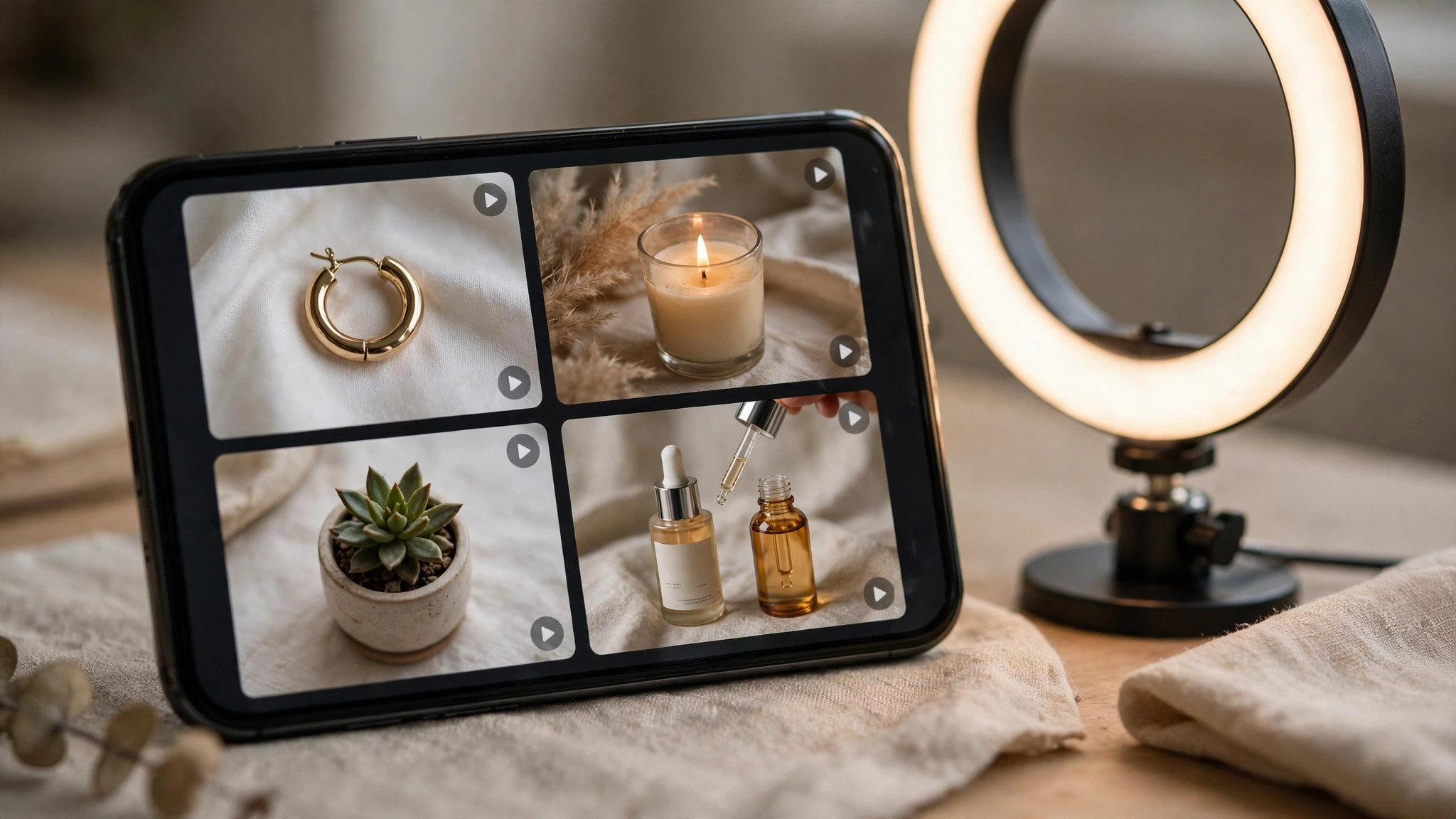
TikTok Shop is the feature that turns TikTok from a marketing channel into a sales channel. Setting it up is the step that makes how to grow a small business on TikTok pay, because views without a shop are only attention. It is free to set up, and it lets viewers buy products without leaving the app, which removes the friction that loses sales. A seller registers as a business, lists the products with photos and prices, and links them to videos, so a viewer watching a candle being poured can tap the product and buy it in seconds.
A shop that sells through TikTok Shop will convert better than a shop that sends viewers to a website, because every extra tap loses buyers.
The shop needs the same care as an Etsy listing. Clear photos, honest prices, accurate descriptions, and fast shipping, because TikTok Shop reviews are public, and a seller with bad reviews will lose the trust that brings sales. A seller who ships quickly, packs well, and replies to messages will earn good reviews, and good reviews will bring more buyers. A seller who ships late and ignores messages will lose the shop, because TikTok will restrict sellers with poor ratings.
The bio link is the second sales path, for sellers who do not use TikTok Shop. A Business account can add a website link to the bio, and every video caption can mention it, with a line such as link in bio. A link-in-bio tool, such as Linktree, free for basic use, can hold several links, such as the shop, the bestseller, and the newsletter signup. A bio with one clear link will convert better than a bio with five links, because the viewer will follow the one that matters.
Live selling is the third path, and it suits a business with a confident presenter. A live video, once a week, where the seller shows the products, answers questions, and offers a discount for live viewers, can sell more in an hour than a week of short videos. A live that is planned, with the products laid out and the offers ready, will feel professional. A live that is unplanned, with the seller searching for products on camera, will feel amateur. Plan the live, promote it a day before, and offer a reason to watch, such as a discount or a new product reveal.
Affiliate creators are the fourth path, and they suit a business that wants reach without filming. TikTok Shop lets sellers invite creators to promote products for a commission, and the creator’s video will bring their audience to the shop. A creator with a small, engaged audience in your niche will sell more than a creator with a large, unfocused audience. Start with one creator, agree a commission, and test the results before inviting more. A creator partnership that works will become a regular source of sales.
Trends, Sounds and Staying Authentic
Trends on TikTok move fast, and a business should follow them with care. That care is part of how to grow a small business on TikTok without losing the audience that came for the product. A trending sound, a trending format, or a trending challenge can bring new viewers, because TikTok pushes trending content to more people. A business that uses a trend well, with the product at the centre, will grow. A business that chases every trend will look desperate, and its audience will leave, because they followed for the product, not for the trends.
Sounds matter more than most sellers expect. A video with a trending sound will be shown to more people than a video with no sound, because TikTok groups videos by sound, and viewers browse by sound. A Business account must use the commercial music library, which is free and licensed for business use, rather than the full music library, which is not licensed for ads. A video that uses an unlicensed song can be muted or removed, which will kill its reach. Use the commercial library, and check the sound’s popularity before you film.
Authenticity is the quality TikTok rewards most, and it is the quality small businesses have naturally. A video filmed on a phone, in the real workshop, with the real maker, will outperform a polished advert, because viewers trust real work. A business should not try to look like a big brand. It should look like itself, with the mess, the noise, and the craft visible, because that is what viewers come to TikTok to see. A small business that is honest on camera will build trust faster than a big business that is polished.
The comment section is where the community lives, and it deserves daily attention. Reply to every comment in the first hour, with a real answer, not a generic thanks. A comment answered quickly will earn more comments, because viewers see the business is listening. A comment ignored will tell viewers the business does not care. A business that replies to comments will grow a community. A business that ignores them will grow an audience that never buys.
Mistakes That Stall a TikTok Account
The first mistake is only posting adverts. An account that posts nine adverts in a row will lose followers, because the audience will learn that every video asks for money. The fix is the mix, with process videos, answer videos, behind-the-scenes moments, and one advert in four. An account that helps first will sell better, because the audience trusts the business that helps them.
The second mistake is no hook. A video that starts slowly, with a greeting and an introduction, will lose viewers in the first two seconds, because TikTok viewers decide in two seconds whether to stay. The fix is a hook in the first sentence, on screen and spoken, that promises a result or asks a question. A video with a hook will hold viewers. A video without one will be scrolled past.
The third mistake is no consistency. An account that posts ten videos one week and none the next will confuse the algorithm and lose the audience it gained. The fix is three to five videos a week, on the same days, for three months. A steady account will grow steadily. An erratic account will grow erratically, which is another way of saying it will not grow.
The fourth mistake is no next step. A video that earns views and likes, but has no shop, no link, and no call to action, will earn attention and no sales. The fix is TikTok Shop, or a bio link, with a clear next step in every video caption. A video that ends with shop the candle in TikTok Shop will sell. A video that ends with nothing will not.
The fifth mistake is copying big creators. A small business that copies a big creator’s style, sound, and format will look like a worse version of the big creator, and viewers will follow the original. The fix is to be yourself, with your own workshop, your own voice, and your own products. A small business that is authentic will find its own audience, and that audience will be more loyal than any audience borrowed from a trend.

A 30-Day Plan for a New TikTok Account
Week one is setup and research. Create the Business account, write the bio, set up TikTok Shop, and spend an hour a day watching videos in your niche. By the end of week one, the account should be ready, the shop should be listed, and the seller should know the five formats that work in their niche. A week spent researching will save a month spent posting videos that do not work.
Week two is the first batch. Film ten videos in two sittings, five process videos and five answer videos, each 15 to 60 seconds long, with a hook in the first two seconds. Post three videos, on the days the analytics suggest, and save the rest for the following weeks. A batch of ten videos, filmed in two hours, will fill the first month, and the seller will learn which format works best.
Week three is posting and replying. Post three videos, reply to every comment within an hour, and check the analytics at the end of the week. Keep the format that earned the most views and follows, and drop the format that earned the least. A week of posting and replying will build the first followers, and the comments will show what the audience wants to see next.
Week four is selling and reviewing. Link the best-selling product to the best-performing video, go live once with a small discount, and review the month. Which videos earned views, which earned follows, and which earned sales. Keep the winners, fix the losers, and plan the next month with the same rhythm. A month that ends with a review will start the next month stronger, and a business that follows this plan for three months will have an account that grows, sells, and sustains itself.

What to Film When You Run Out of Ideas
Every seller runs out of ideas, and the fix is to look at the business, not at the screen. Film the morning setup, with the shop opening, the tools laid out, and the first product of the day. Film a customer question, answered in 30 seconds, with the product in your hands. Film a mistake, and how you fixed it, because viewers love honesty more than perfection. Film the packaging, with the product wrapped, boxed, and labelled, because buyers love to see how their order will arrive.
Film the materials, with a close-up of the wax, the flour, the leather, or the wood, and a line about why you chose it. Film the tools, with the favourite knife, the old mixer, or the worn workbench, and a story about where it came from. Film the team, with a short introduction of the person who makes the product, and a line about what they love about the work. A business has a hundred videos in its daily work, and the camera only needs to be pointed at it.
Keep an idea list on your phone, and add to it whenever a customer asks a question, a product sells out, or something goes wrong. A question is a video, a sellout is a video, and a mistake fixed is a video. A seller who writes down ideas daily will never run out, and a seller who waits for inspiration will wait forever. The work is the content, and the content is the work, so point the camera at the work and press record.
Related Guides
- How to Grow on Instagram with AI Tools
- How to Make a Twitter Header That Stands Out
- How to Plan a Month of Social Media Content with AI
Frequently Asked Questions
How often should a small business post on TikTok?
Three to five times a week is the right rhythm for most small businesses. Three videos keep the account alive without exhausting the owner, and five suit a business with a batch day or a team member who films. Daily posting is unnecessary, and a heroic week followed by a silent month hurts the account more than it helps.
What kind of videos work best for a small business?
Process videos, which show the product being made, and answer videos, which answer the question customers ask most, work best, because they show the craft and they rank in TikTok search. Product videos that show the product in use, and behind-the-scenes videos that show the people, also work well. Adverts alone do not work, because viewers will scroll past them.
Do I need TikTok Shop to sell on TikTok?
No, but it helps. TikTok Shop lets viewers buy without leaving the app, which removes the friction that loses sales, and it is free to set up. A seller without TikTok Shop can use the bio link to send viewers to a website, with a link-in-bio tool such as Linktree. A video with a clear next step, whether a shop or a link, will sell better than a video with none.
How long should a TikTok video be?
Keep videos 15 to 60 seconds long, with a hook in the first two seconds. A video that is 30 seconds long and watched fully will outperform a video that is three minutes long and abandoned halfway, because TikTok rewards watch time. A longer video is fine when the story needs it, but most small business videos should be short.
Can a small business grow on TikTok without ads?
Yes. Most small businesses grow on TikTok without ads, by posting short, honest videos steadily, for three months. TikTok Ads, with a $20 daily minimum for a campaign, can speed up growth, but they are not required, and they should only be used on videos that already perform well organically. An ad on a weak video will waste money, while an ad on a strong video will multiply its reach.
How do I know if TikTok is working for my business?
Check the analytics weekly, looking at views, watch time, profile visits, follows, and website clicks or TikTok Shop sales. A video with many views and few follows entertains but does not convert, while a video with fewer views and many follows finds the right audience. Review the numbers monthly, keep the formats that work, and drop the ones that do not.
The Bottom Line
Knowing how to grow a small business on TikTok is a system of short, honest videos, posted steadily, that show the product, the process, and the answers buyers need. Set up a Business account, film in daylight with a tripod, post three to five times a week, and sell through TikTok Shop or a bio link. A video that ends with a clear next step will turn viewers into buyers.
Start with five videos, filmed in an hour, and post them on a steady rhythm for three months. That simple start is how to grow a small business on TikTok, and it works for a candle maker, a baker, or a repair shop. The account that grows is the one that shows real work, answers real questions, and respects the viewer’s time, one 30-second video at a time.