

A buyer decides in seconds whether to visit, and the flyer is what decides it. It must make a buyer want to see the house, and it must do that before the open house ends and the buyer moves on to the next listing. A flyer with a dark photo, a cramped layout, or a price buried in small type wastes a listing that a good flyer would have sold. The best real estate flyer makers fix that problem in an afternoon. They offer templates built around property photos, prices, and features, with print files that work at the office printer and digital versions that travel by email and social media. Canva takes the top spot because it pairs the widest listing flyer template library with the fastest path from a blank page to a printed flyer, and its price stays low enough for an agent to keep paying it every month.
Quick jump
What Sellers Notice First
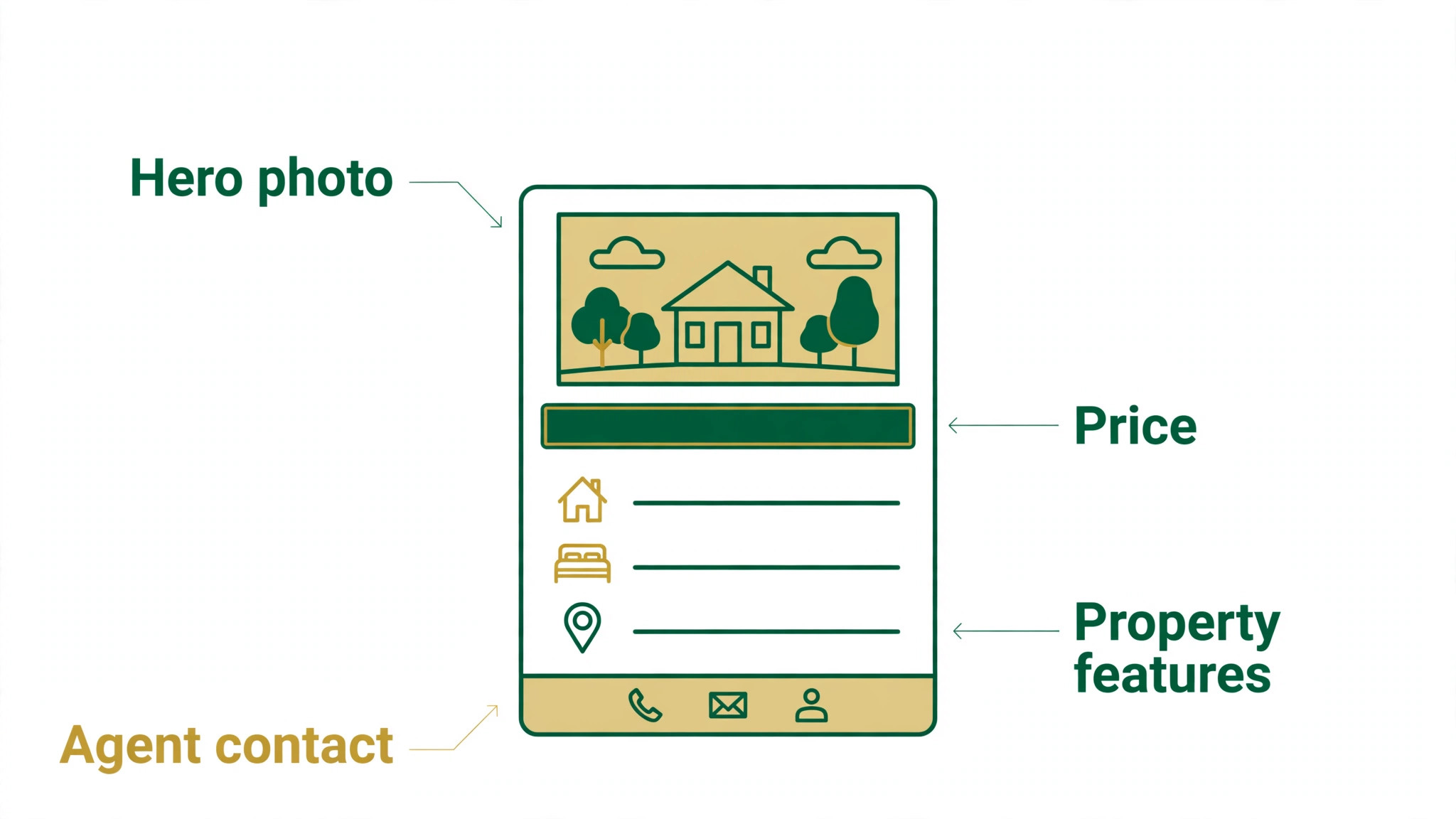
A seller notices the photo before anything else. The hero image carries the flyer, and a listing flyer with a bright, wide photo of the living room or the garden will pull a buyer in, while a flyer with a small, dark photo will be ignored no matter how good the copy is. The best real estate flyer makers put the photo first, with templates that give the hero image the largest space on the page and keep the text out of its way. A template that squeezes the photo into a corner is a template that fights the sale.
The second thing a seller notices is the price. It must be large, clear, and impossible to miss, because a buyer who cannot find the price will not ask. The third is the agent. A flyer without a face, a name, and a phone number is an advertisement for a house with no one to call, and the best templates put the agent branding in the same place on every flyer, so a buyer who has seen three of them recognises the agent before reading the address.
The other test is speed. A listing goes live on a Tuesday, the open house is on Saturday, and the flyer must be designed, printed, and at the door before the first visitor arrives. An agent who waits for a designer loses the week, and the tools on this list were judged on whether a busy agent can finish a flyer in an hour, with the photos they already have, on the computer they already own. The best real estate flyer makers make that hour possible by starting from a template built for property, not from a blank page, and the agent who picks the right template finishes before the coffee goes cold.
The 10 Best Real Estate Flyer Makers in Detail
This section tests the best real estate flyer makers against the same three jobs. A flyer an agent can finish in an hour, a photo-led design that sells the house, and a file that prints well and shares well. Figures in this guide mean the lowest paid plan unless a sentence flags a different basis, all checked in November 2026.
1. Canva
No tool in this list covers more listing flyer jobs than Canva, which is why it leads. One account handles the printed flyer, the social post that promotes the open house, and the presentation slide that runs on the office screen, all from the same design. Its flyer library runs to thousands of designs for houses, apartments, condos, land, and commercial property, and an agent with no design training can finish a flyer in an hour. The brand kit keeps the agency colours and fonts consistent from the flyer through to every listing image, which is the detail buyers notice without knowing why.
The free tier does the basics, and Pro costs $18 a month billed monthly or $144 a year billed annually, which works out near $12 a month. Pro buys brand kits, background removal for property photos, premium templates, and the resize tool that turns a printed flyer into a social post in one click. The print ordering inside Canva is a bonus for an agent without a local print shop, because the flyer can go from screen to delivery without a file transfer.
The weakness is that the free tier limits premium templates and brand kit features, so an agent who wants every flyer on brand should budget for Pro from the start. Choice is the other trap. A new user can lose an hour browsing templates instead of publishing the flyer. Pick one flyer system per agency, save it, and reuse it, and Canva stops being a catalogue and starts being a system.
2. Adobe Express
When a flyer has to look polished and there is no designer on staff, Adobe Express is the tool to reach for first. The templates are tidier than most rivals, the typography is better, and the Adobe Stock assets give a small agency access to lifestyle photography it could never shoot itself. A flyer for a luxury listing needs a hero image that looks expensive, and Adobe Express supplies one in the same canvas where the words go.
It starts free with limits, and Premium runs $9.99 a month billed monthly, or $99.99 for the year. That is one of the cheapest paid entries in this list, and it bundles 250 Firefly generative credits a month with 4,000 Adobe Fonts, so an agent can generate a background image and set the headline in a typeface no rival agency is using. The free tier carries a usable set of templates and 5 GB of storage, which is enough to run a real listing before paying anything.
The trade-off is template depth. Adobe Express has fewer property-specific templates than Canva, so an agent with a very specific property type may find the library thin. The editor is also simpler, which is a strength for a fast flyer and a limit for an agent who wants fine control over every layer. For most agencies, the price and the polish outweigh both limits.
3. PosterMyWall
PosterMyWall fits an agency that promotes every listing in several places at once. One design becomes the printed flyer, the social post, the email to the buyer list, and the event page for the open house, without rebuilding. An agency that lists a house, a condo, and a plot of land in the same week gets all three promoted from one subscription, and the same account schedules the posts and sends the emails.
The free plan covers limited downloads, and Premium costs $13 a month billed monthly, or $109 a year. Premium adds unlimited high-resolution downloads, AI design tools, a brand kit, and 3,000 email sends a month, which covers a weekly buyer email. Premium Plus, at $30 a month, adds unlimited brand kits and 10,000 email sends, which suits a larger agency with several agents mailing separately.
The weakness is range beyond events. PosterMyWall makes a loud, celebratory flyer well, and it makes a quiet, luxury listing flyer less well, because its templates lean bold and busy. Use it for the open house and the price-drop announcement, and use Canva or Adobe Express for the luxury listing that must whisper rather than shout.
4. VistaCreate
VistaCreate earns its place on team value. One Pro plan covers up to 10 team members for $13 a month billed monthly, or $120 a year billed annually, which works out near $10 a month. That flat team price is the cheapest way in this list to put a whole agency on one paid plan, and it includes unlimited brand kits, unlimited storage, and a one-click resizer. An agency where every agent makes their own flyers gets professional tools without a per-seat bill that grows every time a new agent joins.
The free Starter plan is genuinely usable, with 100,000 templates and 10 GB of storage, and Pro adds 200,000 templates plus a library the vendor states as 170 million photos, videos and vectors. The animated template range is a bonus for digital flyers, since a moving announcement stands out in a social feed where a static one scrolls past.
The weakness is polish. VistaCreate templates can feel less refined than Adobe Express, and the photo library quality is uneven, so a flyer built here needs a careful eye on the hero image. The editor also lacks the deep brand controls of Canva Pro. For an agency on a tight budget that lists often, those limits are easy to live with.
5. Visme
Visme suits an agency that leads with numbers. Its data tools turn a market report, a price trend, or a neighbourhood comparison into a chart that can sit on a flyer without looking like a spreadsheet. An agency that wants its flyer to show why a neighbourhood is rising, or how a listing compares to recent sales, will find Visme faster than any general design tool, and the infographic templates inside the same account keep the inside pages consistent with the flyer.
The free Basic plan covers 500 MB of storage and a small set of templates, and Starter costs $12.25 a month billed annually, or $29 a month billed monthly. Starter unlocks JPG, PNG and PDF downloads and the full chart and asset library. Pro, at $24.75 a month billed annually, adds the brand kit, analytics, and PPTX and HTML5 export, which matters for an agency that presents its flyers to sellers.
The weakness is price. Visme is the dearest tool in this list once an agency needs Pro, and the free tier blocks downloads of the formats an agent actually needs. An agency that publishes a quarterly market report will still find the price fair. An agency that only needs listing flyers should spend the money elsewhere.
6. Marq
Marq, formerly Lucidpress, is the brand-locking pick. Its lockable templates let a broker fix the agency logo, the colours, and the fonts, while agents change only the photo, the price, and the features. An agency with several offices, or a franchise with local branches, keeps every flyer on brand without a designer checking each one. That control is the reason Marq survives in a list full of cheaper tools.
Pro starts at $10 per user a month, and a free tier covers occasional use. The web-to-print ordering is a practical bonus, since a flyer can go from the locked template to printed copies without a file leaving the platform. The template library is smaller than Canva, but the templates it has are built for print, with proper margins and guides.
The limit is creative freedom. Marq is built to stop people going off brand, which is exactly what an agent who wants to experiment will resent. For a solo agent with one flyer style, the locking adds little. For a brokerage that needs ten flyers a week to look like one brand, it is the safest tool here.
7. Snappa
Snappa is built for speed. The editor has fewer menus than Canva, the templates are sized for social media and print, and an agent can go from idea to finished flyer in a few minutes. That speed matters on a Friday afternoon, when the listing goes live on Monday and the flyer must be ready before the weekend viewings.
The free plan covers 3 downloads a month, and Pro costs $15 a month billed monthly, or $10 a month billed annually at $120 a year. Pro adds unlimited downloads, background removal, custom font uploads, and integrations with Buffer and social platforms, which suits a solo agent who publishes the flyer and the social post together. Team plans run $20 a month per user billed annually.
The limit is depth. Snappa has fewer templates than Canva or VistaCreate, and its editor offers less control over fine details. An agent who makes one flyer a week will find the speed worth the trade. An agency that needs a wide template range for many property types will outgrow it quickly.
8. Venngage
Venngage is the infographic pick for a data-led listing. Its charts, maps, and comparison layouts turn a neighbourhood report into a flyer a buyer actually reads, with price trends, school ratings, and commute times presented as clean visuals rather than dense text. An agent who sells on data, not just photos, will find Venngage the fastest way to make that case.
The free plan covers 5 designs and 6 image uploads, with public sharing only and no downloads. Premium costs $19 a month billed monthly, or $10 a month billed annually, and adds unlimited designs, premium templates, PNG downloads, and private sharing. Business, at $24 per user a month billed annually, adds PDF and PowerPoint downloads, brand kits, and team sharing.
The weakness is the free tier, which is too limited for real work, since it allows no downloads at all. Venngage is also a data tool first, so a simple photo-led flyer takes longer here than in Canva. The right use is the market report flyer, the neighbourhood comparison, and the listing that leads with numbers. For a plain photo flyer, use a faster tool.
9. Design.com
Design.com fits an agency that also needs a logo. Its flyer templates sit beside a logo maker, so a new agency can build its mark, then carry that mark onto the flyer, the website, and the social profiles from one account. That single-brand workflow is the honest reason to pick it, and it suits a launch better than an established agency that already owns its identity.
It is free to start, with paid plans on the vendor site for premium templates and high-resolution downloads. The flyer templates are serviceable rather than striking, and the library is smaller than the leaders here, so an agency that wants a distinctive flyer will find the range thin. The logo tools are the stronger half of the product, and a new agency that needs both in one afternoon gets real value.
The right use is narrow. A new agency that needs a logo, a flyer, and a basic brand kit in one week gets all three here. An established agency with a logo it already loves should spend its money on a design tool with a deeper flyer library instead.
10. Fotor
Fotor is the photo-led pick, and the cheapest paid entry in this list. Its strength is photo editing, with AI enhancement, background removal, and one-click improvements that make a phone photo of a living room look presentable on a flyer. An agent whose best asset is the property photography will get more from Fotor than from a template-led tool, and the flyer templates are clean enough for a weekly listing.
Pro costs $8.99 a month billed monthly, or $39.99 a year, which works out near $3.33 a month, and Pro+ runs $19.99 a month. The free Basic plan covers basic editing with limited AI credits and 512 MB of storage. At that price, Fotor is the easiest paid upgrade in this list to justify to a broker watching every dollar, and a year of Pro costs less than a single open house advertisement.
The weakness is template range. Fotor is a photo editor with flyer templates attached, not a flyer tool first, so an agency that needs many different flyer styles will find the library thin. The right workflow is to enhance the property photo in Fotor, then build the flyer in Canva or Adobe Express, though a simple listing flyer can be finished in Fotor alone.
The 10 Tools at a Glance
| Tool | Entry paid plan | Free option | Best for |
|---|---|---|---|
| Canva | $18 a month, or $144 a year | Yes | Most agencies |
| Adobe Express | $9.99 a month | Yes | Polished flyers on a budget |
| PosterMyWall | $13 a month, or $109 a year | Yes | Open houses and price drops |
| VistaCreate | $13 a month, or $120 a year | Yes | Whole agency teams |
| Visme | $12.25 a month billed annually | Yes | Market reports and data flyers |
| Marq | $10 per user a month | Yes | Multi-office brand control |
| Snappa | $15 a month, or $120 a year | Yes | Fastest listing flyer |
| Venngage | $19 a month, or $10 a month billed annually | Yes | Neighbourhood data flyers |
| Design.com | Free to start | Yes | A new agency that needs a logo too |
| Fotor | $8.99 a month, or $39.99 a year | Yes | Photo-led listing flyers |
Print, Digital, or Both for a Listing
Most listings need both a printed flyer and a digital one, and the best real estate flyer makers handle the split without making the agent build the flyer twice. The printed flyer goes on the table at the open house, where a visitor picks it up and takes it home. The digital flyer goes on social media and in the buyer email, where it reaches people who did not attend the viewing. A tool with a one-click resizer turns the printed flyer into both digital versions in a minute, and that minute is worth more than the price difference between the tools.
The printed flyer also has a practical limit, which is the office printer. An office printer handles plain paper well and glossy paper badly, and a flyer designed for a print shop can look washed out on it. The fix is to design for the printer the agency actually owns, with strong contrast, large type, and no pale text on a pale background. The tools that preview the flyer at print size help here, and the agent who prints one test copy before the full run saves the agency a ream of paper and an open house of embarrassment.
The digital flyer has its own rule, which is size. A flyer designed for a printed page becomes unreadable when shrunk to a phone screen, so the digital version needs larger type and fewer words. The best real estate flyer makers offer social-sized templates for the same listing, and the agent who uses them will reach more buyers than the one who posts a photo of the printed flyer and hopes for the best.
What a Listing Flyer Really Costs
The cheapest honest year in this list belongs to Fotor Pro at $39.99 a year, followed by Adobe Express Premium at $99.99 a year and PosterMyWall Premium at $109 a year. VistaCreate Pro at $120 a year and Canva Pro at $144 a year cost more, but both replace a template library, a stock photo subscription, and a resize tool, so the comparison is not price alone. Visme Pro at $297 a year is the dearest entry, and it justifies the price only when the agency publishes market reports as well as flyers.
The cost that matters most is not the subscription. It is the cost per listing, and the maths favours every tool here. An agent who lists two properties a month and pays $144 a year for Canva Pro spends $6 per listing on design software. An agent who hires a designer for one flyer pays several times that for a single listing, and waits days for it. The best real estate flyer makers turn design from a cost per listing into a flat monthly habit, and the agent who lists often saves money from the second month.
The free tiers deserve a second look too. Canva, Adobe Express, VistaCreate, Visme, Marq, PosterMyWall, Snappa, Venngage, Fotor, and Design.com all offer one, and a new agent can design a full set of listing flyers without paying any of them. The month the agent needs brand kits, background removal, and premium templates all at once is the month the listings start selling regularly, and by then the subscription pays for itself from a single viewing.
Best Pick by Job
| Job | Best pick | Why |
|---|---|---|
| Most agencies | Canva | Widest flyer library, fastest listing flyer |
| Polished flyers on a budget | Adobe Express | $9.99 a month with Firefly credits and good type |
| Open houses and price drops | PosterMyWall | Flyer, email, social and event page from one design |
| Whole agency teams | VistaCreate | One Pro plan covers up to 10 agents |
| Market reports and data flyers | Visme | Charts built for a flyer, not pasted onto one |
| Multi-office brand control | Marq | Lockable templates keep every office on brand |
| Fastest listing flyer | Snappa | Fewest menus, finished in minutes |
| Neighbourhood data flyers | Venngage | Maps and charts a buyer actually reads |
| A new agency that needs a logo too | Design.com | Logo and flyer from one account |
| Photo-led listing flyers | Fotor | AI photo enhancement, cheapest paid tier |
Questions Agents Ask Before the Open House
How many photos should a listing flyer carry?
Three is the right number for a printed flyer. One large hero photo of the best room or the exterior, and two smaller photos of the next best spaces. More than three turns the flyer into a catalogue, and a buyer who wants more photos will look at the online listing. The digital version can carry more, since a phone scrolls, but the printed flyer should stay simple.
Should the price be on the flyer?
Yes, large and clear. A buyer who cannot find the price will not ask, and an agent who hides the price loses the buyers who would have paid it. The only exception is a luxury listing marketed as price on application, and even then the flyer should say so plainly rather than leaving the space blank.
Can I make a good flyer from phone photos?
Yes, with enhancement. A phone photo taken in good daylight, then enhanced in Fotor or Canva, can look presentable on a flyer. A phone photo taken in a dark room will not, and no editor rescues it. The rule is to photograph in daylight, with the lights on and the curtains open, and to enhance before designing rather than after.
Do I need a different flyer for print and social media?
Yes, in size, though the design can stay the same. The printed flyer is a page, and the social version is a square or portrait image with larger type and fewer words. The tools with a one-click resizer handle that in seconds, and Canva Pro, VistaCreate Pro, and Adobe Express Premium all resize a flyer into social sizes without rebuilding it.
How do I keep every agent’s flyer on brand?
Use a brand kit and a locked template. The broker sets the logo, the colours, and the fonts once, and each agent changes only the photo, the price, and the features. Canva Pro, Marq, and VistaCreate Pro all offer brand kits, and Marq adds locking that stops an agent changing the brand elements at all. A brokerage that skips this step will have ten agents publishing ten different looks within a month.
The Flyer That Books the Viewing
The best real estate flyer makers do not win on template count alone. They win on the three tests that decide whether a flyer works, a design an agent can finish in an hour, a photo-led layout that sells the house, and a file that prints well and shares well. Canva leads because it passes all three at a price an agent can keep paying, and its resize tool turns one flyer into a whole listing campaign. Adobe Express is the pick for a polished flyer on a small budget, VistaCreate is the pick for a whole agency team, and PosterMyWall is the pick for an open house that needs promoting in several places at once. Pick the tool that matches the agency, build one flyer system, and reuse it until buyers recognise the agency before they read the address. Start with the free tier, design three flyers, and print one test copy of each before the open house. The tool that survives that test earns the subscription, and the agency that keeps one system will spend its Saturdays showing houses, not fixing flyers. An agent who picks one tool, learns it properly, and uses it for every listing will produce better flyers than an agent who tries a new tool every month, since the templates, the brand kit, and the workflow all improve with repetition.