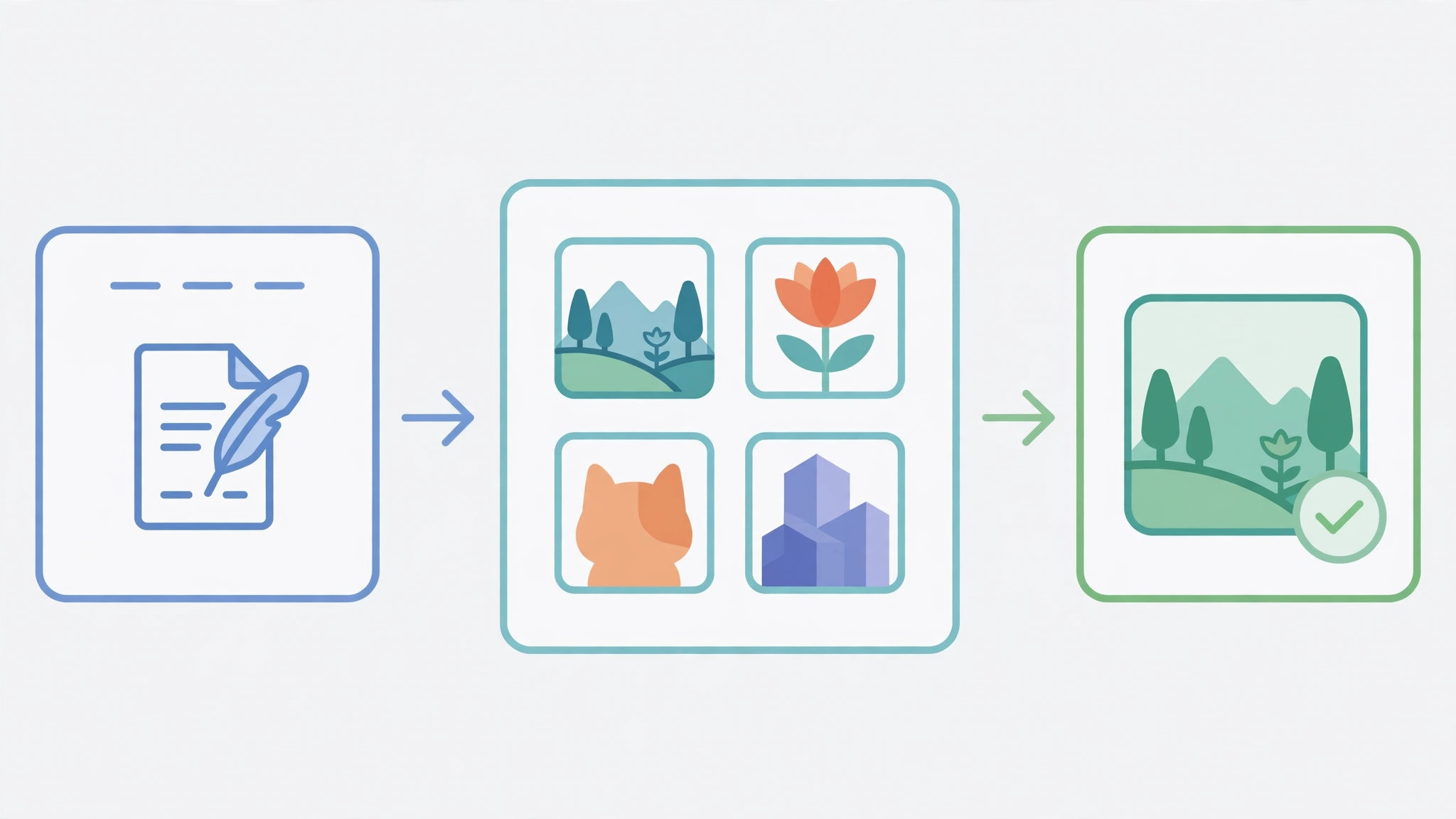
A text prompt is now a camera, a studio and an illustrator in one, and the gap between the best generators and the rest is wider than it looks. One tool turns a sentence into a poster with readable words, another turns the same sentence into a beautiful image with garbled text, and a third turns it into four variations that all miss the brief. The best text to image ai tools are the ones that follow a detailed prompt closely, render words correctly when words matter, and give the user enough control to fix a result without starting over.
This guide compares 11 generators on the jobs that decide a subscription. Image quality and style range, how well the tool follows a long prompt, whether text inside the image comes out spelled right, and what the free plan really allows before the paywall. Prices below are entry paid tiers checked in November 2026, and where a tool offers a free plan the table shows it, because the free allowance is often the deciding factor for a casual user.
Quick jump
The 11 Best Text to Image AI Tools at a Glance
This table compares the best text to image ai tools on the facts that decide a purchase. Prices are entry paid tiers from each vendor site, checked in November 2026. Free allowances vary widely, from a few generations a day to a daily token budget, so read the free column before choosing.
| Tool | Entry price | Best for |
|---|---|---|
| Midjourney | From $10 a month, no free plan | Artistic quality and style |
| ChatGPT | Free plan, Plus $20 a month | Conversational edits and complex prompts |
| Ideogram | Free plan, Plus $20 a month | Readable text in images |
| Leonardo AI | Free plan, Essential $12 a month | Game art and consistent characters |
| NightCafe | Free plan, paid from $5.99 a month | Community challenges and free daily credits |
| Playground | Free plan, Pro $15 a month | Fast edits and design-ready images |
| Recraft | Free plan, paid from $10 a month | Vector graphics and brand assets |
| Krea | Free plan, paid from $10 a month | Multi-model work in one studio |
| Craiyon | Free plan, paid from $5 a month | Free fun images with no sign-up |
| Stability AI | See website | Open models and API access |
| Canva | Free plan, Pro $18 a month | Images inside a design workflow |
The 11 Tools in Full
Each tool below was judged on the same four tests. Quality of the image, prompt following, readable text where it matters, and the generosity of the free plan. The best text to image ai tools in this guide clear those tests, and the ranking follows the job each one does best rather than the size of its model list.
1. Midjourney
Midjourney remains the reference for aesthetics, and its current default model, V8.2, renders native 2K images with far better text than the versions that made it famous for beautiful but garbled words. It works in the browser, turns a prompt into a set of four images that can be varied, upscaled, edited or extended, and covers illustration, photography and anime styles through its Niji model. For pure image quality, no other tool in this list is as consistent.
Basic costs $10 a month or $8 billed yearly for 200 fast GPU minutes, Standard costs $30 or $24 yearly and adds unlimited Relax image generations, while Pro at $60 and Mega at $120 add stealth mode and far more fast time. There is no free plan or trial, images are public unless Pro or Mega is paid for, and companies earning over $1 million a year need Pro or Mega. That is the price of the best-looking output in this category.
The limits are the price of the quality. There is no free plan, images are public unless Pro or Mega is paid for, and companies earning over $1 million a year need the dearer plans. The GPU-minute metering also means a busy month can run out of fast time, and the browser interface, while improved, still assumes the user is comfortable with parameters and commands rather than plain buttons.
Choose Midjourney when the image itself is the product and the budget covers a paid plan from day one.
2. ChatGPT
ChatGPT is the best text to image ai tool for most people, because its image model follows complex instructions better than any rival in this list. Describe a scene in plain language, ask for a change in the next message, and the image updates without a new prompt, which makes it the easiest generator for someone who thinks in conversation rather than in prompt syntax. The current Images model ranks near the top of the public text-to-image leaderboard.
The free plan includes limited image creation, and Plus costs $20 a month with higher limits, file uploads, memory and projects. The trade-off is style. ChatGPT images are accurate and clean rather than strikingly artistic, and generation caps apply even on Plus, so a user who needs a hundred images a day will hit a ceiling. For a marketer or a blogger who needs a good image fast, it is the default answer.
The trade-off is style and caps. ChatGPT images are accurate and clean rather than strikingly artistic, so a user who wants a distinctive look will find the output samey, and generation caps apply even on Plus, so a user who needs a hundred images a day will hit a ceiling. The image tools are also tied to the chat subscription, so a user who only wants images is paying for a general assistant too.
Start with ChatGPT when the prompt is long and specific, because it follows instructions better than any rival here.
3. Ideogram
Ideogram made its name on readable text inside images, so posters, ads, logos and packaging mock-ups are its territory. It is the only generator in this list that reliably spells words right on a poster headline, and editable text layers let the wording be fixed without re-rolling the image. Its current model outputs native 2K images and adds structured prompts that set layout, colour and text placement.
Eligible free accounts get about 30 credits a week, and Plus costs $20 a month or $15 billed yearly for 2,400 priority credits and private generation, with Pro at $60 a month adding batch generation. The trade-off is photorealism, which trails Midjourney, and free generations are public. For anything where the image must contain readable words, Ideogram is the pick.
The trade-off is photorealism, which trails Midjourney, and free generations are public, so a client image should not be made on the free plan. The credit system also needs watching, because the free allowance of about 30 credits a week runs out fast, and the Plus plan at $20 a month is dearer than Leonardo AI for a user who needs volume rather than text.
Use Ideogram whenever the image carries a headline, a logo or a price, because no rival spells as reliably.
4. Leonardo AI
Leonardo AI started as a game-asset generator and grew into the most creator-friendly image studio in this list. It offers more than 80 models, including its own Lucid and Phoenix models plus third-party models, with editing, upscaling, personal model training and an API. The free plan gives 150 fast tokens a day, which is the most usable free allowance of any tool here, and commercial use is allowed even on the free plan.
Essential costs $12 a month or $10 billed yearly for 8,500 tokens and private creations, with higher tiers above it. The token system takes learning, and free generations are public, but the daily allowance is generous enough for real work. For a creator who needs many images a day without paying, Leonardo AI is the best free option in this guide.
The token system takes learning, and free generations are public, so a client image should not be made on the free plan. The interface is also busier than ChatGPT, with many models and settings that can overwhelm a beginner, and the daily token budget, while generous, still caps a heavy day. For a creator who needs many images a day, though, the allowance beats every rival.
Pick Leonardo AI when the work needs volume, because the free daily allowance beats every rival.
5. NightCafe
NightCafe is the friendliest generator in this list, built around a community that runs daily challenges and shares creations openly. It offers several models in one place, including Stable Diffusion variants, with a simple interface that suits a beginner who wants to make art without learning prompt syntax. Free credits arrive daily, and challenges award more, so a regular user can generate steadily without paying.
Paid plans start at $5.99 a month, which is one of the cheapest entries in this guide, and higher tiers add more credits and faster queues. The trade-off is control. NightCafe is simpler than Leonardo AI or Midjourney, so a professional who needs precise art direction will find it limiting. For fun, learning and community, it is the warmest place to start.
The trade-off is control. NightCafe is simpler than Leonardo AI or Midjourney, so a professional who needs precise art direction will find it limiting, and the credit system rewards daily visits, which suits a hobbyist more than a deadline-driven marketer. The community is the strength, and a user who wants solitude rather than challenges will find the social layer distracting.
Choose NightCafe when the goal is to learn image generation and enjoy the community while doing it.
6. Playground
Playground is built for speed and for images that are ready to use in a design. It combines generation with a canvas where images can be edited, combined and refined, and it handles logos, social graphics and product shots alongside pure art. The interface is closer to a design tool than a prompt box, which suits a marketer who needs a finished graphic rather than a raw image.
A free plan covers daily generations, and Pro costs $15 a month with higher limits and commercial rights. The trade-off is model choice, because Playground runs a smaller set of models than Leonardo AI, and the most advanced features sit behind the paywall. For a small team that needs a steady flow of usable images, the canvas is the feature that earns the price.
The trade-off is model choice, because Playground runs a smaller set of models than Leonardo AI, and the most advanced features sit behind the paywall. The canvas is the strength, and a user who only needs raw images will find the design tools unnecessary. For a small team that needs a steady flow of usable images, the canvas earns the price, but a pure generator would be cheaper.
Use Playground when the image must be edited into a finished design in the same tool.
7. Recraft
Recraft is the pick when the image must be a vector rather than a raster. It outputs scalable SVG files alongside regular images, which makes it the only tool in this list suited to logos, icons and brand assets that must scale to any size without losing sharpness. The current model handles illustration and brand work well, and the interface is built around styles and brand controls rather than open-ended prompting.
A free plan covers about 50 generations a day without commercial rights, and paid plans start at $10 a month with commercial use. The trade-off is photographic realism, which is not the point of Recraft, and the model range is narrower than Leonardo AI. For a brand asset that must scale, Recraft has no rival in this guide.
The trade-off is photographic realism, which is not the point of Recraft, and the model range is narrower than Leonardo AI. A user who needs a photo will be disappointed, and the free plan, while generous at about 50 generations a day, carries no commercial rights, so a brand asset must be made on a paid plan. For a logo or an icon, though, the vector output has no rival here.
Pick Recraft when the output is a logo, an icon or a brand illustration that must scale cleanly.
8. Krea
Krea is a browser suite that runs its own models next to third-party ones, so one subscription covers image generation, upscaling, video and editing without switching tools. It suits a creator who wants to try several models on the same prompt and keep the best result, and its real-time generation shows the image changing as the prompt is typed, which makes prompt writing feel like a conversation.
The free plan gives a daily allowance of compute units, and paid plans start at $10 a month with more units and faster queues. The trade-off is complexity, because the suite has many tools and the learning curve is steeper than NightCafe or ChatGPT. For a creator who works across images and video, the breadth is worth it.
The trade-off is complexity, because the suite has many tools and the learning curve is steeper than NightCafe or ChatGPT, and the credit system can be confusing, with different tools consuming units at different rates. A user who only needs still images will find the video and editing tools unnecessary, but a creator who works across images and video will use the breadth every day.
Choose Krea when one prompt should be tested across several models before committing to a result.
9. Craiyon
Craiyon is the simplest generator in this list. Type a prompt, get nine images, and download them without an account, a card or a subscription. It is the tool for a quick laugh, a brainstorming session or a placeholder image, and its low barrier makes it the first generator many people ever try. The images are rougher than the paid tools, but the price is nothing and the wait is seconds.
Paid plans start at $5 a month for the Supporter tier, which removes ads and speeds up generation, with Pro at $20 a month adding faster queues and more features. The trade-off is quality, because Craiyon images look dated next to Midjourney or ChatGPT, and commercial use is limited on the free tier. For a free first try, it is unbeatable.
The trade-off is quality, because Craiyon images look dated next to Midjourney or ChatGPT, and commercial use is limited on the free tier. The nine-image grid is charming for brainstorming, but a user who needs a finished image for a client will have to move to a paid tool. For a free first try, a joke or a placeholder, it is unbeatable, and that is the job it is built for.
Use Craiyon when the image is a joke, a placeholder or a first experiment that costs nothing.
10. Stability AI
Stability AI is the company behind the Stable Diffusion family, and its platform suits developers and teams who want open models, API access and control over the generation pipeline. The models can run locally or through the API, which gives a business full control over data and cost, and the community around Stable Diffusion has produced more fine-tuned models than any other ecosystem in this list.
Stability AI does not publish a single per-image price, because the cost depends on the model, the API usage and the plan, so the pricing page must be checked before committing. The trade-off is ease of use, because the platform assumes technical skill, and a non-technical user will find ChatGPT or Leonardo AI far friendlier. For a developer building image features into a product, it is the foundation.
The trade-off is ease of use, because the platform assumes technical skill, and a non-technical user will find ChatGPT or Leonardo AI far friendlier. The pricing is also opaque, with no single per-image figure, so the cost must be modelled before committing. For a developer building image features into a product, the open models and API access are the foundation, and the learning curve is the price.
Pick Stability AI when the images must be generated inside a product or pipeline rather than in a browser.
11. Canva
Canva earns its place here because its image generation lives inside a design tool, not beside it. Generate an image, drop it into a poster, a social post or a presentation, and finish the design without exporting a file. The free plan covers basic generation, and Pro at $18 a month billed monthly or $144 a year adds more generations, premium templates, background removal and brand kits.
The generation itself is simpler than Midjourney or Ideogram, with fewer controls and less art direction, so a user who wants a striking standalone image should look elsewhere. The value is the workflow, because the image never leaves the canvas, and for a marketer who makes a social post every day, that saved step matters more than model quality.
The generation itself is simpler than Midjourney or Ideogram, with fewer controls and less art direction, so a user who wants a striking standalone image should look elsewhere. The value is the workflow, because the image never leaves the canvas, and for a marketer who makes a social post every day, that saved step matters more than model quality. A user who only needs images should not pay for a design suite.
Use Canva when the generated image goes straight into a design and the workflow matters more than the model.
Prompt Following, and Why Long Prompts Fail
A long prompt is a test of attention, and most generators fail it in the same way. They render the first two details well, drop the third, and invent a fourth that was never asked for. The tools that follow long prompts best are the ones built around language models, because they parse the sentence rather than matching keywords. best text to image ai tools differ most on this test, with ChatGPT ahead and the simpler generators behind, so a prompt with five details should be tested on the tool before a subscription is bought.
The fix is to write prompts in layers. Start with the subject and the setting, add the style, then add the details one at a time, and check the result after each addition. A prompt that tries to do everything at once will fail on every tool, while a prompt built in layers will succeed on most of them. Save the prompts that work, because a good prompt is an asset that can be reused for a whole campaign.
Text Inside Images, and the Spelling Problem
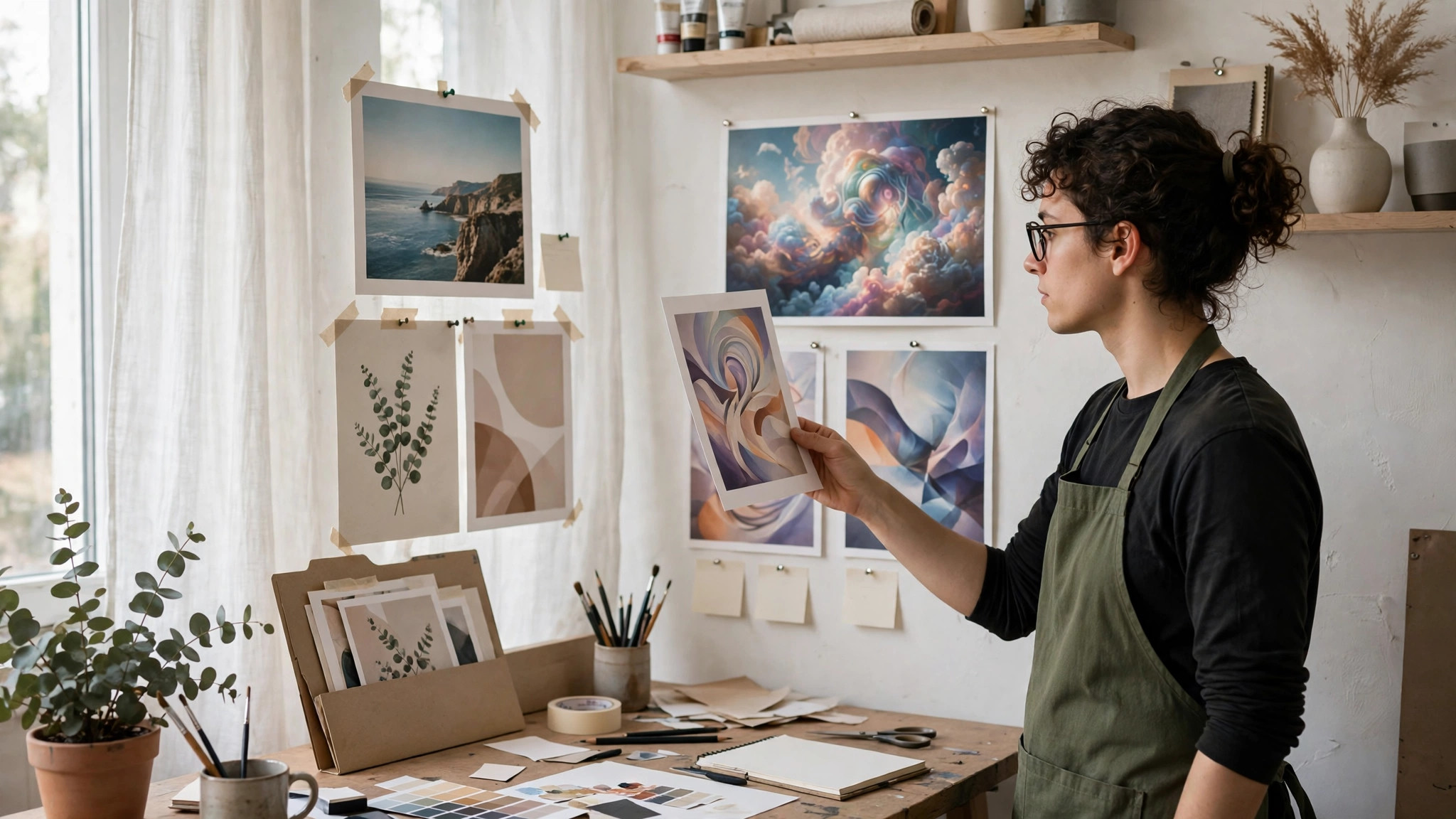
Readable text is the hardest job in image generation, and for years every tool failed it. A poster headline came out with a missing letter, a logo carried a misspelled word, and a thumbnail showed gibberish where the title should be. The current generation of models has improved, and Ideogram now spells reliably while Midjourney and ChatGPT have closed much of the gap. best text to image ai tools should be judged on a poster test, not a landscape test, because a tool that paints a beautiful mountain and misspells the headline is useless for marketing.
Test with a real headline before paying. Generate a poster with a five-word title, a price and a date, then read every word at full size. If the title is right three times in a row, the tool can be trusted with text. If it fails once, use the tool for images and add the text in a design tool afterwards, because a misspelled headline in a published ad costs more than the subscription saves.
Free Plans, and What Free Really Means
Free means different things on every tool in this guide. Leonardo AI gives 150 fast tokens a day, Ideogram gives about 30 credits a week, ChatGPT gives a limited number of generations, and Midjourney gives nothing at all. best text to image ai tools differ most in this free allowance, and a free plan that allows thirty images a day is a working tool, while a free plan that allows three images a week is a demo, and the difference decides whether the tool can be used for real work or only for testing.
Check three limits before relying on a free plan. How many images per day, whether commercial use is allowed, and whether the images are public. Leonardo AI allows commercial use even on the free plan, which is rare, while several rivals keep free generations public, which matters when the image is for a client. A free plan that fits the job is worth more than a cheap paid plan that does not.
Style Range, and the Look That Dates Fast
Every generator has a house style, and the house style dates fast. A model that paints everything in the same glossy light will make every image look like it came from the same tool, and a feed full of those images looks templated within a month. The tools with the widest style range are the ones that let the user steer, with style presets, reference images and fine-tuned models that break the default look.
The defence is variety. Use two generators rather than one, vary the style words in the prompt, and mix generated images with real photographs, so the feed does not settle into one look. A creator who uses Midjourney for art direction, Ideogram for posters and Leonardo AI for volume will produce a feed that looks like a portfolio rather than a single tool’s output.
Best Pick by Job
Different situations need different generators, so the best pick changes with the job. This table matches the common situations to the tool that handles each one best. The best text to image ai tools in this guide cover all of these jobs between them.
| Your job | Pick this one | Why |
|---|---|---|
| Most buyers, best overall quality | Midjourney | V8.2 model, from $10 a month, the aesthetic reference |
| Long prompts and conversational edits | ChatGPT | Free plan, Plus $20 a month, follows instructions best |
| Poster or ad with readable text | Ideogram | Plus $20 a month, the only reliable speller here |
| High volume on a free plan | Leonardo AI | 150 fast tokens a day free, Essential $12 a month |
| Logo or icon that must scale | Recraft | Free plan, paid from $10 a month, true SVG output |
| Image straight into a design | Canva | Pro $18 a month, generation inside the canvas |
Common Questions, Answered
Which text to image AI tool is best overall?
Among the best text to image ai tools, Midjourney leads on pure image quality, with its V8.2 model setting the standard for aesthetics, while ChatGPT is the best all-rounder because it follows complex prompts and edits images through conversation. The right pick depends on the job, because a poster needs Ideogram for readable text and a high-volume workflow needs Leonardo AI for its free daily allowance.
Can I use text to image AI tools for free?
Yes. Leonardo AI gives 150 fast tokens a day, Ideogram gives about 30 credits a week, ChatGPT includes limited image creation on its free plan, and Craiyon generates without an account. Midjourney is the exception, with no free plan at all, so a user who needs free generation should start with Leonardo AI and test the others on their free tiers.
Why do AI images get text wrong?
Text is the hardest job in image generation, because the model must render letters as shapes rather than as meaning, and older models treated words as decoration. Current models have improved greatly, and Ideogram now spells reliably while Midjourney V8.2 and ChatGPT handle short headlines well. For a poster or an ad, always test the exact headline three times before trusting the tool with it.
Can I sell images made with AI generators?
It depends on the tool and the plan. Leonardo AI allows commercial use even on its free plan, most tools allow it on paid plans, and some keep free generations public. Read the terms for the exact plan being used, keep a record of the tool and prompt for each image, and check whether the plan allows commercial use before publishing client work.
Do I need a paid plan to get good results?
No, but it helps. Free plans from Leonardo AI, Ideogram and ChatGPT produce good images for casual use, while paid plans add more generations, private images, faster queues and commercial rights. A user who generates images daily should pay, because the free limits will bite within a week, while a user who generates a few images a month can stay free.
Where to Start
Start with Midjourney when the image itself is the product, because the V8.2 model is still the aesthetic reference and the $10 Basic plan is cheap for the quality it buys. Start with ChatGPT when the prompt is long and the image must change through conversation, because no rival follows instructions as well. Start with Ideogram when the image carries words, because it is the only tool here that spells reliably. The best text to image ai tools all reward the same habit, which is testing the exact job on the free plan before paying.
The tools in this guide all turn words into pictures, and the difference between them is control. A generator that follows a long prompt, spells a headline right and allows commercial use is worth paying for, while a generator that fails any of those three will cost more in rework than the subscription saves. Test the poster headline, check the free allowance, and pick the tool that fits the job rather than the one with the longest feature list.