
Finding clients is the hardest part of freelancing, and it is the part most freelancers spend the least time learning. The best AI tools for freelancers finding clients fix that gap, by matching you with work, writing proposals that win, and keeping a pipeline full while you do the actual work.
The freelance market rewards visibility and speed. Clients hire the freelancer they find first and trust fastest, not necessarily the best one. This guide compares fifteen tools on real prices, proposal help and lead quality, and names the best pick for filling your pipeline.
Quick jump
- Quick Answer. Best AI Tools for Freelancers Finding Clients in 30 Seconds
- What Freelance Platforms Really Cost
- How to Win Work Without Racing to the Bottom
- Freelance Pricing Mistakes That Lose Money
- How to Write a Proposal That Wins
- Building Repeat Clients, Not One-Off Gigs
- How to Price Freelance Work
- Freelance Contracts Every Beginner Needs
- How to Choose the Best AI Tools for Freelancers Finding Clients
- Related Guides
- Frequently Asked Questions
- The Bottom Line
Quick Answer. Best AI Tools for Freelancers Finding Clients in 30 Seconds
If you want the answer before the detail, here it is. Upwork is the best pick for steady freelance work, and it is free to join, with a 10 percent service fee on earnings. Contra is the best pick for keeping what you earn, with no commission on client work. Fiverr is the best pick for packaged services, and it is free to join, with a 20 percent commission on sales.
The best AI tools for freelancers finding clients are the ones that put you in front of clients who are ready to hire, not the ones with the most listings. A smaller pool of serious clients beats a giant board full of low-budget work every time.
The rest of this guide proves that short answer, with a full comparison table, a detailed review of each tool with real prices, a guide to choosing, and answers to the questions freelancers ask most.
| Tool | Best for | Free tier | Paid from | Key strength |
|---|---|---|---|---|
| Upwork | Steady freelance work | Free to join | 10% service fee | Largest client pool |
| Fiverr | Packaged services | Free to join | 20% commission | Buyers come to you |
| Toptal | High-paying expert work | Free for freelancers | $0 | Top 3% screening |
| Contra | Keeping what you earn | Free | 0% commission | Portfolio plus hiring |
| Freelancer.com | Contests and projects | Free to join | Memberships from $0.99/mo | Huge project volume |
| PeoplePerHour | UK and European clients | Free to join | Fees on earnings | Hourly and project work |
| Guru | Long-term client work | Free to join | Memberships from free | SafePay escrow |
| Malt | European freelance work | Free for freelancers | $0 | Strong in France and Europe |
| SolidGigs | Curated freelance leads | Free to browse | $29/mo | Hand-picked leads weekly |
| We Work Remotely | Remote contract roles | Free | $0 | Remote-only clients |
| FlexJobs | Screened freelance listings | Career articles free | $2.95 trial, then $23.95/4wk | Screened listings |
| HoneyBook | Managing clients after the win | Free trial | Plans from $19/mo | Contracts and invoicing |
| Bonsai | Proposals, contracts, invoicing | Free trial | Plans from $16/mo | All-in-one freelance suite |
| Apollo | Finding client contact details | Free tier | Basic $49/mo | Lead database and outreach |
| Instantly | Cold email outreach at scale | Free trial | Plans from $37/mo | Automated outreach campaigns |
What Freelance Platforms Really Cost
The first number to learn is the commission. Upwork charges a 10 percent service fee on your earnings, Fiverr charges 20 percent, and Contra charges nothing. A 20 percent commission on a $1,000 project is $200, which is the price of a tool that brings the client to you. A 0 percent commission means you find the client yourself, and the tool only hosts the work. Neither model is wrong, but you should know which one you are paying for.
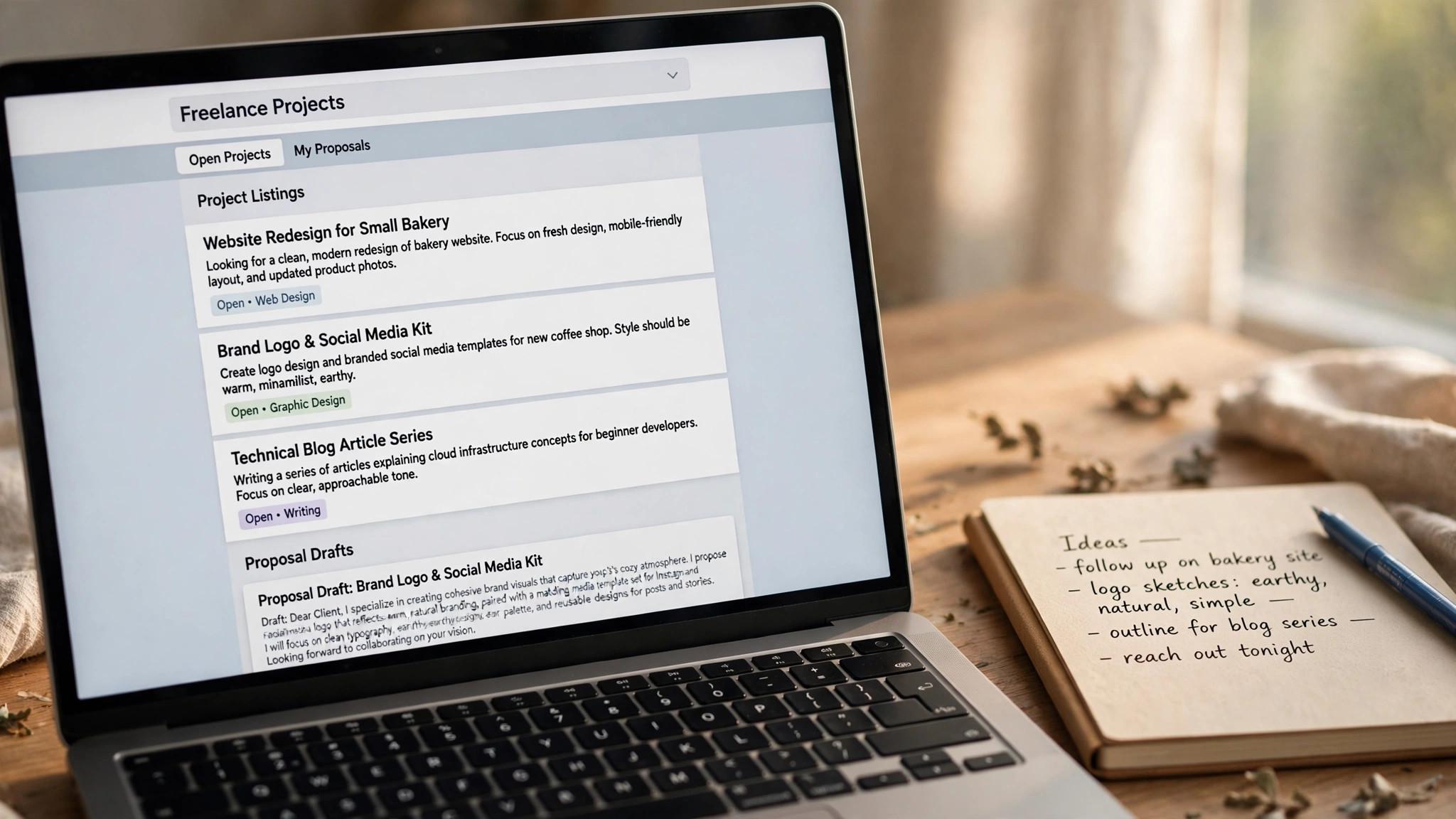
The second number is the cost of finding clients outside a marketplace. Apollo starts at $49 a month for its lead database and outreach, Instantly starts at $37 a month for cold email campaigns, and SolidGigs costs $29 a month for curated leads. The best AI tools for freelancers finding clients include both kinds, because a marketplace gives you work today and outreach gives you work that no one else is bidding on.

The third number is the cost of running the business after the win. HoneyBook starts from $19 a month and Bonsai from $16 a month, and both cover proposals, contracts, invoicing and payments. A freelancer who wins work but loses hours to admin is paying a hidden tax, and a tool that automates the paperwork pays for itself in the first month.
1. Upwork. Best for steady freelance work
Upwork is the largest freelance marketplace, and it is the best pick for steady work. Clients post jobs across every skill, from writing and design to development and data, and freelancers bid with proposals. The volume is unmatched, and the escrow payment system protects both sides. It is the first platform most freelancers join, and the one most return to.
Pricing is free to join, with a 10 percent service fee on your earnings. Connects, the credits you spend to bid on jobs, cost extra, though new accounts receive free Connects to start. Check the current Connects pricing at checkout, because it changes often.
2. Fiverr. Best for packaged services
Fiverr flips the marketplace model. Instead of bidding on jobs, you package your service as a gig with a fixed price, and buyers come to you. It suits freelancers with a clear, repeatable service, such as logo design, voiceover, or a specific deliverable, and it rewards sellers who build a strong profile and gather reviews.
Pricing is free to join, with a 20 percent commission on your sales. Fiverr also offers paid seller tools and promotion, but the core marketplace is free to list on.
3. Toptal. Best for high-paying expert work
Toptal is the premium marketplace, and it accepts only the top 3 percent of applicants after a rigorous screening process. The clients are larger companies with bigger budgets, the rates are higher, and the work is longer term. It is the best pick for an experienced freelancer who can pass the screening and wants fewer, better clients.
Pricing is free for freelancers, with no commission charged to you. Clients pay Toptal, and Toptal pays you, so the rate you agree is the rate you receive.
4. Contra. Best for keeping what you earn
Contra is the marketplace that charges no commission. You build a portfolio, clients hire you, and you keep everything you earn. It also includes contracts, invoicing and payments, so the whole job runs inside one tool. It is the best pick for a freelancer who wants the marketplace without the marketplace tax.
Pricing is free, with 0 percent commission on client work. Contra earns money from premium features and employer tools, not from your earnings.
5. Freelancer.com. Best for contests and projects
Freelancer.com is the volume marketplace, with the largest number of posted projects here. It covers every skill and every budget, and it runs contests where freelancers submit work and the client picks a winner. It suits a freelancer who wants maximum choice and is comfortable competing on price.
Pricing is free to join, with memberships from $0.99 a month adding more bids and features. The platform charges fees on earnings, so check the current fee structure at checkout.
6. PeoplePerHour. Best for UK and European clients
PeoplePerHour is the marketplace with the strongest UK and European client base. It offers hourly and project work, with a focus on design, writing, marketing and development. It suits a freelancer who wants European clients and is comfortable with the platform’s proposal system.
Pricing is free to join, with fees charged on your earnings. Check the current fee structure at checkout, because it varies by project type and membership.
7. Guru. Best for long-term client work
Guru is the marketplace built for long-term relationships. Its SafePay escrow system protects payments, its work rooms organise ongoing projects, and its client base leans towards businesses that hire the same freelancer repeatedly. It suits a freelancer who wants repeat clients, not one-off gigs.
Pricing is free to join, with memberships from free adding more bids and lower fees. Check the current fee structure at checkout, because it varies by membership level.
8. Malt. Best for European freelance work
Malt is the leading freelance marketplace in France and across Europe, with a strong client base of startups and large companies. It suits a freelancer based in Europe, or one who wants European clients, and it offers contracts, invoicing and payments inside the platform.
Pricing is free for freelancers, with no commission charged to you. Malt earns money from clients, not from freelancers.
9. SolidGigs. Best for curated freelance leads
SolidGigs is the curated lead service. Instead of a marketplace you bid on, it sends you hand-picked freelance leads every week, filtered to your skills, so you spend your time pitching, not searching. It suits a freelancer who knows their niche and wants a steady flow of relevant leads.
Pricing is $29 a month, with no free tier beyond browsing. The price is low for a lead service, and one won project covers many months of the subscription.
10. We Work Remotely. Best for remote contract roles
We Work Remotely is the remote job board that also lists contract and freelance roles. Employers pay around $299 per post, which keeps the quality up, and the categories run from engineering and design to marketing and support. It suits a freelancer who wants remote contract work with real companies.
Pricing is free for job seekers to browse and apply. A Pro plan costs $14.95 a month on a 12-month commitment and adds saved searches and alerts.
11. FlexJobs. Best for screened freelance listings
FlexJobs screens every listing before it appears, excluding scams, junk listings and commission-only roles. Its freelance section covers remote and flexible contract work, and its career resources help you pitch and negotiate. It suits a freelancer who wants screened listings and is willing to pay for them.
Pricing starts with a 14-day trial at $2.95, which renews at $23.95 every four weeks unless you cancel. The annual plan costs $71.40 upfront, which works out to $5.95 a month.
12. HoneyBook. Best for managing clients after the win
HoneyBook is the client management tool, not a marketplace. It covers proposals, contracts, invoicing, payments and scheduling, so the admin after the win takes minutes instead of hours. It suits a freelancer who already finds clients and needs the business side to run smoothly.
Pricing starts with a free trial, and plans start from $19 a month. Check the current figures at checkout, because plan names and prices change often.
13. Bonsai. Best for proposals, contracts, invoicing
Bonsai is the all-in-one freelance suite. It covers proposals, contracts, time tracking, invoicing and payments, with templates for each, so a freelancer can run the whole business from one login. It suits a freelancer who wants the admin handled and the paperwork professional.
Pricing starts with a free trial, and plans start from $16 a month. Check the current figures at checkout, because plan names and prices change often.
14. Apollo. Best for finding client contact details
Apollo is the lead database and outreach tool. It lets you find companies that need your service, get the right contact details, and send outreach sequences, all from one platform. It suits a freelancer who wants to find clients directly instead of competing on a marketplace.
Pricing starts with a free tier, and Basic costs $49 a month per user. Check the current figures at checkout, because plan names and limits change often.
15. Instantly. Best for cold email outreach at scale
Instantly is the cold email tool for freelancers who want to reach many prospects at once. It automates outreach campaigns, tracks replies, and helps you manage deliverability, so your emails land in inboxes instead of spam. It suits a freelancer with a clear niche and a list of target clients.
Pricing starts with a free trial, and plans start from $37 a month. Check the current figures at checkout, because plan names and prices change often.
How to Win Work Without Racing to the Bottom
The fastest way to lose money in freelancing is to compete on price. A client who hires the cheapest freelancer will replace you with a cheaper one next month, and a race to the bottom has no winner. The freelancers who earn well compete on fit, not price, by showing the client that they understand the problem and have solved it before. Start with a niche. A freelancer who does everything for everyone is invisible, and a freelancer who does one thing for one kind of client is memorable. Pick the service you do best, pick the client who needs it most, and build your profile, your portfolio and your proposals around that pair. A niche makes every other tool in this guide work better, because the leads are more relevant and the proposals are more convincing. Then build proof. A portfolio with three strong case studies beats a profile with thirty generic samples, and a case study that names the result beats one that only shows the work. Write each case study as a story, with the problem, what you did, and the result in numbers. Clients hire proof, not promises.
Freelance Pricing Mistakes That Lose Money
The first mistake is pricing by the hour when the client buys a result. An hourly rate punishes efficiency, because the faster you work, the less you earn, and a project price rewards it, because the client pays for the outcome. Price the project, not the hours, and the faster you get, the more you earn. The second mistake is forgetting the platform fee. A 20 percent commission on Fiverr means a $1,000 project pays $800, and a 10 percent fee on Upwork means it pays $900. Set your rates to cover the fee, or use a zero-commission platform like Contra for direct clients, because a fee you did not budget for comes out of your profit. The third mistake is competing on price. A client who hires the cheapest freelancer will replace you with a cheaper one next month, and a race to the bottom has no winner. Compete on fit, by showing the client that you understand the problem and have solved it before, and charge for the value, not for the hours. The fourth mistake is not raising rates. A freelancer who charges the same rate for three years is earning less every year, because the market moves and the skills improve. Raise your rates by 10 percent every year, and by 20 percent when you add a skill or a result that the market values. Clients who value you will pay, and clients who will not are not your clients.
How to Write a Proposal That Wins
Lead with the problem, not with yourself. A proposal that opens with I have five years of experience is about you, and a proposal that opens with your onboarding flow loses users at step three, and here is how I would fix it is about the client. The client hires the freelancer who understands the problem, not the one with the longest biography. Show proof, not promises. A proposal that links to a case study with a result, such as a landing page that raised conversions by 30 percent, beats a proposal that says I am an expert, because the proof is verifiable and the promise is not. One strong case study beats ten claims, and the link should be in the first three sentences. Keep it short. A proposal that takes five minutes to read will not be read, and a proposal that takes one minute will. Three short paragraphs, the problem, the proof, and the next step, are enough for most projects, and the next step should be a question, not a demand, because a question starts a conversation. End with a clear next step. A proposal that says let me know if you are interested ends the conversation, and one that says can we talk on Tuesday at 10am to discuss the scope starts it. The freelancer who proposes the next step controls the process, and the one who waits for the client to act waits a long time.
Building Repeat Clients, Not One-Off Gigs
Repeat clients are the foundation of a freelance business, because they pay more, brief better, and refer others. A freelancer with three regular clients earns more steadily than one with thirty one-off gigs, and the work is better, because the client trusts you and the brief is clearer. Build for repeats, not for volume. Deliver early and communicate often. A freelancer who delivers a day early and sends a short update every two days is remembered, and one who disappears for a week and delivers late is not rehired. Communication is the product as much as the work, and a client who feels informed is a client who returns. Ask for the next project before the current one ends. A simple question, such as what else do you need help with next month, turns a one-off gig into a relationship, and a freelancer who asks is a freelancer who gets the work. Most clients have more work than they admit, and they give it to the freelancer who asks first. Raise your rates with repeat clients, slowly and honestly. A 10 percent rise after a year, explained by the results you delivered, is fair, and a client who values the work will pay it. A freelancer who never raises rates with a repeat client is subsidising the client, and the subsidy grows every year.
How to Price Freelance Work
Price the project, not the hours, because an hourly rate punishes efficiency and a project price rewards it. A client who buys a result cares about the outcome, not the time, and a freelancer who prices the result earns more as they get faster. Quote a fixed price for a defined deliverable, with a clear scope, and the client will pay for the value, not for the clock. Calculate your rate from your costs, not from the market alone. Add up the income you need, the taxes, the platform fees, the tools, and the unpaid time for admin and marketing, then divide by the billable hours you can realistically work. A rate that covers the costs is a business, and one that does not is a hobby that loses money. Charge more for rush work, for difficult clients, and for work outside your niche, because the premium compensates for the cost. A rush fee of 25 percent, a difficult-client premium, and a clear scope with a change fee all protect your time, and a client who respects the premium is a client worth keeping. Raise your rates every year, by 10 percent, and by 20 percent when you add a skill or a result the market values. A freelancer who charges the same rate for three years is earning less every year, because the market moves and the skills improve. Clients who value you will pay, and clients who will not are not your clients.
Freelance Contracts Every Beginner Needs
A contract protects both sides, and a freelancer without one is exposed. The contract should name the scope, the deliverable, the price, the payment schedule, the revision limit, and the kill fee, because each one prevents a dispute that costs more than the contract ever will. A one-page contract is enough for most projects, and a template from Bonsai or HoneyBook is a good start. Take a deposit before you start, usually 50 percent, because a client who pays a deposit is committed, and one who will not is a risk. The deposit covers your time if the project is cancelled, and it signals that the client values the work. A freelancer who starts without a deposit is lending the client money, and the loan rarely gets repaid. Limit revisions in writing, usually two rounds, because unlimited revisions mean unlimited work for a fixed price. A client who asks for a third round should pay for it, and the contract should say so, because the revision limit is what keeps a project profitable. State the limit upfront, and enforce it politely, because a boundary set early is easier than one set late. Own the work until you are paid. The contract should state that the intellectual property transfers on final payment, not on delivery, so a client who does not pay does not own the work. The clause costs nothing to add, and it is the strongest protection a freelancer has, because it makes non-payment pointless for the client.
How to Choose the Best AI Tools for Freelancers Finding Clients
Step 1. Pick one marketplace and one outreach tool. A marketplace like Upwork or Contra gives you work today, and an outreach tool like Apollo or Instantly gives you work that no one else is bidding on. Two channels checked daily beat five channels checked rarely, because the best clients hire fast.
Step 2. Price the commission before you bid. A 20 percent commission on Fiverr means your $1,000 project pays $800, and a 10 percent fee on Upwork means it pays $900. Set your rates to cover the fee, or use a zero-commission platform like Contra for direct clients. Never let the fee surprise you after the work is done.
Step 3. Write proposals that name the problem. A proposal that says you can do the job gets ignored, and a proposal that names the client’s problem, shows you solved it before, and states the result gets read. Keep it short, lead with the proof, and ask one question that shows you read the brief.
Step 4. Follow up once, then move on. A polite follow-up after three days doubles your reply rate, and a second follow-up after a week closes the loop. After that, move on, because chasing a silent client wastes the time you could spend pitching a new one. Track every pitch in a simple sheet and review it weekly.
Step 5. Automate the admin, not the relationship. Use HoneyBook or Bonsai for contracts, invoices and payments, so the paperwork takes minutes. But write every proposal and every client message yourself, because the relationship is the product, and no tool can build trust for you.

Related Guides
- Best AI Tools for Salary Negotiation
- Best Free AI Resume Builders for Students
- Best Job Matching Platforms for Remote Work
Frequently Asked Questions
What is the best freelance platform for beginners?
Upwork is the best starting point for most beginners, because it has the largest client pool and the escrow system protects payments. Fiverr is the best pick if you have a clear packaged service, and Contra is the best pick if you want to keep everything you earn. Start with one platform and learn it well before adding a second. That is the value of best ai tools for freelancers finding clients. A tool that fits the job beats a tool that promises everything.
How much do freelance platforms charge?
Upwork charges a 10 percent service fee on your earnings, Fiverr charges 20 percent, and Contra charges nothing. Freelancer.com, PeoplePerHour and Guru charge fees that vary by project and membership, so check the current structure before you bid. Add the fee to your rate, so it never comes out of your profit. The test for any best ai tools for freelancers finding clients is simple. Does it fix the step where your search breaks down?
How do freelancers find clients without a marketplace?
Use a lead tool like Apollo to find companies that need your service, then send a short, specific outreach email with Instantly or by hand. A niche, a strong portfolio and one good case study matter more than volume, and a personal email that names the client’s problem beats a hundred generic pitches.
Should I use AI to write my freelance proposals?
Yes, for the first draft, and no, for the final version. AI can structure a proposal and suggest phrasing, but a proposal that sounds generated gets ignored. Edit every draft until it names the client’s problem, shows your proof, and sounds like you wrote it for them specifically.
How many clients do I need as a freelancer?
Three to five regular clients is enough for most freelancers, because it spreads the risk without spreading you thin. One client is a job, and ten clients is chaos. Build to three steady relationships, then grow slowly, and always keep one outreach channel warm so a lost client never leaves you with nothing.
The Bottom Line
Upwork is the best pick for steady freelance work, Contra is the best pick for keeping what you earn, and Fiverr is the best pick for packaged services. The best AI tools for freelancers finding clients are the ones that put you in front of clients who are ready to hire, so pick one marketplace and one outreach tool, write proposals that name the problem, and keep the pipeline full. Start with the free tier, and let best ai tools for freelancers finding clients prove itself on one real role before you pay.
Start today with one platform and one outreach list. Build a portfolio with three strong case studies, set your rates to cover the fee, and send five pitches this week. Clients hire the freelancer they find first and trust fastest, and the right tools make that happen. Used well, best ai tools for freelancers finding clients saves hours every week, and the time saved is the real return on the price.