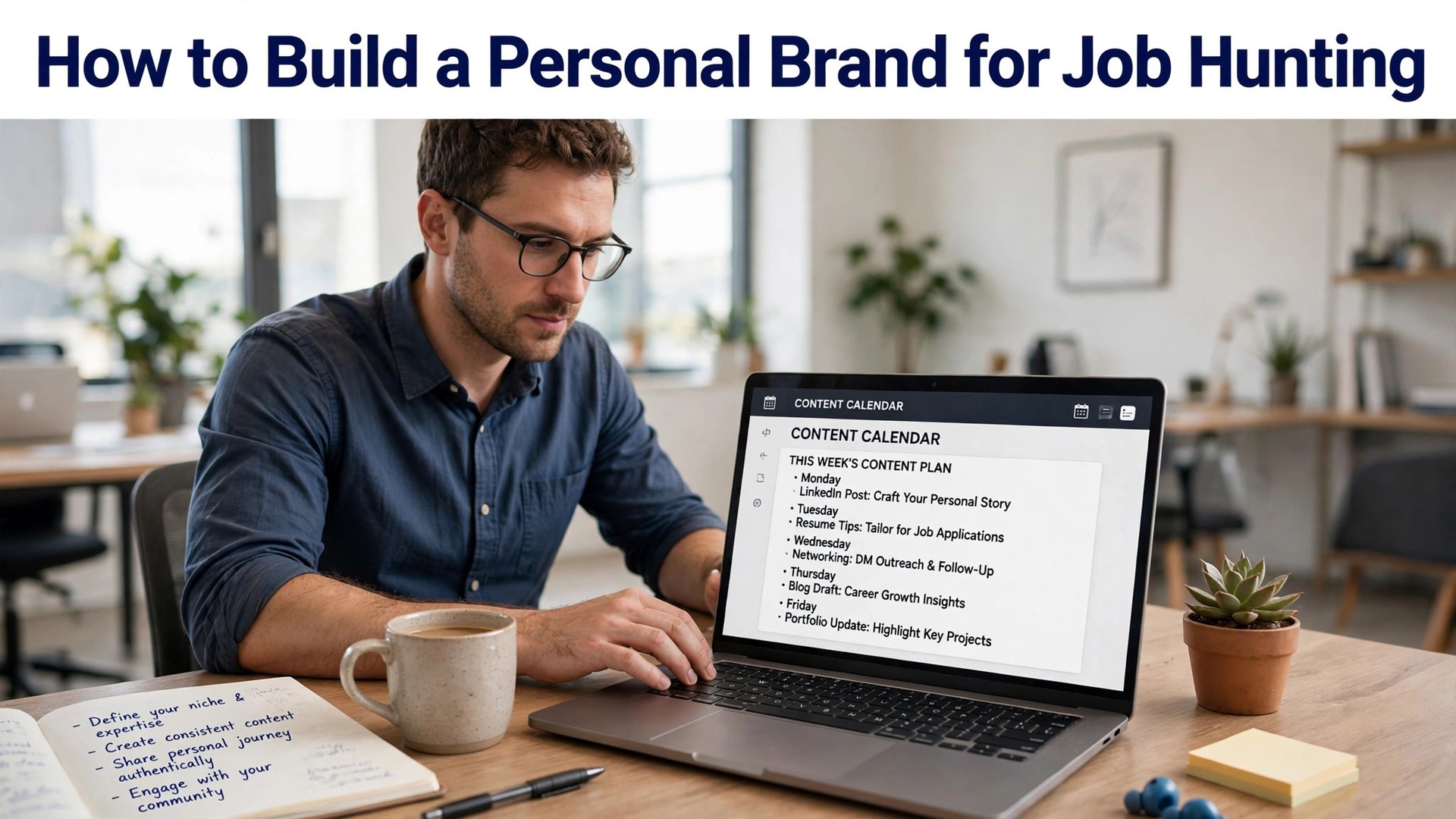
Recruiters remember people, not resumes. How to build a personal brand for job hunting is a system for making recruiters remember you, by showing your work, sharing what you know, and proving your value in public, so the interview starts with a hiring manager who already trusts you.
A personal brand is not a logo or a slogan. It is the reputation you build by doing good work and talking about it clearly, consistently, and honestly. This guide shows you the playbook, from the niche to the weekly habit, so your brand works while you sleep.
Quick jump
- Quick Answer. How to Build a Personal Brand for Job Hunting in 30 Seconds
- Pick a Niche Where You Can Be Useful
- Prove the Niche with Real Work
- Post Twice a Week About Real Work
- Engage with the People in Your Field
- Turn the Brand into Interviews
- Content Ideas for a Whole Month
- How to Measure Your Brand
- Personal Branding Mistakes to Avoid
- Using Video and Short-Form Content
- Keeping the Brand Alive After You Are Hired
- Your 12-Week Personal Brand Plan
- Related Guides
- Frequently Asked Questions
- The Bottom Line
Quick Answer. How to Build a Personal Brand for Job Hunting in 30 Seconds
If you want the short version, here it is. Pick a niche where you can be useful, fix your LinkedIn profile so it proves the niche, post twice a week about real work and real lessons, build a small portfolio that shows the proof, and engage with the people in your field every day. The brand takes three months to build and a lifetime to keep, and it starts with one honest post.
How to build a personal brand for job hunting comes down to four moves, which are pick a niche, prove it, post about it, and connect with the people who care. The rest of this guide shows you each move in detail, with the tools and the weekly plan.
The playbook below assumes you have work worth talking about, even if it is small. If you do not, start with section one and build the proof first, because a brand without proof is just noise, and a brand with proof is a reputation.
| Week | Focus | Key action | Where |
|---|---|---|---|
| 1-2 | Pick a niche | Choose one topic, fix profile | |
| 3-4 | Build proof | Finish one project, publish it | Portfolio, GitHub |
| 5-6 | Start posting | Post twice a week, comment daily | |
| 7-8 | Grow reach | Engage with five people a day | LinkedIn, communities |
| 9-10 | Show results | Share a case study with numbers | LinkedIn, portfolio |
| 11-12 | Convert | Message hiring managers, apply | LinkedIn, job boards |
Pick a Niche Where You Can Be Useful
A personal brand needs a niche, because a freelancer who does everything for everyone is invisible, and a job seeker who talks about everything is forgettable. Pick one topic where you can be useful, such as data visualisation for marketers, onboarding for SaaS, or accessibility for designers, and build your brand around that pair, the topic and the audience who needs it.
The niche should be narrow enough to be memorable and broad enough to sustain a year of posts. A niche that is too broad, such as marketing, gives you nothing to say that has not been said, and a niche that is too narrow, such as one tool, runs out of material in a month. Aim for a topic you can talk about for a year without repeating yourself, and an audience that is large enough to include hiring managers.
Test the niche before you commit. Write five post ideas, and see whether each one teaches something useful, whether you can write it from real experience, and whether the audience would care. If three of the five fail the test, the niche is wrong, and a narrower or broader version will work better. A niche that passes the test is a brand that can last.
Name the niche in your headline, so a recruiter who finds you knows what you do in five seconds. A headline that names the role, the specialty and one proof point, such as a result you delivered, works harder than a clever headline, because it tells the reader exactly who you are and why they should care.
Do not copy someone else niche. A brand built on imitation sounds like the original and reads as a copy, and recruiters can tell. Build the niche from your own work, your own lessons, and your own voice, because authenticity is the only advantage a new brand has over an established one.
Prove the Niche with Real Work
A brand without proof is just noise, and a brand with proof is a reputation. Build one project that demonstrates the niche, solve a real problem for a real user, even a small one, and publish the work where hiring managers will see it. A data analyst who builds a dashboard from public data, a designer who redesigns a real onboarding flow, and a writer who publishes a case study all have proof that no post can match.
Write each project as a case study, with the problem, what you did, and the result in numbers. A case study that says you built a dashboard is forgettable, and one that says you built a dashboard that cut reporting time from four hours to twenty minutes is memorable. Numbers make the proof believable, and a result makes it hireable.
Put the proof on your profile, in the Featured section, so a recruiter who likes the headline can see the work in one click. Link to the portfolio, the project, or the post, and keep it current, because a Featured section with a two-year-old project tells the reader you stopped proving yourself.
Get feedback on the work from people in the field, before you publish it widely. A ten-minute review from a practitioner catches the mistakes a course never mentions, and it builds a relationship with someone who might refer you. Ask for the review, listen to it, and fix what they flag.
Do not wait for a job to prove yourself. A job seeker who waits for permission to do the work will wait forever, and one who builds proof first gets hired faster. The projects are the job, before the job exists, and they are the strongest part of a personal brand.
Post Twice a Week About Real Work
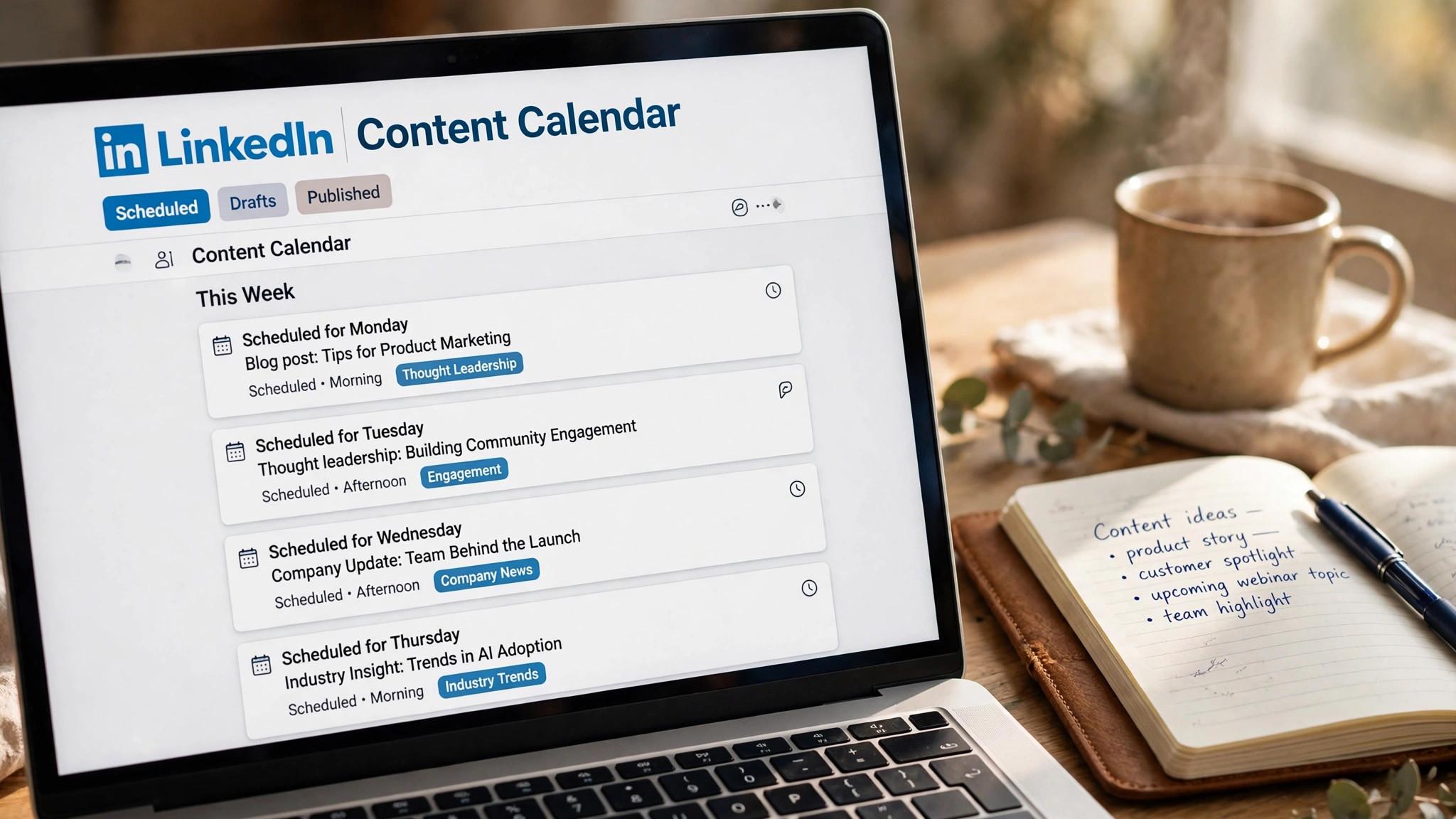
Post twice a week about real work and real lessons, not about motivation or generic advice. A post that explains how you solved a problem, what you learned from a mistake, or what surprised you about a project teaches something, and a post that says work hard and stay positive teaches nothing. The audience follows people who teach, not people who preach.
Use a simple structure for every post. Open with the lesson or the result, explain what happened in three short paragraphs, and close with a question or a takeaway. Keep it under 200 words, because LinkedIn readers skim, and a short post that teaches one thing beats a long post that teaches nothing.
Write in your own voice, and write like a person, not a brand. A post that sounds like you, with your phrasing and your humour, is memorable, and a post that sounds like a template is forgettable. Read every post aloud before you publish it, and cut any sentence you would never say in conversation.
Use a tool to help with the writing if you need it. Taplio helps you write and schedule posts, with plans from $49 a month, and AuthoredUp helps you draft hooks and analyse performance, with plans from $19.95 a month. The tool helps, but the habit matters more, because a tool cannot post for you and a schedule you do not keep is just a plan.
Measure what works. After a month, check which posts got seen, which ones got comments, and which ones brought profile views. Do more of what worked, and less of what did not. A brand that improves beats a brand that repeats, and the data tells you what to do more of.
Engage with the People in Your Field
A personal brand is not a broadcast, it is a conversation, and the engagement matters as much as the posts. Comment on five posts a day in your field, with something useful, not just great post, and reply to every comment on your own posts. The people who engage with you are the people who will remember you, refer you, and hire you.
Follow the hiring managers, the practitioners, and the companies in your niche, and learn what they care about before you message them. A message that references their work, asks a real question, and offers something useful gets read, and a message that asks for a job gets ignored. The relationship comes first, and the opportunity follows.
Join one community in your field, and be useful there. Answer questions, share resources, and help people who are earlier in the journey than you are. A community remembers the people who help, and it forgets the people who only promote themselves. Generosity is the fastest way to build a reputation, and it costs nothing.
Ask for recommendations, and give them. A recommendation from a colleague, a client, or a manager carries more weight than any self-description, and a profile with two or three strong recommendations is believable in a way a profile without them is not. Write one for someone else first, and ask in return, because generosity earns reciprocity.
Do not buy followers, and do not automate engagement. A bought audience never engages, never refers, and never hires, and an automated comment is obvious to everyone who reads it. A small, real audience that knows your work is worth more than a large, fake one that ignores you.

Turn the Brand into Interviews
A personal brand pays off when it turns into interviews, and the conversion needs a plan. After three months of posting, message five hiring managers a week in your niche, with a short note that references their work, names your proof, and asks one question about a role. The message takes two minutes, and it works because the hiring manager can check your profile and see the proof before they reply.
Apply to roles with a profile that proves the brand, not just a resume. Link to the portfolio, the case studies, and the posts that demonstrate the niche, so the application carries the brand with it. A hiring manager who sees the brand before the interview starts the conversation already trusting you, and that trust changes the result.
Track what the brand brings. Note which posts brought profile views, which views turned into messages, and which messages turned into interviews. A brand that brings interviews is working, and a brand that brings likes but no interviews needs a different call to action. The metric that matters is interviews, not impressions.
Keep the brand alive after the hire. A personal brand that stops when the job starts fades fast, and a brand that continues grows into a career asset. Post once a week about the new work, share what you learn, and keep the network warm, because the next opportunity will come from the brand you keep, not the one you abandoned.
Be patient. A personal brand takes three months to show results, and a year to pay off fully, and the job seekers who quit after three weeks never see the return. Post twice a week, engage daily, and trust the compound effect, because a reputation builds slowly and lasts longer than any single application.
Content Ideas for a Whole Month
Week one is for the lesson. Write about a problem you solved, a mistake you made, or a surprise you found in your work, with the lesson in the first sentence and the story in three short paragraphs. A post that teaches something gets comments, and a post that preaches gets likes, and comments are what the algorithm rewards.
Week two is for the proof. Share a project, a result, or a case study, with numbers, and explain what you did and what happened. A post with a result is believable, and a post without one is a claim, and the audience follows people who prove, not people who promise.
Week three is for the question. Ask your audience a real question about the field, such as how they solve a problem you face, and reply to every answer. A question post builds conversation, and a conversation builds a community, and a community remembers the person who asked.
Week four is for the curation. Share something useful you found, with your own take on why it matters, and credit the source. A curator who adds a view is more valuable than a creator who repeats, and the habit of sharing useful things builds a reputation for judgment, which is what hiring managers want.
How to Measure Your Brand
Measure profile views, not likes, because a like is cheap and a profile view is intent. A post that brings ten profile views from hiring managers is worth more than a post that brings a hundred likes from strangers, and the profile view is the metric that predicts interviews. Check the views weekly, and note which posts brought them.
Measure messages, not followers, because a follower is a number and a message is a conversation. A brand that brings one message a week from a recruiter is working, and a brand that brings a thousand followers and no messages is not. The message is the conversion, and the follower is the vanity metric.
Measure interviews, not impressions, because an impression is a view and an interview is a result. A brand that brings interviews is working, and a brand that brings impressions but no interviews needs a different call to action. Track which posts turned into interviews, and do more of what worked.
Review monthly, and change one thing at a time. A brand that improves beats a brand that repeats, and the data tells you what to change. If the posts bring views but no messages, add a call to action. If the messages bring no interviews, add proof. The measurement is the management, and a brand that is measured is a brand that grows.
Personal Branding Mistakes to Avoid
The first mistake is posting about everything. A profile that posts about marketing, cooking, travel, and politics builds an audience that cares about nothing, because the audience cannot tell what you do. Pick one niche, post about it twice a week, and let the audience find you, because a focused brand is a memorable brand.
The second mistake is copying someone else. A brand built on imitation sounds like the original and reads as a copy, and recruiters can tell. Build the brand from your own work, your own lessons, and your own voice, because authenticity is the only advantage a new brand has over an established one, and a copy has none.
The third mistake is selling instead of teaching. A post that says hire me is forgettable, and one that teaches something is memorable, because the audience follows people who help, not people who ask. Teach first, and the hiring will follow, because the teaching is the proof, and the proof is the pitch.
The fourth mistake is quitting after three weeks. A personal brand takes three months to show results, and a year to pay off fully, and the job seekers who quit after three weeks never see the return. Post twice a week, engage daily, and trust the compound effect, because a reputation builds slowly and lasts longer than any single application.
Using Video and Short-Form Content
Video is the fastest way to build trust, because a hiring manager who has seen your face and heard your voice feels like they know you, and a profile with video stands out in a feed of text. Record a short video, under two minutes, about a lesson you learned or a project you built, and post it weekly, because the consistency matters more than the production quality.
Keep the video simple. A phone, good light, and a quiet room are enough, and a script that is memorised word for word sounds robotic, while notes with three bullet points sound natural. Talk to the camera like it is one person, because it is, and the viewer who feels spoken to is the viewer who remembers you.
Repurpose the video into text, because a video post and a text post reach different audiences, and the same lesson can serve both. Write the three key points as a text post the next day, link to the video, and the two posts together reach twice the audience for the same work. Repurposing is efficient, and efficiency is what sustains a brand.
Measure what works, and do more of it. A video that brings profile views from hiring managers is worth repeating, and one that brings likes from strangers is not, and the metric that matters is interviews, not impressions. Review monthly, and change one thing at a time, because a brand that improves beats one that repeats.
Keeping the Brand Alive After You Are Hired
A personal brand that stops when the job starts fades fast, and one that continues grows into a career asset. Post once a week about the new work, share what you learn, and keep the network warm, because the next opportunity will come from the brand you keep, not the one you abandoned, and the brand is a career, not a job search trick.
Shift the content from job hunting to the work itself, because the audience that followed you for the search will stay for the learning, and a brand that teaches is a brand that lasts. Share the projects, the lessons, and the mistakes, with the same honesty you used during the search, because the honesty is what built the trust.
Keep the network warm, with a comment a day and a message a week, because a network that is maintained is a network that refers, and one that is ignored forgets you. The maintenance takes ten minutes a day, and it is the cheapest career insurance there is, because the next role will come from someone you already know.
Review the brand yearly, and update the niche, the headline, and the Featured section, because the work changes and the brand should change with it. A brand that grows with your career is an asset, and one that stays still is a snapshot of who you were, not who you are. The review takes an hour a year, and it keeps the brand working while you sleep.
Your 12-Week Personal Brand Plan
Weeks 1-2. Pick the niche and fix the profile. Choose one topic where you can be useful, test five post ideas, and rewrite your headline, summary and Featured section around the niche. The profile should prove the niche in five seconds.
Weeks 3-6. Build proof and start posting. Finish one project, publish it as a case study with numbers, and post twice a week about real work and real lessons. Comment on five posts a day in your field, and join one community.
Weeks 7-10. Grow reach and show results. Engage daily, share a case study with numbers, and ask for two recommendations. Measure which posts work, and do more of what worked.
Weeks 11-12. Convert the brand into interviews. Message five hiring managers a week, apply with a profile that proves the brand, and track which posts turned into interviews. Keep posting after the hire, because the brand is a career asset, not a job search trick.
Related Guides
- How to Make a Resume That Passes ATS
- How to Optimize Your LinkedIn Profile for Recruiters
- How to Prepare for an AI Job Interview
Frequently Asked Questions
How long does it take to build a personal brand for job hunting?
Three months to show results, and a year to pay off fully. A job seeker who posts twice a week, engages daily, and builds proof will see profile views and messages within a month, and interviews within three months. The brand builds slowly and lasts longer than any single application, so patience is part of the plan. That is the value of how to build a personal brand for job hunting. A tool that fits the job beats a tool that promises everything.
Do I need a large following to get hired through personal branding?
No. A small, real audience in your niche is worth more than a large, fake one. Hiring managers care about proof and relevance, not follower counts, and a profile with three strong case studies and a hundred engaged followers in the field will outperform a profile with ten thousand silent followers every time. The test for any how to build a personal brand for job hunting is simple. Does it fix the step where your search breaks down?
What should I post on LinkedIn as a job seeker?
Post about real work and real lessons, not about motivation or generic advice. A post that explains how you solved a problem, what you learned from a mistake, or what surprised you about a project teaches something, and a post that says work hard and stay positive teaches nothing. The audience follows people who teach, not people who preach. The right pick among how to build a personal brand for job hunting is the one you will actually use every week, not the one with the longest feature list.
Should I post on LinkedIn if I am currently employed?
Yes, but carefully. Post about your work and your learning, not about your job search, and do not set the open-to-work badge for everyone. Keep the posts professional, avoid criticising your employer, and build the brand quietly until you are ready to search. A brand built while employed is stronger than one built in a rush.
Can personal branding really get me a job?
Yes, and it works by making recruiters remember you before the interview. A hiring manager who has read your posts, seen your projects, and trusts your expertise starts the interview already convinced, and that trust changes the result. The brand does not replace the resume, it makes the resume believable, and the combination is what gets hired.
How do I build a personal brand with no audience?
Start with the work, not the audience. Build one project, write one honest post about it, and share it with five people in your field. An audience of five who care is worth more than an audience of five thousand who do not, and the audience grows one real connection at a time. The brand builds slowly, and the first five followers matter more than the next five hundred.
Should my personal brand be professional or personal?
Both, with the professional first. A brand that is only professional is boring, and one that is only personal is irrelevant. Share the work, the lessons, and the occasional personal detail that explains why you care, and keep the ratio at four professional posts to one personal one. The audience follows the work, and stays for the person.
How do I start a personal brand with no experience?
Start with learning in public. Share what you are studying, what you built, and what surprised you, because a beginner who learns openly is more interesting than an expert who lectures. A student who posts about a project, a course, or a lesson is building a brand, and the audience will grow with the work, one honest post at a time.
Should I use my real name for my personal brand?
Yes, because a personal brand is a reputation, and a reputation needs a name. A real name builds trust, a pseudonym builds distance, and a hiring manager who cannot find you by name cannot hire you. Use your real name, a clear photo, and a consistent handle across platforms, so the brand is findable everywhere. That is the value of how to build a personal brand for job hunting. A tool that fits the job beats a tool that promises everything.
The Bottom Line
Pick a niche where you can be useful, prove it with real work, post twice a week about real lessons, and engage with the people in your field every day. How to build a personal brand for job hunting is a system for making recruiters remember you, and the brand takes three months to build and a lifetime to keep. Start with the free tier, and let how to build a personal brand for job hunting prove itself on one real role before you pay.
Write one honest post this week, about a problem you solved or a lesson you learned. Post it, reply to the comments, and do it again next week. A reputation builds slowly, one post at a time, and the recruiters who remember you are the ones who will hire you. Used well, how to build a personal brand for job hunting saves hours every week, and the time saved is the real return on the price.
1 thought on “How to Build a Personal Brand for Job Hunting”