Among the Top 10 AI Search Optimization Tools, Profound leads for most brands, because it tracks mentions, citations and sentiment across ChatGPT, Perplexity and Gemini in one dashboard, with prompt level data a team can act on. A brand that never appears in AI answers loses the click before the search results page even loads. The tools below track that visibility, and the cheapest useful start is Otterly.AI at 29 dollars a month.
AI answers changed the job. A buyer now asks a chatbot for a shortlist and clicks the two or three brands it names, so ranking tenth on Google matters less than being cited in the answer. That shift is why tracking changed too, and why a dashboard that only counts blue link positions now misses half the picture.
This guide compares ten platforms on engines covered, prompt limits, price and who each one fits. Every price comes from the vendor own page or a published review of it, and the pick at the end is the one a small team can start this week without a sales call.
Quick jump
- The 10 Tools at a Glance
- Best Pick by Job
- Which Top 10 AI Search Optimization Tools Actually Move the Needle in 2026?
- How to Choose the Right AI Search Tool for Your Brand
- The 10 Tools in Detail
- Profound vs Otterly.AI, Which One Fits a Small Brand?
- Can One Tool Cover AI Tracking and Classic SEO at Once?
- What Does AI Search Tracking Cost in 2026?
- Frequently Asked Questions
- The Final Word on AI Search Optimization Tools
The 10 Tools at a Glance
| Tool | Main job | Best for | Starting price |
|---|---|---|---|
| Profound | AI visibility analytics platform | brands and agencies that need deep ai answer data | from $99/mo |
| Otterly.AI | AI visibility tracker | small brands taking a first step into ai search | from $29/mo |
| Peec AI | Prompt level visibility tracker | agencies that must prove ai visibility to clients | from $95/mo |
| Scrunch AI | AI search monitoring and optimisation | mid market teams that want monitoring plus fixes | from $300/mo |
| Athena HQ | AI visibility platform | teams that want to test ai tracking free before committing | Free Essential plan; paid pricing not published |
| Goodie | AI visibility platform | brands that want citation level detail | Pricing not published |
| Brandlight | Enterprise AI visibility platform | large brands with a formal ai visibility program | Pricing not published |
| Semrush | All in one SEO suite | teams that want one suite for classic seo and ai search in the same login | from $139.95/mo |
| HubSpot AI Search Grader | Free AI visibility grader | anyone who wants a free first read on ai visibility | Free |
| SE Ranking | SEO suite with AI visibility | budget conscious teams that still want the full workflow | reported from $65/mo |
Best Pick by Job
| Job type | First pick | Second tool | Why this pair works |
|---|---|---|---|
| Cheapest useful start | Otterly.AI | HubSpot AI Search Grader | Otterly.AI tracks daily for 29 dollars, the grader is free for a one off read |
| Deepest AI answer data | Profound | Peec AI | Profound leads on prompt volume, Peec AI leads on screenshot evidence |
| Best inside a full SEO suite | Semrush | SE Ranking | Semrush has the widest suite, SE Ranking costs about half as much |
| Best free first check | HubSpot AI Search Grader | Athena HQ | The grader is instant and free, Athena HQ adds a free tracking tier |
| Best for fixing pages too | Scrunch AI | Goodie | Scrunch AI pairs monitoring with fixes, Goodie leads on citation sources |
The Top 10 AI Search Optimization Tools in this guide split into two groups, and the split matters more than the price. Dedicated trackers such as Profound, Peec AI and Otterly.AI watch AI answers all day, while suites such as Semrush and SE Ranking add AI tracking to a classic SEO login. Before buying another tracker, open the suite the team already pays for and see whether its add-on already does the job.
Which Top 10 AI Search Optimization Tools Actually Move the Needle in 2026?
Prompt coverage moves the needle first. A tracker that watches fifty prompts on one engine will miss the questions buyers actually ask, while a tracker that watches a smaller set across four engines will catch the answer that matters. The test is simple, and it starts with the list of questions a real customer would type, not the list the vendor suggests.
Citation sources come second. A mention without a link is a brand signal, while a mention with a citation is a traffic signal, because the reader can click through to the source page. Tools that show the source page behind each citation let a content team fix the exact page that lost, instead of guessing which page to rewrite.
Refresh speed comes third. Daily checks catch a lost citation within a day, while a weekly rhythm hands a competitor seven days with the answer. Daily numbers suit a market that moves every morning, while a quiet market can settle for a weekly look and put the saving into new pages.
How to Choose the Right AI Search Tool for Your Brand
Start with the engines your buyers use. A business audience lives on ChatGPT and Copilot, a consumer audience leans on Google AI Overviews and Perplexity, and a technical audience splits across Gemini and Claude. A tool that covers the wrong engines will report fine numbers about an audience that never buys, so the engine list decides the shortlist before the price does.
Next, count the prompts honestly. A tracker priced by prompts will look cheap at fifteen prompts and dear at two hundred, so list the real questions first and price the plan against that list. The Top 10 AI Search Optimization Tools all price by prompts or by projects, and the cheapest plan on the page is rarely the cheapest plan for a real prompt list.
Then test the shortlist on live work. Take the ten questions buyers actually ask, run them through each tracker for a week, and note any citation the team had never seen. A tracker that only echoes what the team already knew is dead weight, while one that turns up something new each week earns its keep.
The 10 Tools in Detail
The ten tools below are listed in the order a buyer usually meets them, from dedicated AI trackers to the suites that added AI tracking. Each entry states the starting price, the engines covered and who it fits, so the Top 10 AI Search Optimization Tools can be compared on the same terms.
1. Profound
Across ChatGPT, Perplexity, Gemini and the other answer engines, Profound logs each time a brand is named or cited, then layers on the tone of those answers and how much of the conversation each rival owns. Published pricing starts from $99/mo.
Its volume figures reveal which questions actually drive mentions, a detail most trackers keep hidden. A Monday look at the report catches a slide while it is still small, while a report left unread until the quarter ends usually arrives after the leads have already gone.
Bigger accounts get a price worked out for them, so a small team begins on the agency plan or a trial instead. Built for brands and agencies that want deep data on AI answers.
Profound’s depth only pays off if someone looks at it every week. Fix one weekday for the check, repeat the same prompt list, and log the mention and citation numbers where everyone can see the line move. A tracker that is checked once and forgotten will look fine until a rival takes the answer, while a weekly check shows the slide in time to fix the page. The prompt volume data is only useful when it is read on a schedule, because an unread dashboard is only a monthly bill.
A small brand starts on the agency plan, so the trial question is simple: does the prompt-volume data surface a question the team never thought to ask?
2. Otterly.AI
Otterly.AI watches the four main answer engines for every mention and citation of a brand. Its GEO audit scores the page factors behind the numbers, and tracks whether the tone of those answers is warming or cooling. Published pricing starts from $29/mo.
Otterly.AI is the cheapest starting point for AI tracking here, with a plain dashboard and a free audit preview worth opening. When renewal comes round, the report must reach the manager in a format they already read, because a good dashboard alone never saved a subscription.
The starting plan holds only a small prompt set, and every added engine raises the monthly total. A brand that has never watched AI answers before can start here for 29 dollars a month without a sales call.
At 29 dollars a month the risk is small, but the trial still has to run on real work. Load the ten questions buyers actually ask, watch them across the engines the plan covers, and note whether any answer changes a decision that week. A cheap tracker that only repeats what the team already knew is still money wasted, while one surprise a week is worth the renewal. Mark the trial end date in the calendar first, and count the prompts honestly before the trial ends, because extra engines cost more.
At 29 dollars the risk is a cheap lesson, so the trial week should answer one thing: does the GEO audit name a page fix the team had not already spotted?
3. Peec AI
Peec AI tracks visibility, position and sentiment prompt by prompt, with screenshot evidence of each answer and share of voice against rivals. Published pricing starts from $95/mo.
Its screenshot audit trail settles arguments about what an answer actually said. Turn on notifications in the first week, because a ping the instant a figure shifts beats a screen the agency only opens when it remembers.
The cheapest plan watches three engines, and each additional model raises what the agency pays. Suits agencies that must prove AI visibility to clients.
An agency buys Peec AI to prove visibility to clients, so the client report is the real test. Pull one report with its screenshot evidence during the trial, send it to a client, and ask whether it settles the question without a call. If the client still needs the agency to explain it, the report is not doing its job, however sharp the screenshots look inside the dashboard. Renewal rests with whoever reads the report, so put it in front of a real client before deciding.
Peec AI’s edge is the screenshot trail, so the trial should end with one answer the team can show a client word for word, not a dashboard summary.
4. Scrunch AI
Scrunch AI monitors brand mentions across answer engines, recommends page fixes and serves an AI tuned version of pages to crawlers, and it joined Sitecore in 2026. Published pricing starts from $300/mo.
It pairs monitoring with action, so the same tool that spots a gap helps fix the page. Set aside the same hour every Friday to check five numbers, and the numbers stay trustworthy all quarter.
Its entry price is high for a small brand, and the Sitecore tie shapes the roadmap. Suits mid market teams that want monitoring plus fixes.
Scrunch pairs monitoring with fixes, so the export should show both sides of that job. During the trial, pull a report that lists the gaps it found and the fixes it suggests, open it in a spreadsheet, and check whether a colleague could act on it without opening the tool. If the history behind the fixes is locked to a higher tier, the price of proving the fixes worked climbs later. A clear export that ties each fix to a result is the proof a mid market team needs at renewal.
Give Scrunch AI a fortnight on five pages that never get cited, and keep it only if its suggested fixes move those pages into answers.
5. Athena HQ
Athena HQ tracks brand visibility across AI engines, audits content for AI readiness and reports share of voice, with a free Essential plan to start. No price is listed, so ask the vendor for the current figure before putting it in a budget.
The free tier is genuinely useful, and the content audit points at fixes rather than just scores. Looking at the report each Monday catches a slide while it is still cheap to fix, while a report left until the quarter ends usually arrives after the damage is done.
Paid pricing is not published, so a buyer must talk to sales before budgeting. Suits teams that want to test AI tracking free before committing.
The free Essential plan makes it easy to start and easy to forget, so fix a weekly slot for it. Every Monday, run the same five brand questions, note the share of voice in a shared sheet, and read the content audit beside it to see which fix the tool suggests next. A free tier checked once and abandoned proves nothing, while the same five questions checked every week show whether the audit fixes are moving the numbers. Without the habit, even a free plan proves nothing.
The Essential plan costs nothing, so the honest test is a month of Monday checks: if the share-of-voice line never moves, the audit fixes are not landing.
6. Goodie
Goodie monitors how AI engines answer questions about a brand, tracks competitors and surfaces the sources behind each citation. The price is not listed anywhere, so check with the vendor before budgeting for it.
Its source level reporting shows which pages earn citations, so content work has a target. The renewal test is whether the report arrives where the manager already works, because a dashboard the manager never opens will not defend the spend.
Pricing is not published, and the platform is newer than the leaders here. Suits brands that want citation level detail.
Judge Goodie on its citation detail, not on the demo. Load ten real questions about the brand, run them for a week, and check whether the source pages it names match the pages that actually earn the citations. A tracker that points at the wrong page sends the content team to fix work that was never broken. Put a reminder on the calendar before the first run, so the choice rests on a week of live answers instead of a sales conversation.
Because Goodie publishes no price, the trial has to answer the value question too: ask sales for the figure on day one, then decide whether the citation detail is worth it.
7. Brandlight
Brandlight tracks AI mentions and citations for large brands, with governance, workflow and reporting built for enterprise marketing teams. Brandlight publishes no price, so a buyer talks to sales first and budgets only after the quote lands.
Its enterprise controls and reporting depth suit big teams with many stakeholders. Turn the alerts on during the trial, because a ping the moment a number moves beats a dashboard that waits for someone to log in.
Pricing is not published and the sales cycle is enterprise length. Suits large brands with a formal AI visibility program.
In a large team the report is the product, because the people who pay never open the dashboard. Let the person who signs the budget read one trial report and say whether it answers their question in two minutes. If it needs a walkthrough or a meeting to explain, it will not survive the first quarter, however deep the data looks inside the tool. The reporting test should happen before the sales cycle closes, not after.
For a large brand the question is governance, not data: does the workflow route approvals and reporting the way the marketing team already works, or does it add a layer they will skip?
8. Semrush
One Semrush login holds the whole traditional job, from finding search terms and auditing the site to checking positions, mapping links and shaping content, and the AI Visibility Toolkit watches which prompts on ChatGPT, Perplexity and Google AI answers mention the brand. Published pricing starts from $139.95/mo.
Nothing else in this guide spans the whole job, so a team that buys the suite can drop the second subscription it was paying for keyword, rival and AI-answer work. Fix one weekly slot for it, such as a Thursday look at the same five numbers, and the figures stay trustworthy all quarter.
Adding seats or extra toolkits pushes the monthly total up fast, and a first-time user can get lost in the menus. A team already running traditional search work gets the AI-answer tracking folded into the same account it opens every morning.
With a suite this wide, the export is what the client actually sees, so test it before the first invoice. During the trial week, carry one keyword export and one AI-answer export into a spreadsheet and see whether a colleague could read the columns and dates cold. If history and older months sit behind a higher tier, the true cost of a year of trends is higher than the plan price. A tidy export that a client can read unaided says more about the vendor than any feature page does.
Switch the AI Visibility Toolkit on for ten buyer prompts and compare the citation list before and after the first month.
9. HubSpot AI Search Grader
HubSpot AI Search Grader is a free tool that grades how visible a brand is in AI search, with a simple report on mentions and sentiment. It is free to start.
It is free and takes minutes, so it is the fastest first check in this list. A quick Monday regrade shows whether the score is slipping, while a grade left for a quarter tells the team what it lost too late to recover it.
It grades once rather than tracking daily, so it cannot show trends. Suits anyone who wants a free first read on AI visibility.
Because the grader gives a one off score rather than daily tracking, the habit matters even more. Run the same brand questions through it every Friday and write the score in a shared sheet, so a slow slide shows up as a falling line instead of a surprise. A free check that nobody repeats tells the team nothing, while a repeated check costs minutes and still catches a lost citation early. Keep the routine even though the tool is free, because the value sits in the repetition, not in the dashboard.
There is no trial to start and no bill to pay, so the only test is repetition: grade the same brand questions every Friday and watch whether the score moves at all.
10. SE Ranking
SE Ranking sells the full SEO job, position checks, site audits, link data and page scoring, for less than the big suites charge, and the optional AI tracking extra follows the prompts buyers type into chatbots, which the headline price does not include. Published pricing starts at reported from $65/mo.
At a reported 65 dollars a month, a small team gets most of what the big suites sell for twice the money. The renewal test is the same as anywhere else, because a report the manager never sees will not defend the spend, however good the data inside looks.
The keyword and link data behind it is thinner than the leaders hold, and the AI tracking is sold separately from the headline plan. A team watching the budget gets the whole workflow here without paying the leaders’ rate.
Test it on a real client site with the AI visibility add on switched on, so the extra cost is judged on live numbers rather than the demo. Load the keywords that already bring enquiries and see whether the AI answers change a decision that week. An add on that only repeats what rank tracking already showed is not worth paying for, so mark the renewal date in the calendar on day one and decide while the evidence is fresh.
Switch the AI visibility add-on on for the trial week, because the add-on price is the real question: does it surface a prompt the rank tracker already missed?
Profound vs Otterly.AI, Which One Fits a Small Brand?
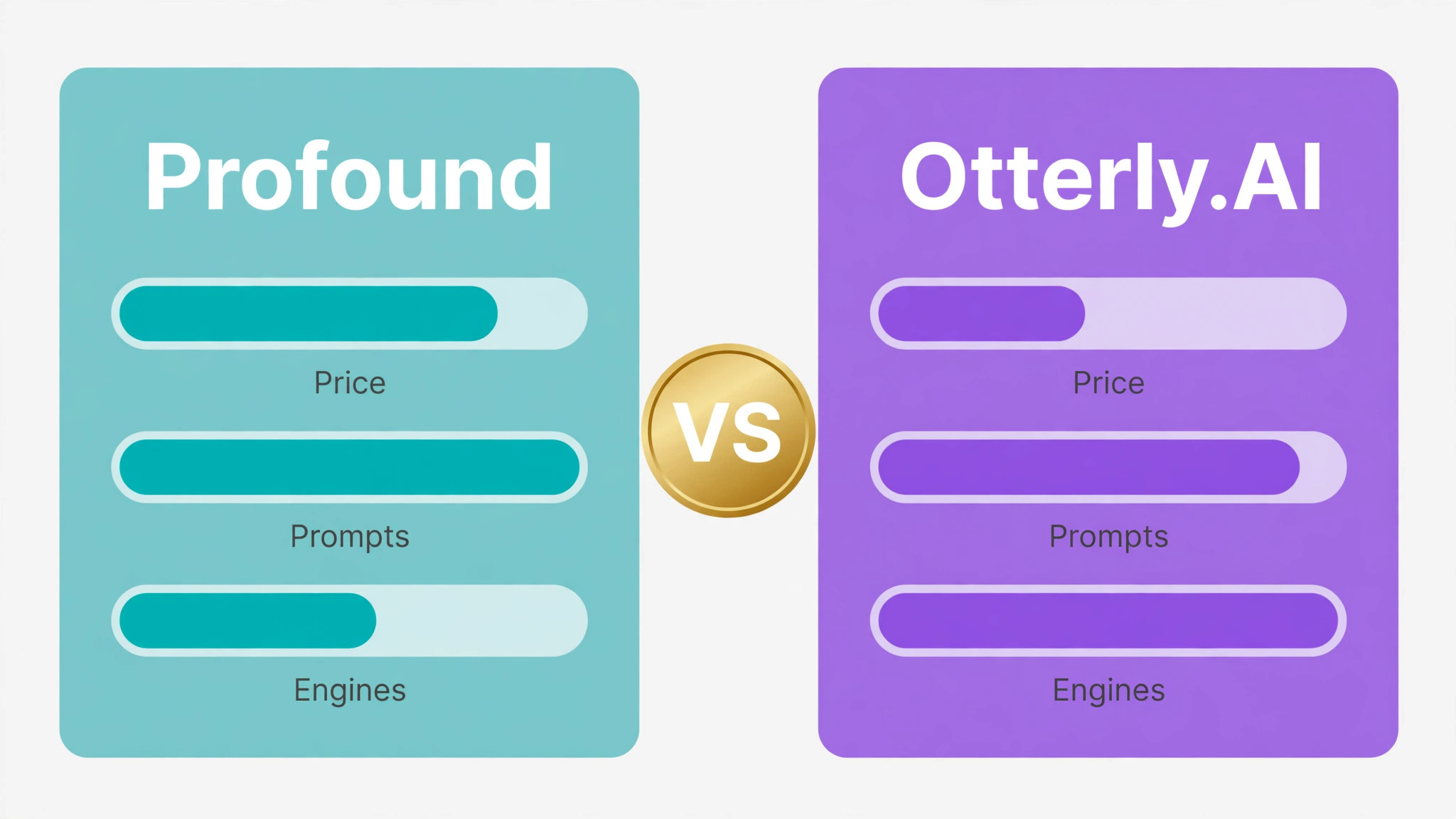
Price is the first gap, and it is wide. Otterly.AI starts at 29 dollars a month for a small prompt set, while Profound starts at 99 dollars a month on the agency plan, with brand pricing custom. A small brand that needs a daily read on a few dozen prompts will get what it needs from Otterly.AI for a third of the money.
Depth is where Profound earns its fee. Its prompt volume data shows which questions drive mentions, and its sentiment and competitor share reports go deeper than a small tracker can. The Top 10 AI Search Optimization Tools split here on depth against price, and a team that reports AI visibility to a board will feel the Profound difference in the first month.
Engines decide the tie for most buyers. Otterly.AI covers ChatGPT, Google AI Overviews, Perplexity and Copilot on the entry plan, with Gemini and Claude as add ons, while Profound covers up to nine engines on the enterprise tier. A buyer who only needs the big four should pick Otterly.AI, while a buyer who needs the full set should price Profound properly before deciding.
Can One Tool Cover AI Tracking and Classic SEO at Once?
One login can hold both jobs, and Semrush comes nearer than any rival here to pulling that off. The AI Visibility Toolkit shares a login with keyword research, audits and rank tracking, so the blue link rank and the AI citation sit side by side. A team that already pays for Semrush should look inside its own plan for the toolkit before buying a second tool.
SE Ranking offers the same idea at a lower price, with an AI visibility add on that tracks prompts across chatbots. The add on costs extra, so the total is higher than the headline plan, yet it still lands below a dedicated tracker plus a suite. A budget team that wants both jobs in one login should price SE Ranking first.
Dedicated trackers still win on depth. Profound, Peec AI and Scrunch AI watch AI answers all day and report prompt level detail a suite add on cannot match. A team that lives or dies by AI citations should keep a dedicated tracker, even if a suite covers the basics, because the detail is where the fix is found.
What Does AI Search Tracking Cost in 2026?
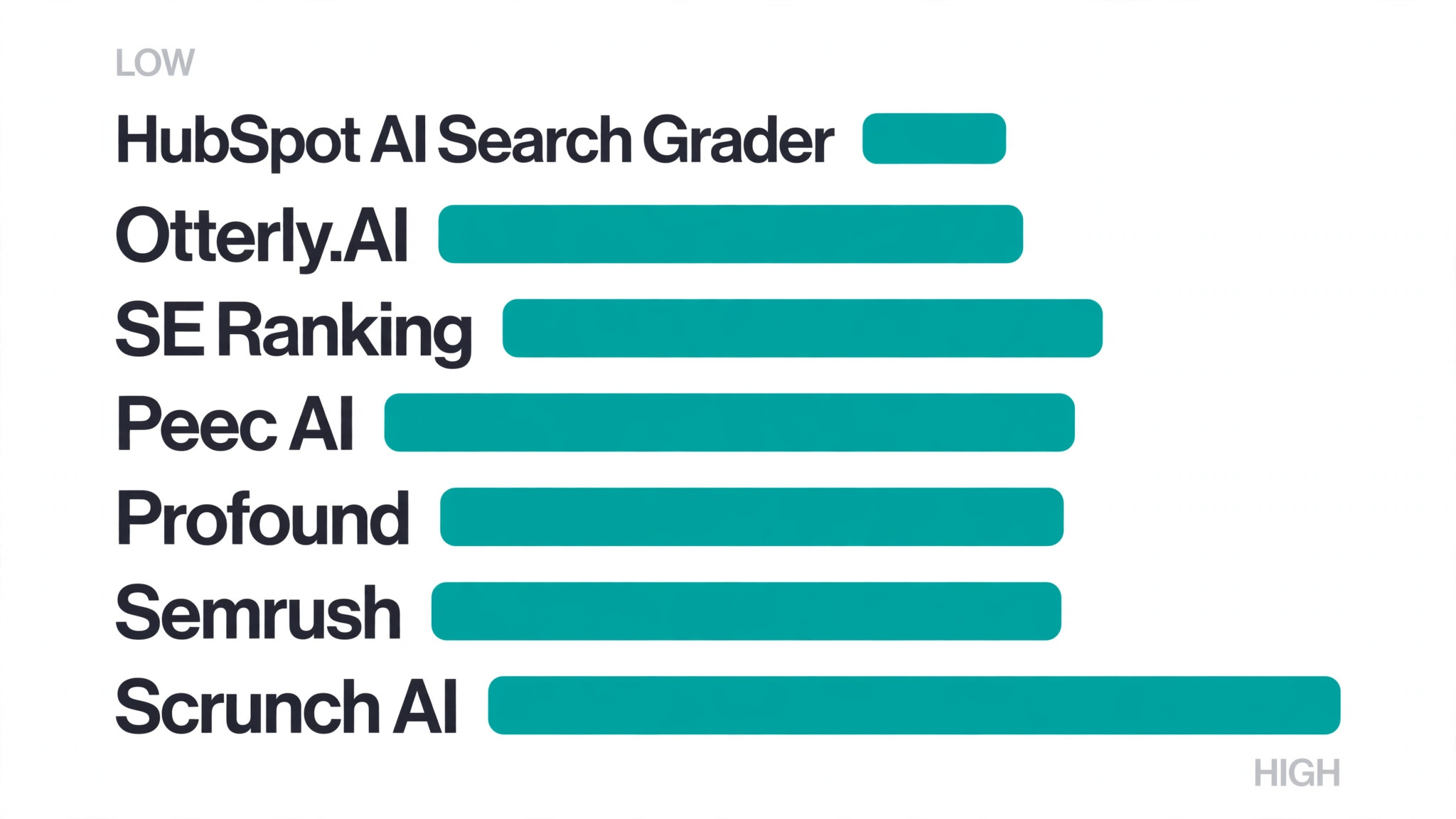
Entry prices run from free to about 300 dollars a month. The free HubSpot grader gives a one off read, Otterly.AI starts at 29 dollars a month, and Scrunch AI starts at 300 dollars a month. The Top 10 AI Search Optimization Tools span that whole range, so the budget question is really a depth question, and a buyer should decide the depth before the price.
Prompt math decides the real bill. A plan that covers fifteen prompts for 29 dollars a month costs about two dollars per prompt, while a plan that covers fifty prompts for 99 dollars a month costs about the same per prompt with more engines. Count the prompts first, then divide the price by that count, and the cheapest plan on the page often stops looking cheap.
Hidden costs sit in add ons and seats. Extra engines, extra seats and API access all add to the bill, and annual billing can cut fifteen to twenty percent for a team that commits. Price the whole setup first, counting the engines and seats the team will really use, before judging two vendors by the headline number.
Frequently Asked Questions
Which AI search tool is best for a small brand?
Otterly.AI is the best first pick for a small brand, because it starts at 29 dollars a month, covers the four main engines and adds a GEO audit. Among the Top 10 AI Search Optimization Tools, it is the cheapest way to get daily data, and a brand can move to Profound or Peec AI later when the prompt list grows past the entry tier.
Do I still need classic SEO if AI answers cite my brand?
Yes, because AI answers cite pages that rank well and read clearly, so the same pages that win classic SEO also win citations. A team that stops publishing and fixing pages will watch its citations fade within months, while a team that keeps the content fresh will hold the answer.
How many prompts should I track?
Most brands need between fifty and one hundred prompts, covering brand questions, comparison questions and problem questions. Begin with the twenty questions customers ask most, add head-to-head questions against the top three rivals, and grow the list only when the reports expose gaps.
Can a free tool track AI visibility?
A free tool can give a first read, and the HubSpot AI Search Grader does that in minutes. Daily tracking across engines costs the vendor real money, so the Top 10 AI Search Optimization Tools that check daily need a paid plan, and a free tool can only show where a brand stands today, not whether it is rising or falling.
How often should AI visibility data refresh?
Brands in fast markets lose a week of leads when a citation slips, so they need daily refresh, while slow markets with steady answers can wait a week. Set the refresh to the pace of the market, since a daily feed nobody opens helps less than a weekly one the team works from.
Will AI search tracking replace rank tracking?
No, because the two are measured differently, and a brand needs traffic from both. Third place on Google can still win the AI citation, and first place can lose it when a rival page answers more clearly. Both figures belong in the same weekly review, because either one alone tells half the story.
The Final Word on AI Search Optimization Tools
Profound takes the top spot for teams that need depth, Otterly.AI takes the budget spot, and Semrush takes the suite spot for teams that already pay for it. The Top 10 AI Search Optimization Tools all track the same shift, and the winner for any one buyer is the tool that covers the engines its buyers use, at a prompt count it can afford, with reports someone actually reads.
Start with the free grader, then trial one tracker for a week on live questions. The tool that finds a citation the team did not know about is the tool to keep, and the tool that only confirms the obvious should go back. AI search rewards the brand that shows up in the answer, and the tracker is how a brand knows whether it does.