The Top 10 SEO Tools for Dentists for most practices start with BrightLocal, because it tracks local rankings street by street, manages citations and watches reviews from one dashboard, and it costs 39 dollars a month. A dental practice wins patients from the map pack, not from national rankings, so the tool that shows the map wins. The twelve tools below cover local rank, reviews, listings and the classic SEO a practice site still needs.
Dentists lose patients in two places, and both are local. A patient searches for a dentist near me, reads the first three map results, and picks the one with the most recent good reviews. A practice that ranks fourth and holds forty reviews will lose to a practice that ranks second and holds four hundred, even if the first practice does better dentistry.
This guide compares twelve tools on local tracking, review volume, citation work and price, with a clear pick for a single practice and a clear pick for a group with several offices. Every figure in this guide was taken from the vendor’s own page or a published review of it, and the closing verdict names the tool a practice can start this week.
Quick jump
- The 12 Tools at a Glance
- Best Pick by Job
- Which Top 10 SEO Tools for Dentists Win New Patients Fastest?
- How to Choose the Right SEO Tool for a Dental Practice
- The 12 Tools in Detail
- BrightLocal vs Birdeye, Which One Should a Practice Buy First?
- Can One Tool Cover Rankings, Reviews and Listings at Once?
- What Does Dental SEO Software Cost in 2026?
- Frequently Asked Questions
- The Final Word for Dental Practices
The 12 Tools at a Glance
| Tool | Main job | Best for | Starting price |
|---|---|---|---|
| Semrush | All in one SEO suite | teams that want one suite for classic seo and ai search in the same login | from $139.95/mo |
| Ahrefs | SEO suite with backlink index | teams that judge seo by links and content gaps | from $129/mo |
| Moz Pro | SEO suite with authority metrics | small teams that want a steady suite without a steep learning curve | from $49/mo |
| BrightLocal | Local SEO platform | practices and firms that win clients from a map pack | from $39/mo |
| Whitespark | Local search and citation tool | anyone fixing citations and local rankings on a budget | from $25/mo |
| Birdeye | Review and reputation platform | multi location practices that live or die by review count | Pricing not published; reported from $299/mo per location |
| Yext | Listings management platform | firms with several offices that need listings to match everywhere | from $199 per location per year |
| Podium | Messaging and reviews platform | busy practices that want calls, texts and reviews in one inbox | from $399/mo |
| ReviewTrackers | Review monitoring platform | firms that already earn reviews and need to watch them all | reported from $69/mo per location |
| Grade.us | Review and reputation software | agencies that report reviews to clients every month | reported from $110/mo |
| SE Ranking | SEO suite with AI visibility | budget conscious teams that still want the full workflow | reported from $65/mo |
| Local Falcon | Local rank grid tracker | any local business that competes street by street | from $24.99/mo |
Best Pick by Job
| Job type | First pick | Second tool | Why this pair works |
|---|---|---|---|
| Best first tool for one practice | BrightLocal | Whitespark | BrightLocal shows the map grid, Whitespark is cheaper for citations alone |
| Most new reviews fastest | Birdeye | Podium | Birdeye leads on review volume, Podium adds patient texting |
| Cheapest local tracking | Whitespark | Local Falcon | Whitespark covers citations too, Local Falcon shows the map grid |
| Best for several offices | Yext | Birdeye | Yext fixes listings everywhere, Birdeye drives reviews at scale |
| Best full SEO suite | Semrush | Ahrefs | Semrush covers the most jobs, Ahrefs leads on links and content gaps |
The Top 10 SEO Tools for Dentists in this guide split into local tools and review tools, and a practice usually needs one of each. BrightLocal and Whitespark cover rankings and citations, while Birdeye and Podium cover review volume and patient messaging. A single practice can start with one local tool and add a review tool once the ranking work is steady, because reviews help only if the practice already appears in the map.
Which Top 10 SEO Tools for Dentists Win New Patients Fastest?
Review volume wins fastest. A practice that asks every happy patient for a review will add dozens of reviews in a month, and the map pack rewards that volume within weeks. Birdeye leads here, because its text first request flow fits how patients actually reply, and its AI drafts answer reviews in minutes rather than days.
Local rank tracking comes next. A practice cannot fix a ranking it cannot see, and BrightLocal shows the map grid street by street, so the team knows which neighbourhoods need citations and which need reviews. A practice that watches the grid weekly will spot a slide before it costs a month of new patient calls.
Listings accuracy is the quiet third factor. A wrong phone number or old address on one directory can send a patient to a closed office, and Yext fixes that everywhere at once. A practice with several offices should fix listings first, because a patient who cannot call cannot book.
How to Choose the Right SEO Tool for a Dental Practice
Start with the map pack, because that is where patients choose. Check where the practice ranks for dentist near me and for the top five treatment searches, then pick a tool that tracks those terms by location. For the Top 10 SEO Tools for Dentists, the ones tracking local grids show the answer, while a national rank tracker reports one number that hides the real picture.
Next, count the review gap. Compare the practice review count with the top three rivals, and when the gap passes a hundred reviews, a review tool beats a keyword tool. A practice that closes its review gap climbs the map before it publishes another page.
Then check the front desk workload. A tool that sends review requests and answers routine questions by text will save the front desk hours a week, while a tool that only reports numbers will add work. Pick the tool the front desk will actually use, because a tool nobody opens is just a subscription.
The 12 Tools in Detail
The twelve tools below run from local rank trackers to review platforms, in the order a practice usually buys them. Every entry lists its starting price, its main job and who it fits, so the Top 10 SEO Tools for Dentists can be judged on the same terms.
1. Semrush
One Semrush account gives a practice the full SEO job: the terms patients search, the site audit, the position checks, the link map and the content work. The AI Visibility Toolkit shows which prompts on ChatGPT, Perplexity and Google AI answers mention the practice, so the content team knows which page to fix. Published pricing starts from $139.95/mo.
For a dental practice its database covers the whole job, from treatment keywords to rival backlinks, without a second subscription. A Monday check of the report catches a ranking slide while it is still cheap to fix, while a report left until the quarter ends usually arrives after the bookings have already fallen.
The price jumps once the practice adds seats or extra toolkits, and the menus run deep enough to confuse a newcomer. For a practice that already runs classic SEO, the draw is one account covering both the old rankings and the new AI answers.
For a practice, the weekly check is the map pack and the review count, not the whole suite. Every Monday, note the rank for the five treatments that bring the most patients and the number of new reviews, and write both in a shared sheet. A practice that looks once a quarter finds the slide after the chairs have emptied, while a practice that looks every week can fix the listing before the bookings drop. A suite earns its fee only when somebody opens it on a fixed day each week.
For a practice, the weekly check is the map pack and the review count, so the trial should run on the practice’s own treatment pages and see whether the suite earns its 139.95 dollars a month.
2. Ahrefs
Behind Ahrefs sits a backlink index counted among the biggest in the world, and one login holds the five tools a team opens most: Site Explorer, Keywords Explorer, Site Audit, Rank Tracker and Brand Radar for AI mentions. Published pricing starts from $129/mo.
For link data and content gaps, nothing in this guide comes close, and the interface stays quick even on a large practice site. Renewal comes down to whether the report reaches the practice owner in a form they already read, since a dashboard they never open will not defend the spend.
The cheapest Ahrefs plan limits how many keywords and reports a practice can track, and the AI features only appear on the dearer plans. A practice that measures SEO by its links and the topics rivals cover will get the most from Ahrefs.
Run Ahrefs against the practice’s own site and its nearest rivals, not the demo. Load the treatment pages that already bring patients, run a site audit, and see whether the content gap report names a page the team had not thought to write. A report that tells the practice nothing new is not worth 129 dollars a month, while a single gap that books an appointment pays for the trial. Put the decision date down before the first crawl, so the choice rests on that week of live work rather than on the demo.
Ahrefs earns its 129 dollars a month on link data, so the trial should end with the content-gap report open beside the rival backlink list, and the practice keeps it only if that pair names a page worth writing.
3. Moz Pro
Moz Pro puts search-term research, position checks, site crawls and link numbers in one suite. Clients still ask for the Domain Authority number by name when they want to know how a site measures up. Published pricing starts from $49/mo.
Moz Pro feels less rushed than the big suites: each crawl report lists what to fix first instead of burying the practice in charts. Moz Pro’s calm reports only help if someone sees them, so switch the notifications on in week one and let a ranking slip ping the practice the day it happens.
Moz Pro’s keyword and link data runs thinner than the two suites above it, and it barely follows AI answers at all. It suits a small team after a steady suite with no steep learning curve.
A practice owner rarely opens the dashboard, so the monthly report is what decides the renewal. During the trial, export one crawl report, hand it to the owner, and ask whether it says plainly what to fix next. If the owner needs the agency to translate it, the report is not doing its job, however calm the workflow feels inside the tool. The reporting test belongs at the start of the trial, not at the end of the quarter.
Moz Pro’s calm workflow is the thing to test, so run one crawl on a live practice site and see whether the priorities it lists are the fixes the practice actually needs.
4. BrightLocal
From one BrightLocal login, a practice sees its map positions by postcode, keeps its citations tidy, watches incoming reviews and gets its Google Business Profile checked. Published pricing starts from $39/mo.
BrightLocal maps the practice’s position street by street, a view no national rank tracker can offer. Pick a Wednesday each week to check the same five treatment keywords, and the figures stay trustworthy all quarter.
BrightLocal sticks to the local job, so the writing and the AI-answer work still need a different tool. Suits practices and firms that win clients from a map pack.
Local work lives or dies by the map pack, so the export has to show ranks street by street. During the trial, pull the rank grid and the citation list, open both in a spreadsheet, and check whether the columns make sense to someone who has never opened the tool. Rank history locked to a higher tier makes a year of progress dearer to prove, right when the practice wants the evidence. A plain export a practice owner can read unaided is worth more than a clever dashboard.
Run BrightLocal on the practice for a month, fix the citation errors it flags, and watch whether the map grid shifts.
5. Whitespark
Whitespark’s job is finding the citations a practice is missing, building the review links to match, and watching where the practice ranks locally, and its Local Citation Finder is the feature local campaigns have leaned on for years. Published pricing starts from $25/mo.
Citations are where Whitespark lives, and the reports are written plainly enough to hand to a client as they are. A Monday glance at the report finds a citation gap while it is still cheap to repair, while a report left until the quarter ends usually lands after the map pack has slipped.
Whitespark does one job, citations and local rank, so the practice still needs a separate tool for keywords and site audits. It fits a practice fixing citations and local rankings on a budget.
Citation work drifts quietly, so the weekly check is the citation count itself. Every Friday, run the same five treatment keywords, note where the practice ranks street by street, and log any citation the finder flags as missing. A practice that checks once and forgets will find the map pack gone when a rival opens nearby, while a weekly look shows the drift in time to fix it. Citations only stay clean when someone watches them every week.
Run Whitespark on one real practice listing for a week, and judge it by whether the citation finder flags a gap the practice did not know it had.
6. Birdeye
Birdeye collects Google reviews by text and email, answers them with AI drafts, tracks listings and surveys customers from one inbox. No price is published for Birdeye, so the practice must get a sales quote before the number can go into any budget.
Its review request flow lifts review volume faster than any tool here, and the AI replies save hours a week. The renewal question is whether the report reaches the practice owner where they already work, because a good inbox alone never saved a subscription.
The entry price is high for a single location practice, and the quote comes only from sales. Suits multi location practices that live or die by review count.
Birdeye has to prove itself on real patients, so run the trial on the live review flow. Send requests by text and email for a week, watch how many patients reply, and read the AI drafted answers before they go out. If the review count does not move, the tool is not earning its fee, however smooth the inbox looks. Put the trial end date in the calendar on day one, because a review tool judged on a demo tells the practice nothing.
Birdeye’s trial should be judged on the AI-drafted replies: read them before they go out for a week, and see whether patients can tell a machine wrote them.
7. Yext
Yext pushes business details to dozens of directories and maps from one record, and flags mismatches in name, address and phone before they cost calls. Published pricing starts from $199 per location per year.
Its network is the widest here, so a change lands everywhere within days rather than months. Turn the alerts on during the trial, because a ping when a listing changes beats a dashboard that waits for someone to log in.
Pricing is annual and per location, which adds up fast for a small practice. Suits firms with several offices that need listings to match everywhere.
With listings spread across dozens of directories, the report has to prove every location matches. During the trial, pull the listing report for every office, hand it to the person who signs the budget, and see whether each mismatch jumps out without a walkthrough. If the report needs a walkthrough to read, a multi location firm will not keep paying for it, however wide the network is. Test the report on the person who signs, before the annual per location bill lands.
Yext is priced per location per year, so the trial should start with the office whose listings are messiest and prove the fix lands everywhere within days.
8. Podium
Podium turns texts into review requests, payments and appointment bookings, and its AI receptionist answers calls and chats when the front desk is busy. Published pricing starts from $399/mo.
Its text first flow fits how patients actually reply, and the AI agent covers after hours calls. Give it one fixed weekly slot, such as a Tuesday review of texts sent and reviews gained, and the numbers stay trustworthy all quarter.
It is the priciest tool in this list, and the sales led pricing slows a quick trial. Suits busy practices that want calls, texts and reviews in one inbox.
Podium holds calls, texts, reviews and payments in one inbox, so the export has to cover all of them. Pull one report during the trial that shows review requests sent, replies received and bookings made, and open it in a spreadsheet to see whether the numbers line up. If the history behind those numbers is locked to a higher tier, the price of looking back a year is higher than the plan suggests. A clear export that ties texts to bookings is the evidence a busy practice needs at renewal.
During the trial, count the review requests sent against the reviews gained, and judge Podium on that ratio.
9. ReviewTrackers
ReviewTrackers pulls reviews from more than a hundred sites into one feed, scores sentiment and alerts the team when a low rating lands. Published pricing starts at reported from $69/mo per location.
Its coverage is the broadest here, so no review hides on a site nobody checks. A Monday scan of the feed catches a low rating while the patient is still reachable, while a report left for a quarter arrives after the damage is done.
It monitors and reports rather than generating reviews, so it pairs with a request tool. Suits firms that already earn reviews and need to watch them all.
ReviewTrackers only watches reviews, so its trial should run on the live feed: does a low rating reach the front desk fast enough to answer while the patient is still reachable?
10. Grade.us
Grade.us automates review requests, builds white label reports and tracks local rankings for agencies and their clients. Published pricing starts at reported from $110/mo.
Its white label reports are the cleanest here, and the review funnel is easy to set up. The renewal test is whether the client reads the report without a call, because a white label report the client never opens will not keep the account.
The feature set is narrower than Birdeye, and pricing is quoted rather than published. Suits agencies that report reviews to clients every month.
Grade.us sells to agencies, so its trial should end with a white-label report in a client’s hands: if the client reads it without a call, the monthly fee is justified.
11. SE Ranking
For less than the big suites charge, the plan gives a practice position checks, site health checks, link data and page scoring in one login. The optional AI visibility extra watches the prompts buyers type into chatbots, for a fee the headline plan leaves out. Published pricing starts at reported from $65/mo.
For a reported 65 dollars a month, a practice gets most of the big-suite job at roughly half the rate the leaders charge. SE Ranking’s alerts are the cheap insurance here, so switch them on in the trial week and let a ranking slip reach the practice the day it happens.
SE Ranking costs a practice depth: the data behind it runs thinner than the leaders hold, and the AI tracking is an extra the headline plan leaves out. It fits budget conscious teams that still want the full workflow.
SE Ranking is the budget pick, so the trial should run on one live practice site with the AI add-on switched on, and the saving only counts if the numbers move.
12. Local Falcon
Local Falcon scans Google local rankings across a map grid, so a business can see exactly which streets it wins and which it loses. Published pricing starts from $24.99/mo.
No other tool here shows local visibility as a map, and the scans are cheap per run. Pick a Thursday each week to look at the same five streets, and the figures stay trustworthy all quarter.
It tracks ranks only, so keyword research and audits need a second tool. Suits any local business that competes street by street.
Scan the same five streets twice in a fortnight and keep Local Falcon only if the second scan reads differently from the first.
BrightLocal vs Birdeye, Which One Should a Practice Buy First?
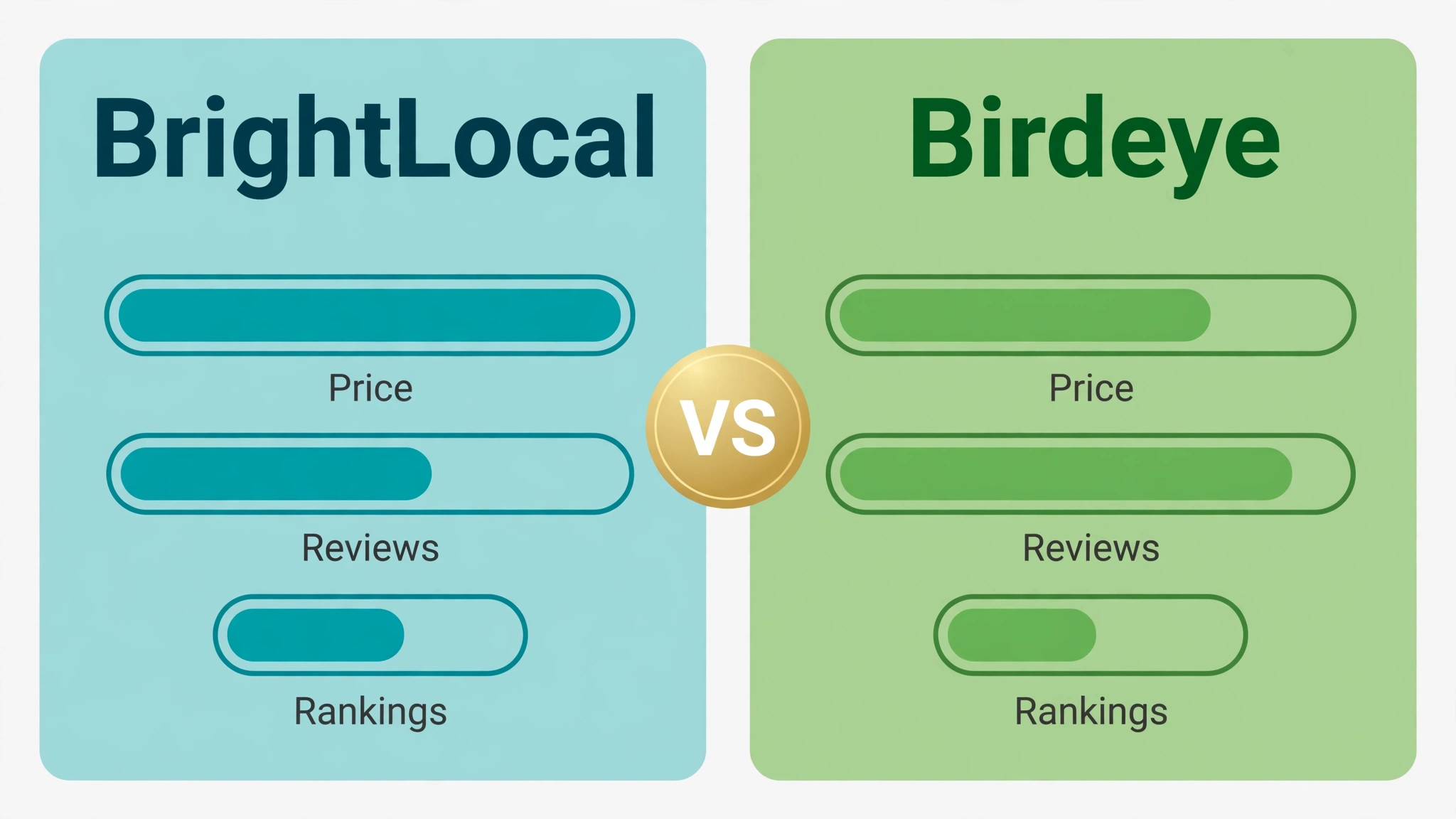
BrightLocal should come first for most practices, because it shows where the practice ranks and fixes the citations that hold the ranking back. It costs 39 dollars a month, it tracks the map grid street by street, and it reports reviews and listings in the same dashboard. A practice that cannot see its map position is guessing, and BrightLocal ends the guessing.
Birdeye should come first only when reviews are the clear gap. A practice with strong rankings and forty reviews against a rival with four hundred needs review volume more than rank data, and Birdeye text first flow will close that gap faster than any other tool here. The Top 10 SEO Tools for Dentists split here on the gap, and the gap decides the buy.
Price decides the tie for a single practice. BrightLocal at 39 dollars a month is a small line in a practice budget, while Birdeye is priced from sales at a reported 299 dollars a month per location. A single practice should start with BrightLocal, add a cheaper review flow, and move to Birdeye only when several offices share the cost.
Can One Tool Cover Rankings, Reviews and Listings at Once?
For one practice, BrightLocal gets nearest to covering the whole local job: map positions, citation lists, review counts and the Google Business Profile all sit in the same login. It does not generate review volume the way Birdeye does, and it does not answer patient texts the way Podium does, yet it covers the three jobs well enough for a practice starting out.
Birdeye covers reviews and listings together, with review requests, AI replies, listing management and surveys in one inbox. It costs more, and it tracks local rankings less deeply than BrightLocal, so a practice that buys Birdeye should keep a cheap rank tracker beside it for the map grid.
What Does Dental SEO Software Cost in 2026?
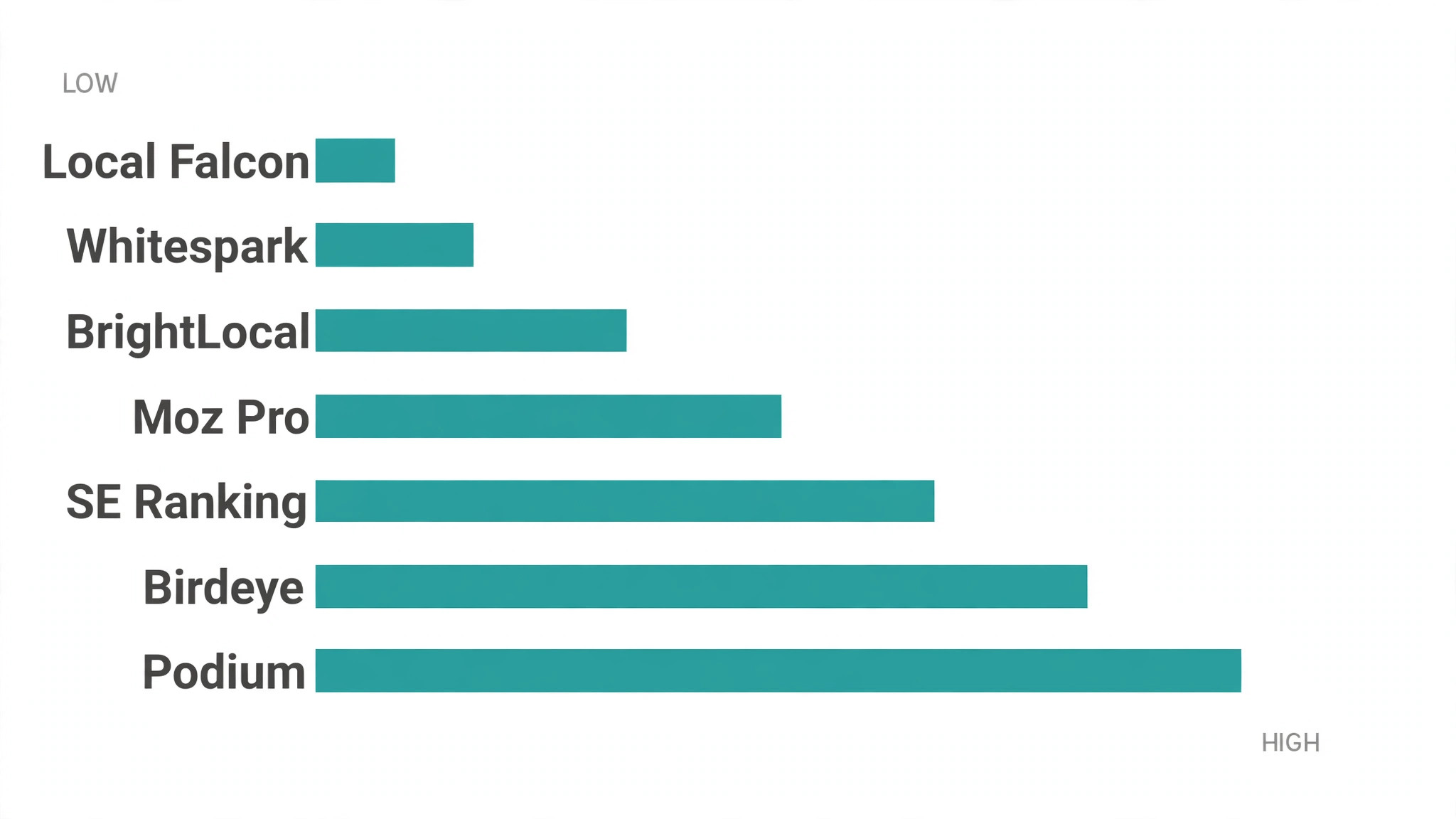
A single practice can start for about 25 to 65 dollars a month. At 25 dollars a month Whitespark is cheapest here, BrightLocal follows at 39, and SE Ranking sits at a reported 65. The Top 10 SEO Tools for Dentists at this level cover rankings, citations and the basic SEO a practice site needs, and a practice should expect that range for the first tool.
Review platforms cost far more. Birdeye is reported from 299 dollars a month per location, Podium starts at 399 dollars a month, and Yext starts at 199 dollars per location per year. These prices fit a group with several offices, or a single practice with a large patient base, and a small practice should not rent them before the ranking work is done.
Frequently Asked Questions
Which SEO tool is best for a single dental practice?
BrightLocal is the best first pick for a single practice, because it tracks the map grid, manages citations and watches reviews for 39 dollars a month. Among the Top 10 SEO Tools for Dentists, it is the one tool that shows where the practice stands locally, and a practice can add a review tool later once the ranking work is steady.
How many Google reviews does a dental practice need?
A practice should pass the top three rivals in its area on reviews, and in most suburbs that takes two hundred or more, with fresh ones arriving every month. A practice with forty reviews will lose the map to a rival with four hundred, even if its dentistry is better, because patients read the count before they read the words.
Do dentists still need a website if patients find them on Google Maps?
Yes, because the map listing links to the website, and patients check it before they call. A fast site with clear treatment pages, real photos and online booking will turn map views into calls, while a slow or thin site will send the patient back to the map to pick the next practice.
Can a practice manage SEO without an agency?
Yes, and the Top 10 SEO Tools for Dentists in this guide are built for exactly that. A practice that tracks rankings with BrightLocal, asks for reviews after every visit, and publishes one treatment page a month will beat most local rivals within a year, because few practices do all three consistently.
How long does local SEO take for a dentist?
Most practices notice map movement within eight to twelve weeks, and a strong position within six months, when citations are fixed and reviews keep arriving. A practice that publishes nothing and never asks for reviews waits a year for the same result, so pace comes from the routine, not the tool.
Should a dental group buy one tool for all offices?
Yes, since one platform with per location pricing keeps rankings, citations and reviews consistent across offices, and the group can weigh each office against the others. Birdeye and Yext are built for groups, while BrightLocal scales per location too, so a group should price the full office count before choosing.
The Final Word for Dental Practices
BrightLocal takes the top spot for most practices, Birdeye takes the review spot for groups, and Whitespark takes the budget spot for a practice that only needs citations and rank data. The Top 10 SEO Tools for Dentists all serve the same patient journey, from a map search to a review read to a phone call, and the winner for any one practice is the tool that fixes its weakest step first.
Open with the map grid, clear the citation errors, then ask every happy patient for a review. Repeat that routine every week and a practice climbs the map faster than any single feature in this guide. The tool matters less than the habit, and the habit starts with one dashboard the front desk opens every morning.