A writing assistant is not a writer, and the tools that work best are the ones that know the difference. A good assistant drafts the first version, tightens the sentences, checks the grammar, keeps the tone steady, and then steps aside, because the thinking, the argument and the voice belong to the writer. The best ai writing assistants help with the whole job, from the blank page to the final polish, and they do it without turning every document into the same flat, machine-smooth text.
This guide compares 12 tools on the three jobs that decide a writing assistant. Drafting the first version fast, editing it into something clear, and keeping the tone and the facts right across a whole document. Prices below are entry paid tiers checked in November 2026, and where a tool offers a free plan the table shows it, because a writing assistant should be tested on the writer’s own work before it is bought.
Quick jump
The 12 Best AI Writing Assistants at a Glance
This table compares the best ai writing assistants on the facts that decide a choice. Prices are entry paid tiers from each vendor site, checked in November 2026. Free plans vary widely, from a few pages a month to a full grammar check, so read the free column before choosing.
| Tool | Entry price | Best for |
|---|---|---|
| Grammarly | Free plan, Pro $12 a month billed annually | Grammar, clarity and tone |
| Jasper | Pro $59 a month billed annually | Marketing drafting at scale |
| Copy.ai | $24 a month billed annually | Chat-based drafting and brainstorming |
| Writesonic | From $20 a month | Fast drafting with templates |
| Rytr | Free plan, Saver $7.50 a month | Cheapest drafting |
| QuillBot | $8.33 a month billed annually | Paraphrasing and grammar |
| Wordtune | From $9.99 a month | Sentence rewriting in place |
| Sudowrite | From $10 a month | Creative and fiction writing |
| Notion AI | $10 a user a month | Writing inside a workspace |
| Frase | $39 a month billed annually | SEO drafting with research |
| Anyword | From $39 a month | Copywriting with performance scores |
| HyperWrite | See website | Chat-based drafting with research |
A Closer Look at the 12 Tools
Each tool below was judged on the same three jobs. Drafting the first version, editing it into something clear, and keeping the tone and the facts right. The best ai writing assistants in this guide clear those tests, and the ranking follows the job each one does best rather than the size of its feature list.
1. Grammarly
Grammarly is the standard grammar and clarity checker, with a free plan and a Pro plan at $12 a month billed annually. It checks the grammar, the clarity, the tone and the plagiarism, and the suggestions are clear enough to learn from, which is why it is the most widely used writing assistant in this list. It will not draft a document, but it will make a good draft better, and the browser extension brings the check to every page the writer works on.
The price of $12 a month billed annually is reasonable for the toolkit, and the free plan covers the basic grammar check. The trade-off is that Grammarly is an editor rather than a drafter, so a writer who needs help starting will need Jasper or Copy.ai as well. For a finished draft, though, the editing is the best in this list, and the tone detector helps a writer keep a document formal or friendly as the audience requires.
The limit is that an editor cannot fix a weak argument, and a polished document with no point will still fail. Use Grammarly after the argument is written, not before, and read every suggestion before accepting it, because a suggestion that changes the meaning is worse than a grammar error. The tool is a polisher, not a thinker, and the thinking is the writer’s job.
Use Grammarly to polish a finished draft, and read every suggestion before accepting it.
2. Jasper
Jasper is the marketing writer’s assistant, with templates for blogs, ads, emails and social posts, a brand voice feature that keeps the tone steady, and a drafting tool that produces sections quickly. It suits a marketer or a content team who needs a high volume of on-brand copy, because the tool drafts fast and the brand voice keeps the output consistent. The Pro plan costs $59 a month billed annually, with a free trial for testing.
The price of $59 a month billed annually is the dearest in this list, and the tool is built for teams rather than a single writer, so a solo writer will find it dear. The trade-off is volume against cost, because a team that drafts twenty posts a month will earn the price back, while a writer who drafts one post a week will not. For a content team, the brand voice and the templates are the value.
The limit is that a fast draft is not a good draft, and a marketer who publishes the tool’s output without editing it will sound like every other marketer using the same tool. Use Jasper to beat the blank page, rewrite the draft in the brand’s own words, and check every fact, because the tool is a drafter, not an editor, and the editing is still the writer’s job.
Choose Jasper when a team needs high-volume on-brand drafting, and edit every draft before publishing.
3. Copy.ai
Copy.ai is a chat-based AI writer with a free plan and a Chat plan at $24 a month billed annually. It suits a writer who wants to brainstorm, outline and draft through conversation, because the chat interface lets the writer ask for an outline, a draft, a rewrite and a summary in turn, and the tool keeps the context across the conversation. The tool is a general writer, so the editing features are thinner than Grammarly, but the chat is flexible.
The price of $24 a month billed annually is mid-range, and the free plan covers a short test. The trade-off is flexibility against specialisation, because the chat can do anything, but it does nothing as well as a dedicated drafting or editing tool. For brainstorming and first drafts, though, the chat is the best in this list, because the conversation helps the writer think.
The limit is that a chat can produce a draft that sounds good and says little, because the tool fills the page with fluent sentences that lack an argument. Use the chat to brainstorm and outline, and write the argument yourself, because the document is judged on the thinking, not on the fluency, and a fluent draft with no point will fail.
Use Copy.ai to brainstorm and outline, and write the argument yourself.
4. Writesonic
Writesonic is a general AI writer with templates for blogs, ads and emails, an outline builder and a drafting tool that produces sections quickly. It suits a writer who needs a first draft fast, because the templates cover the common document types, and the tool drafts a section from a prompt in seconds, which gives the writer something to edit rather than a blank page. The entry plan costs from $20 a month, with a free plan for testing.
The price of $20 a month is mid-range, and the tool is a general writer rather than a specialist, so the editing features are thinner than Grammarly. The trade-off is speed against depth, because a fast draft is useful when the deadline is close, but the draft needs heavy editing to become a good document. Use Writesonic to beat the blank page, and then rewrite the draft in your own words.
The limit is that a fast draft is not a good document, and a writer who publishes the tool’s draft without rewriting it will sound like every other writer using the same tool. Use the draft as a starting point, rewrite every paragraph, check every fact, and make the voice your own, because the document is your work.
Use Writesonic to beat the blank page, then rewrite every paragraph in your own words.
5. Rytr
Rytr is the cheapest drafting tool in this list, with a free plan and a Saver plan at $7.50 a month. It suits a writer on a tight budget who needs help drafting sections, because the tool covers forty use cases including blogs, emails and stories, and the interface is simple, with a prompt, a tone choice and a result. The free plan covers 10,000 characters a month, which is enough for a short document.
The price of $7.50 a month is the lowest in this list for a paid plan, and the free plan is usable for a short assignment. The trade-off is that the tool is a general writer rather than a specialist, so the editing features are thin, and the drafts need heavy editing. For a writer who needs a cheap drafting tool, the price is the point.
The limit is depth. A cheap general writer will not edit the draft or check the tone, so a writer who needs those must use Grammarly as well. Use Rytr to draft the sections, and use a second tool to polish the language, because the document needs both jobs done well.
Pick Rytr when the budget is $7.50 a month and the job is drafting sections.
6. QuillBot
QuillBot is a paraphraser with a grammar checker, a summariser, a citation generator and a plagiarism checker, so the writing toolkit sits in one subscription. It suits a writer who needs to rephrase a paragraph, check the grammar, summarise a source and cite it, because the tool covers all four jobs, and the Premium plan costs $8.33 a month billed annually, which is cheap for the toolkit it includes. The free plan covers a short test.
The price of $8.33 a month billed annually is one of the lowest in this list, and the paraphraser is the best available for rewording a sentence without changing the meaning. The trade-off is that QuillBot is a paraphraser first and a drafting tool second, so it will not plan the document or draft the sections, and a writer who needs help starting will need Jasper or Copy.ai as well. For rewriting and polishing, it is excellent.
The limit is the same as Grammarly, which is that a paraphraser cannot fix a weak argument. Use QuillBot to rephrase and polish your own draft, and do not use it to reword a source and present it as your own, because that is plagiarism even when the words are different. The tool is a polisher, and the argument is yours.
Choose QuillBot for paraphrasing, grammar and citations in one cheap toolkit.
7. Wordtune
Wordtune rewrites sentences in place, offering several versions of the same sentence with different tones, lengths and structures, so the writer can pick the one that fits. It suits a writer with a finished draft that needs tightening, because the tool works inside the document, rewriting one sentence at a time, and the free plan covers a short test. The entry plan costs from $9.99 a month.
The price of $9.99 a month is reasonable for the feature set, and the in-place rewriting is the strength, because the writer sees the options beside the original and picks the best one. The trade-off is that the tool is a sentence editor rather than a document editor, so it will not fix the structure or the argument, and a writer who needs those must use Grammarly as well. For tightening sentences, it is the best in this list.
The limit is scope. A sentence editor cannot fix a document, and a writer who rewrites every sentence without checking the argument will produce a polished document with no point. Use Wordtune after the argument is written, and check that each rewrite keeps the meaning, because a rewrite that changes the meaning is worse than a clumsy sentence.
Use Wordtune to tighten sentences in a finished draft, and check that each rewrite keeps the meaning.
8. Sudowrite
Sudowrite is the creative writer’s assistant, with tools for fiction, stories and narrative, including a brainstorming tool, a description generator and a rewrite feature that keeps the voice. It suits a novelist or a storyteller who needs help with the craft rather than the grammar, because the tool understands the conventions of fiction, and the entry plan costs from $10 a month, with a free trial for testing.
The price of $10 a month is reasonable for the feature set, and the creative focus is the strength, because most writing assistants are built for business documents. The trade-off is that the tool is a creative assistant rather than a general one, so a writer who needs business documents will find less, and the editing features are thinner than Grammarly. For fiction, though, it is the only tool in this list built for the job.
The limit is the audience. A fiction writer will find Sudowrite invaluable, while a marketer or a student will find it less useful, so the tool should be picked for the job it does best. Use it to brainstorm, describe and rewrite, and keep the story yours, because the tool is an assistant, not an author, and the story belongs to the writer.
Choose Sudowrite for fiction and creative writing, and keep the story yours.
9. Notion AI
Notion AI brings the writing assistant inside Notion, so the drafting, the summarising and the editing happen where the notes and the documents already live. It suits a team or a writer who already works in Notion, because the assistant can summarise a page, draft a document from the notes, and rewrite a section without leaving the workspace. The price is $10 a user a month on top of the Notion plan.
The price of $10 a user a month is reasonable for a team that already pays for Notion, and the integration is the strength, because the assistant works with the notes rather than a separate document. The trade-off is that the tool is tied to Notion, so a writer who does not use Notion will find it useless, and the drafting features are thinner than Jasper. For a Notion user, though, the convenience is the value.
The limit is the platform. A writing assistant that only works inside one app is only useful when the work lives in that app, so a writer who drafts in a word processor will need a different tool. Use Notion AI when the notes, the documents and the drafts all live in Notion, because that is where it beats the competition.
Pick Notion AI when the work already lives in Notion, and skip it otherwise.
10. Frase
Frase is an SEO writing assistant with a research tool, a content brief builder and a drafting tool that optimises for the search terms. It suits a writer who needs to rank, because the tool analyses the top results for a topic, builds a brief from them, and drafts a document that covers the terms the search engine expects. The Solo plan costs $39 a month billed annually, with a free trial for testing.
The price of $39 a month billed annually is mid-range, and the research feature is the strength, because a brief built from the top results is a better starting point than a blank page. The trade-off is that the tool is an SEO assistant rather than a general writer, so a writer who needs creative or business documents will find less. For a blog post that must rank, though, it is the best in this list.
The limit is that an SEO draft can read as optimised rather than useful, because the tool fills the page with the terms the search engine expects, and the writer must rewrite it into something a human wants to read. Use Frase to build the brief and the first draft, and then rewrite it for the reader, because the search engine ranks the document, but the reader decides whether to stay.
Use Frase to build the brief and the first draft, then rewrite it for the reader.
11. Anyword
Anyword is a copywriting assistant with a performance score that predicts how well a headline, an ad or an email will convert, based on data from past campaigns. It suits a marketer who needs copy that performs, because the tool scores each version and suggests the one most likely to work, and the entry plan costs from $39 a month, with a free trial for testing.
The price of $39 a month is mid-range, and the performance score is the strength, because a marketer who can predict which copy will convert will spend less on testing. The trade-off is that the score is a prediction, not a guarantee, and the tool is a copywriting assistant rather than a general writer, so a writer who needs long documents will find less. For ads and emails, though, the score is the value.
The limit is that a score cannot replace judgement, and a marketer who follows the score without reading the copy will publish a headline that performs but says nothing. Use the score to choose between versions, and read the winning copy before publishing, because the copy is yours, and the score is only a guide.
Use Anyword to score copy options, and read the winner before publishing.
12. HyperWrite
HyperWrite is a chat-based writing assistant with a research tool, a drafting tool and a rewriting feature, built for writers who want to draft through conversation. It suits a writer who needs to research a topic and draft the document in the same place, because the chat can search the web, summarise the sources and draft the sections in turn. The price is not published, so the site must be checked before committing.
The lack of a published price is the trade-off, because a chat assistant that hides its cost is hard to budget for. The research feature is the strength, because a tool that searches the web and drafts from the sources is rare, and the chat is flexible. Check the price on the site, and compare it with the $24 entry of Copy.ai before paying.
The limit is transparency. A tool without a published price is hard to compare, and a writer who needs a predictable monthly cost should pick Copy.ai at $24 a month instead. Use HyperWrite to test the research feature, and only pay if the price, once checked, is competitive with Copy.ai.
Test HyperWrite for research drafting, then check the price before committing to a plan.
Drafting, and the Blank Page
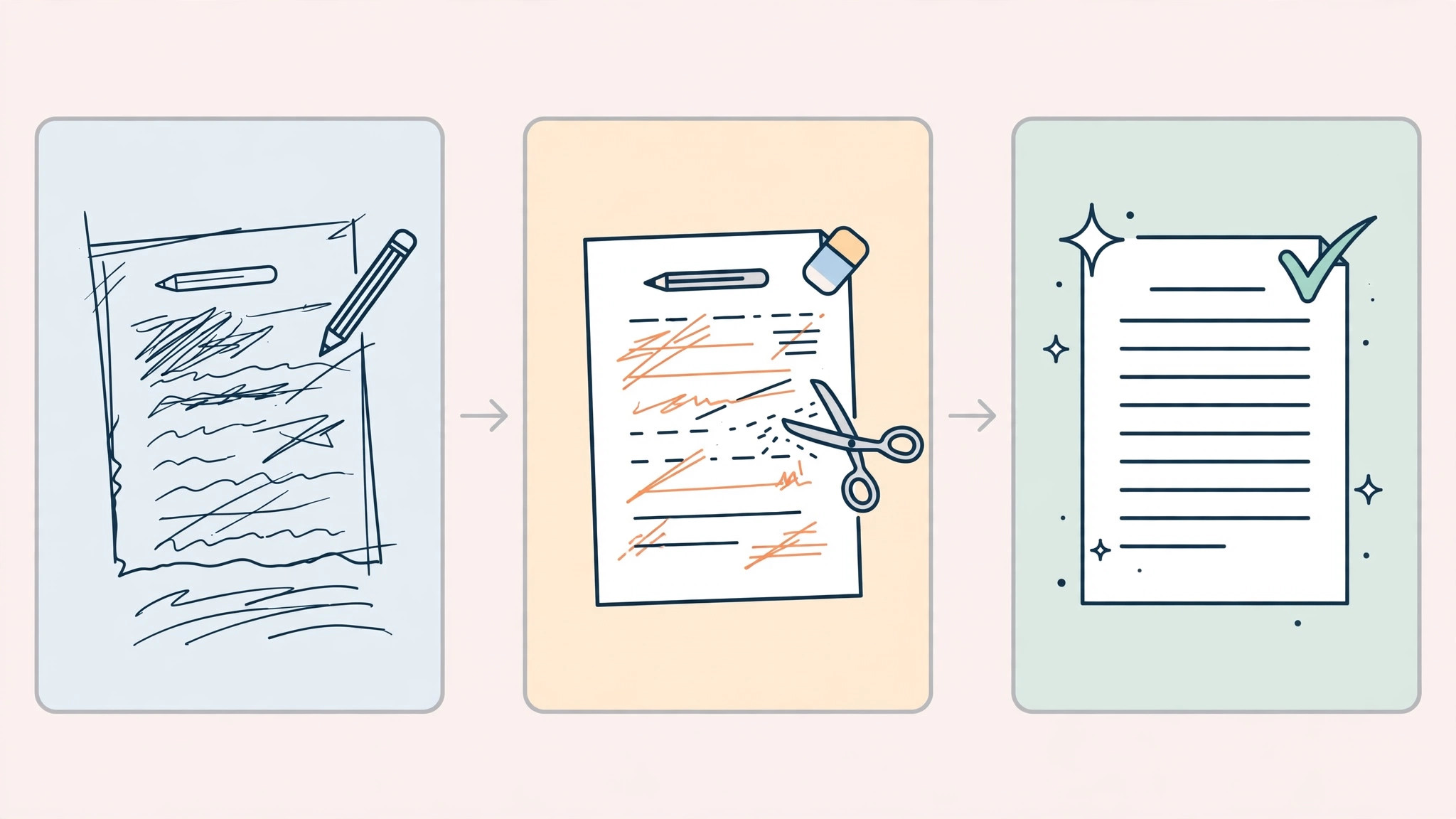
The blank page is the hardest part of writing, and the drafting tools in this guide exist to beat it. A prompt, an outline and a first draft give the writer something to edit, and editing is easier than starting, because the argument can be fixed, the sentences can be tightened, and the structure can be rearranged. best ai writing assistants include several drafting tools, and the best habit is to draft fast and edit slowly, because a fast draft is a starting point, not a finished document.
The practical method is to draft in one session and edit in another, with a break between them, because a writer who edits while drafting will never finish. Draft the whole document, step away, and return to edit with fresh eyes, because the mistakes that are invisible while drafting will be obvious after a break. The tools make the draft faster, and the break makes the edit better.

Editing, and the Draft That Needs a Second Pass
A first draft is never a final draft, and the editing tools in this guide exist for the second pass. Grammar, clarity, tone and structure all need checking, and the tools that check them will catch the errors the writer missed, because a writer who reads their own draft will see what they meant rather than what they wrote. Grammarly and Wordtune are the best in this list for the second pass, and the habit is to run the check, read every suggestion, and accept only the ones that improve the document.
The habit is to edit in passes, one for structure, one for clarity, one for grammar and one for tone, because a single pass that tries to fix everything will fix nothing. Read the document aloud for the clarity pass, because a sentence that sounds odd when read aloud will read odd to the reader, and the fix is usually a shorter sentence or a simpler word.
Tone, and the Document That Sounds Wrong
Tone is the voice of the document, and a document with the wrong tone will fail even when the facts are right. A formal report written in a friendly tone will not be taken seriously, while a friendly email written in a formal tone will feel cold, and the tools that check tone help the writer match the voice to the audience. Grammarly and Wordtune both check tone, and the habit is to read the document as the audience would, and to ask whether the voice fits.
The practical method is to name the audience before writing, and to keep the tone steady across the whole document, because a document that shifts tone will confuse the reader. A brand voice feature, such as the one in Jasper, helps a team keep the tone steady, but a solo writer can do the same by reading the document aloud and listening for the places where the voice changes.
Best Pick by Job
Different situations need different tools, so the best pick changes with the job. This table matches the common situations to the tool that handles each one best. The best ai writing assistants in this guide cover all of these jobs between them.
| Your job | Pick this one | Why |
|---|---|---|
| Most writers, editing and tone | Grammarly | Free plan, Pro $12 a month billed annually |
| Marketing team, high volume | Jasper | Pro $59 a month billed annually |
| Cheapest drafting | Rytr | Free plan, Saver $7.50 a month |
| Paraphrasing plus grammar | QuillBot | $8.33 a month billed annually |
| Fiction and creative writing | Sudowrite | From $10 a month |
| SEO blog that must rank | Frase | $39 a month billed annually |
One more habit worth building is the read-aloud check. Read the finished document aloud, from the first sentence to the last, and listen for the places where the rhythm breaks, the argument jumps, or the sentence sounds like someone else wrote it. A passage that sounds odd when read aloud will read odd to the reader, and the fix is usually a rewrite in your own words.
What to Ask Before You Pay
Which AI writing assistant is best overall?
Among the best ai writing assistants, Grammarly leads for most writers, because the grammar, clarity and tone checks sit in one tool at $12 a month billed annually. Jasper is the best for a marketing team at $59 a month billed annually, while Rytr is the cheapest drafting tool at $7.50 a month, so the right pick depends on the job.
Can AI writing assistants write a whole document for me?
They can draft one, but the draft will need heavy editing, because a machine draft lacks an argument, a voice and a check on the facts. Use the tool to beat the blank page, rewrite every paragraph in your own words, check every fact, and take responsibility for every word, because the document is yours.
How much do AI writing assistants cost?
A writing assistant costs from $7.50 a month to $59 a month. Rytr costs $7.50, QuillBot costs $8.33 billed annually, Wordtune costs $9.99, Sudowrite costs $10, Grammarly costs $12 billed annually, Writesonic costs $20, Copy.ai costs $24, Frase and Anyword cost $39, and Jasper costs $59 billed annually, while HyperWrite does not publish a price.
Will a writing assistant make my writing sound robotic?
It can, if the draft is published without editing, because a machine draft has an even rhythm and a narrow vocabulary. Rewrite every paragraph in your own words, vary the sentence lengths, and read the result aloud, because a document that sounds like you wrote it is a document that reads well.
Do I need more than one writing assistant?
Usually two. A drafting tool such as Jasper or Copy.ai for the first version, plus an editing tool such as Grammarly for the grammar, the clarity and the tone, covers most writing. A writer who needs paraphrasing can add QuillBot, because the toolkit costs $8.33 a month billed annually.
The Bottom Line
Start with Grammarly, because the grammar, clarity and tone checks sit in one tool at $12 a month billed annually, and the free plan covers the basic check. Add Jasper when a team needs high-volume drafting, because the brand voice and the templates keep the output consistent at $59 a month billed annually, and add Rytr when the budget is tight, because the drafting costs $7.50 a month. The best ai writing assistants all reward the same habit, which is drafting fast, editing slowly, and checking every fact.
The tools in this guide all help a writer draft, edit and polish a document, and the difference between them is the job. A drafter is needed to beat the blank page, an editor is needed to polish the language, and a tone checker is needed to keep the voice steady. Pick one of each, rewrite every paragraph in your own words, and the document will be yours, with the quality to match.