
How to rebrand your small business starts with one honest question. Does the brand you have match the business you run today? A bakery that began as a home kitchen and now supplies three cafes has outgrown its hand-drawn logo. A plumber who started with one van and now runs a team of six has outgrown a name that sounds like a one-person job. A boutique that sold vintage clothes and now sells its own label has outgrown a brand that describes the old stock. When the brand and the business no longer match, customers get the wrong idea before they ever walk in, and the rebrand is the fix.
A rebrand is not a new logo. A logo is one piece of a brand, and a new logo on top of the same muddled message changes nothing. A rebrand is a new promise, a new look and a new voice, all built around the customers you want next. The logo, the colors, the name, the tagline, the website, the shopfront and the way staff answer the phone all carry the same message, and the customer believes it because every part agrees. A business that changes the logo and nothing else has paid for a picture, not a rebrand.
The cost of getting it wrong is real. A rebrand that confuses regulars will cost you the customers you already have, and a rebrand that says nothing new will cost you the money you spent on it. The safest rebrand is the one that keeps what customers already love, fixes what confuses them, and says clearly what the business does now. This guide walks through the whole job in seven steps, from the research that comes first to the launch that comes last, with the costs, the timeline and the mistakes to avoid.
Quick jump
Quick Answer. How to Rebrand Your Small Business in 30 Seconds
If you want the short version, here it is. A small business rebrand takes six to twelve weeks, and the work runs in seven steps. First, research your customers and your competitors. Second, decide what stays and what goes. Third, write the new message, the promise and the tagline. Fourth, design the logo, colors and type. Fifth, rebuild the website, the shopfront and the packaging. Sixth, tell your staff before you tell the public. Seventh, launch, then measure the result for ninety days.
Budget for a rebrand the same way. A do-it-yourself rebrand with a logo tool and a template website costs a few hundred dollars. A rebrand with a freelance designer and a new website costs a few thousand. A rebrand with a small agency costs ten thousand and up. The right budget is the one that covers the logo, the website, the signage and the launch, because a rebrand that stops at the logo is a rebrand that never lands.
Why a Small Business Rebrands
When you plan how to rebrand your small business, the reason matters, because a business rebrands for one of four reasons, and knowing yours keeps the whole job honest. The first is growth. The business has outgrown its name, its logo or its market, and the old brand now holds it back. A bakery that supplies cafes needs a brand that looks wholesale, not homemade. A cleaning company that started with houses and now cleans offices needs a brand that looks commercial, not domestic.
The second is change. The business sells something different from what it sold five years ago, and the old brand describes the old offer. A shop that sold phone cases and now repairs phones needs a brand that says repair, not retail. A studio that offered yoga and now offers physiotherapy needs a brand that says health, not leisure.
The third is confusion. Customers mix the business up with a competitor, or they cannot tell what it does from the name and the sign. A name that sounds like three other businesses in the same street is a name that costs you walk-ins. A logo that looks like a stock image is a logo that nobody remembers.
The fourth is reputation. The business has a bad review history, a dated look, or a name that carries the wrong associations, and a fresh start is cheaper than a long repair. A rebrand does not erase bad reviews, but it gives the business a clean frame for the better service it now offers, and it signals to customers that something has changed.
None of these reasons calls for a new name on its own. A name change is the most expensive part of a rebrand, because it means new signage, new stationery, new listings and a new domain, and it risks losing the search ranking the old name earned. Change the name only when the old one actively misleads customers, or when the business has moved into a different trade entirely. Most small business rebrands keep the name and change everything around it.
How to Rebrand Your Small Business in 7 Steps
The seven steps below are the whole job, in the order that works. Skip the research and the design will be guesswork. Skip the staff briefing and the launch will fall flat. Skip the measurement and you will never know whether the money worked.
Step 1. Research Your Customers and Your Competitors
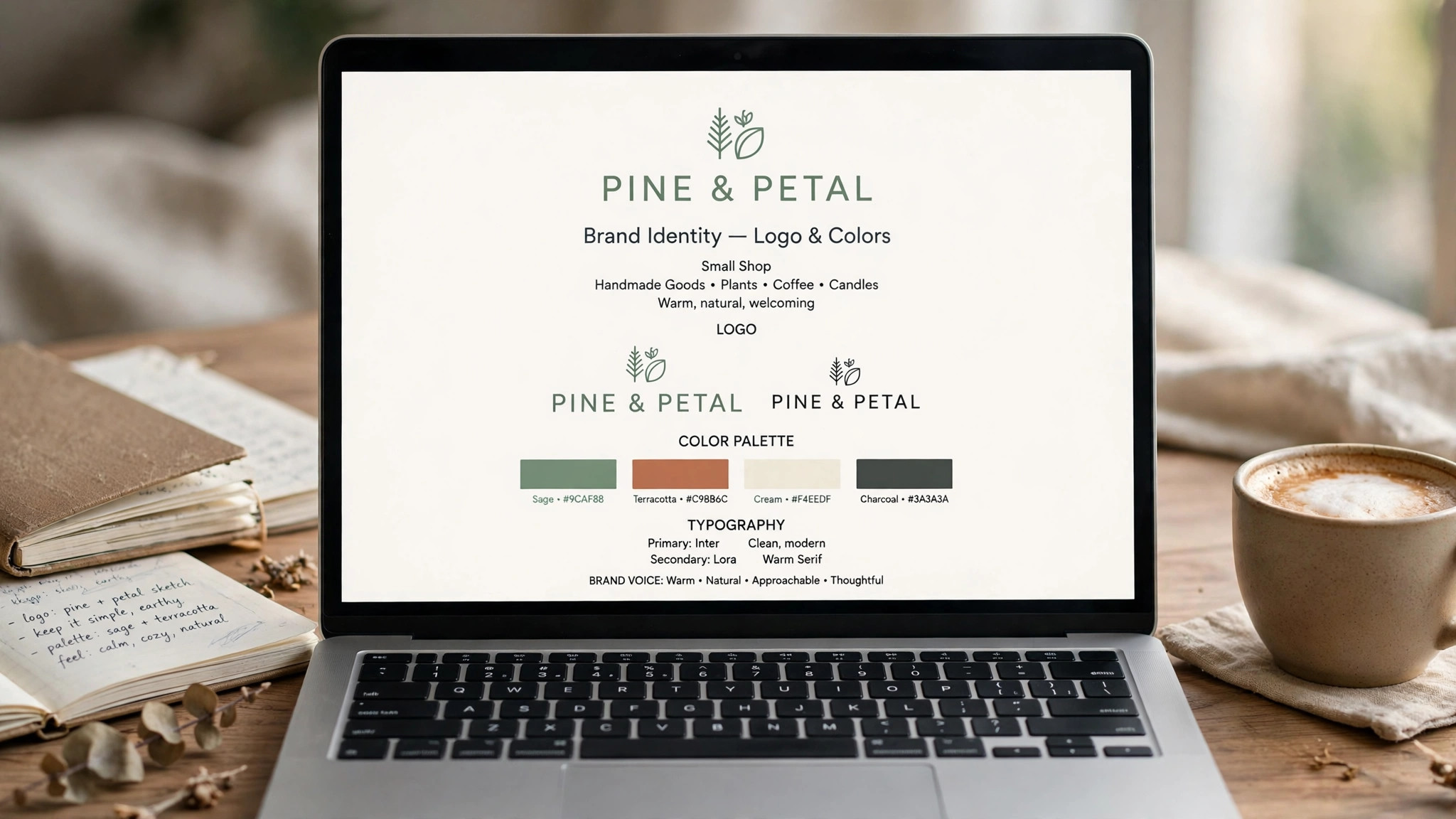
Start by talking to the people who already buy from you. Ask ten regular customers three questions. What made you choose us? What do you tell friends about us? What would you change? The answers will tell you what customers already love, and that is the part of the brand you must keep. A bakery whose customers praise the sourdough should keep the sourdough at the centre of the brand. A plumber whose customers praise the punctuality should keep the punctuality at the centre of the brand.
Then look at your competitors. List the five businesses your customers compare you with, and write down their names, their logos, their colors and their taglines. If three of them use blue, do not use blue. If all of them say “quality” and “service”, do not say “quality” and “service”. The point of a rebrand is to look different from the businesses your customers compare you with, and you cannot be different until you know what they look like.
Then check your own numbers. Which products make the most money? Which customers come back? Which services take the most time for the least profit? The rebrand should push the profitable work to the front, and the unprofitable work to the back, because a brand that sells the wrong thing is a brand that works against the business.
Write the findings down in one page. Who are your best customers, what do they value, what do your competitors look like, and what should the brand say. That page is the brief for everything that follows, and every design decision should be checked against it.
Step 2. Decide What Stays and What Goes
A rebrand is a decision about what to keep, and the decision matters more than the design, which is why the second step in how to rebrand your small business is the hardest one to rush. Keep the name if customers know it and it does not mislead them. Keep the tagline if customers repeat it. Keep the color if customers recognise the van, the shopfront or the packaging from across the street. Keep the best product at the centre of the story, because that is what customers came for.
Drop the parts that confuse people. Drop a name that describes a product you no longer sell. Drop a tagline that could belong to any business in your trade. Drop a logo that looks like a stock image, or that cannot be read at the size of a phone screen. Drop colors that clash with the products you sell, and drop a website that looks older than the business it describes.
Write the keep list and the drop list on one page, and show it to two people who know the business well, a member of staff and a regular customer. If they disagree with a choice, listen, because they see the brand the way the public sees it, and the owner sees it the way the owner sees it, which is not the same thing.
Step 3. Write the New Message Before You Design Anything
The message comes before the logo, because the logo has to carry the message, and a logo designed first will carry nothing. Write three sentences. Who are your customers? What do you do for them? Why should they choose you over the business down the road? The answers should be specific enough that no competitor could copy them word for word. “We fix boilers the same day” is a message. “We offer quality service” is not a message, because every business in the trade says it.
Then write the tagline. A tagline is one short line that carries the promise, and it should fit on a van, a shopfront and a business card. “Same-day boiler repair, fixed right” is a tagline. “Your trusted partner” is not a tagline, because it says nothing about the work. Test the tagline by reading it aloud to a customer. If they can repeat it back after a minute, it works. If they cannot, it is too long or too vague.
Then write the voice. How does the business talk? A bakery talks warmly and plainly. A law firm talks carefully and precisely. A gym talks energetically and directly. Write three example sentences in the new voice, one for the website, one for a social post and one for a reply to a complaint, and use them as the standard for every piece of writing that follows. A brand that talks one way on the website and another way on the phone is a brand that customers do not trust.
Step 4. Design the Logo, Colors and Type
Now the design can begin, and it should begin with the logo, because the logo sets the colors and the type. A small business logo needs to work in three places. It needs to read on a shopfront from across the street, on a phone screen at the size of a thumbnail, and in black and white on an invoice. A logo that only works at full size on a website is a logo that fails in the places customers actually see it.
Pick two colors, not five. One main color that carries the brand, and one supporting color that carries the contrast. A bakery might use warm brown and cream. A plumber might use navy and orange. A boutique might use black and blush. The colors should suit the products and stand apart from the competitors you listed in step one. Check the colors on a phone screen and on paper, because a color that looks rich on a laptop can look muddy in print.
Pick two typefaces, one for headings and one for body text, and use them everywhere. A heading typeface with character carries the personality, and a body typeface that reads easily carries the information. Do not use more than two, because a third typeface makes the brand look untidy, and a brand that looks untidy makes customers doubt the work.
Get the logo in every format you will need. A vector file for the signwriter, a PNG with a transparent background for the website, a small version for social profiles, and a black and white version for invoices and fax. A logo delivered as a single JPG is a logo you will have to redraw within a year, and redrawing a logo costs more than getting the files right the first time.
Step 5. Rebuild the Website, Shopfront and Packaging
The website comes first, because it is where most customers check a business before they visit or call. A rebrand that changes the logo and leaves the old website is a rebrand that customers will not believe, because the website is the first thing they see. Rebuild the homepage around the new message, with the new logo, the new colors and the new tagline at the top, and make sure the phone number and the opening hours are easy to find on a phone.
Then the shopfront, the van and the signage. A new sign is the most visible part of a rebrand, and it is the part regulars notice first. Order the sign early, because signwriters book weeks ahead, and a launch date that depends on a sign that has not arrived is a launch date that will slip. Photograph the old shopfront before the change, because the before and after photos are the best launch content you will ever have.
Then the packaging, the uniforms and the stationery. A bag, a box, a uniform and a business card that all carry the new brand tell the customer that the change is real, and that the business means it. A rebrand that changes the website and leaves the old bags is a rebrand that customers will see as a coat of paint, not a new business.
Check every listing. Google Business Profile, social profiles, directories, review sites and the email signature all need the new logo and the new name, if the name changed. A customer who finds the old logo on Google and the new logo on the website will wonder which business is real, and that doubt costs bookings.
Step 6. Tell Your Staff Before You Tell the Public
Staff hear about a rebrand from the owner, not from the new sign, and the order matters. A member of staff who learns about the rebrand from a customer will feel blindsided, and a member of staff who feels blindsided will not sell the new brand to customers. Brief the team a week before the launch, show them the new logo and the new message, and tell them what has changed and what has stayed the same.
Give staff the words to use. When a regular asks why the sign changed, the answer should be one sentence, not a shrug. “We have grown, so we gave the business a look that matches the work we do now” is an answer. “I don’t know, the boss changed it” is not an answer, because it tells the customer that the staff were not told, and a business that does not tell its own staff is a business that customers will not trust.
Train the team on the new voice. If the brand now talks warmly and plainly, the phone greeting, the email replies and the in-person service should all sound warm and plain. A brand is what the staff do, not what the logo says, and a rebrand that does not reach the staff is a rebrand that stops at the door.
Step 7. Launch, Then Measure for Ninety Days
Launch on a quiet day, not a busy one, because a launch that goes wrong on a busy day costs you customers. Pick a Tuesday, put the new sign up, publish the new website, post the before and after photos, and send a short email to your regulars explaining what has changed and what has stayed the same. Keep the email short, one paragraph and one photo, because regulars do not need a press release, they need to know that the business they like is still the business they like.
Then measure for ninety days. Count the website visits, the phone calls, the bookings and the sales, and compare them with the ninety days before the launch. Ask new customers how they found you, and ask regulars what they think of the new look. A rebrand that works will show up in the numbers within three months, in more enquiries, more bookings, or more sales per customer.
If the numbers fall, do not panic and do not change the brand again. A rebrand takes time to settle, and a second change in three months will confuse customers more than the first one did. If the numbers fall for six months, look at the message, not the logo, because the logo was never the problem. The message is the part that wins customers, and the logo is the part that helps them remember it.
Your Rebrand Week by Week
A small business rebrand takes six to twelve weeks, and the plan below is the most common shape. Week one is research, talking to customers, listing competitors and checking the numbers. Week two is the keep and drop decision, with the brief written on one page. Week three is the message, the tagline and the voice, written before any design begins.
Weeks four and five are design, the logo, the colors and the type, with two rounds of revision. A designer who offers unlimited revisions is a designer who has not planned the job, so agree on two rounds before you start, and make the feedback specific. “Make it warmer” is not feedback. “Use a warmer brown and a rounder typeface” is feedback.
Weeks six and seven are the website, the shopfront and the packaging, with the sign ordered early. Week eight is the staff briefing, the listings update and the launch content. Week nine is the launch, on a quiet day, with the email to regulars. Weeks ten to twelve are measurement, with the numbers checked weekly and the lessons written down.
A rebrand that runs longer than twelve weeks is usually a rebrand where the decisions were not made, and the delay is the owner changing their mind, not the designer working slowly. Decide early, decide once, and let the plan run.
What a Rebrand Costs
Knowing how to rebrand your small business means knowing what it costs. A do-it-yourself rebrand costs a few hundred dollars. A logo tool costs under $100, a template website costs under $200 a year, and new business cards cost under $50. The risk is the design, because a logo made in an afternoon by someone who is not a designer will look like a logo made in an afternoon, and customers can tell.
A rebrand with a freelance designer costs a few thousand dollars. A logo and brand kit from a freelancer costs $500 to $2,000. A new website from a freelancer costs $1,000 to $5,000. Signage costs $500 to $3,000, depending on the size and the material. The total for a small shop is usually $2,000 to $8,000, and the result is a brand that looks professional and holds together.
A rebrand with a small agency costs $10,000 and up. An agency will do the research, the strategy, the design and the launch, and the price covers the thinking as well as the pictures. A business should only pay agency prices when the rebrand is tied to a real change in the market, such as a move into a new trade or a merger, because the strategy is the part that an agency adds, and the design alone is cheaper from a freelancer.
Budget for the whole job, not the logo. A rebrand that spends the whole budget on the logo and leaves nothing for the website, the signage and the launch is a rebrand that never lands, and the logo will sit in a folder while the old brand stays on the door.
Common Rebrand Mistakes
The first mistake is changing the logo and nothing else. A new logo on top of the same muddled message changes nothing, and customers will notice that the business looks different but says the same thing. A rebrand is a new promise, a new look and a new voice, all built around the customers you want next.
The second mistake is copying a competitor. A logo that looks like the market leader’s logo will make customers think you are the market leader’s cheaper copy, and a tagline that sounds like the market leader’s tagline will make customers think you have nothing of your own to say. The point of a rebrand is to look different, and copying the business you compete with is the opposite of different.
The third mistake is asking too many people. A rebrand that is designed by committee will end up as a compromise that nobody loves and nobody remembers. Ask two people who know the business well, a member of staff and a regular customer, and then decide. A brand that tries to please everyone pleases no one.
The fourth mistake is launching without telling staff. A member of staff who learns about the rebrand from a customer will feel blindsided, and a member of staff who feels blindsided will not sell the new brand. Brief the team a week before the launch, give them the words to use, and train them on the new voice.
The fifth mistake is changing the name when it does not need changing. A name change is the most expensive part of a rebrand, because it means new signage, new stationery, new listings and a new domain, and it risks losing the search ranking the old name earned. Change the name only when the old one actively misleads customers, or when the business has moved into a different trade entirely.

Related Guides
- Small Business Branding Strategy for Beginners
- AI Logo Generator Pricing
- How to Create a Brand Kit for Your Small Business
Frequently Asked Questions
How long does a small business rebrand take?
Six to twelve weeks is the normal range. Week one is research, weeks two and three are the message, weeks four and five are design, weeks six and seven are the website and signage, week eight is the staff briefing, and week nine is the launch. A rebrand that runs longer than twelve weeks is usually a rebrand where the decisions were not made, and the delay is the owner changing their mind.
How much does it cost to rebrand a small business?
A do-it-yourself rebrand costs a few hundred dollars, which is the cheapest answer to how to rebrand your small business. A rebrand with a freelance designer costs $2,000 to $8,000 for a small shop, covering the logo, the website, the signage and the launch. A rebrand with a small agency costs $10,000 and up. Budget for the whole job, not the logo, because a rebrand that spends the whole budget on the logo and leaves nothing for the website and the signage is a rebrand that never lands.
Should I change my business name when I rebrand?
Usually not. Change the name only when the old one actively misleads customers, or when the business has moved into a different trade entirely. A name change is the most expensive part of a rebrand, because it means new signage, new stationery, new listings and a new domain, and it risks losing the search ranking the old name earned. Most small business rebrands keep the name and change everything around it.
How do I tell my customers about the rebrand?
Send a short email to your regulars on launch day, one paragraph and one photo, explaining what has changed and what has stayed the same. Post the before and after photos on social media, and put the new sign up on a quiet day. Regulars do not need a press release, they need to know that the business they like is still the business they like.
What if my customers do not like the new brand?
Listen to them, and check the numbers before you change anything. Ask new customers how they found you, and ask regulars what they think of the new look. A rebrand takes time to settle, and a second change in three months will confuse customers more than the first one did. If the numbers fall for six months, look at the message, not the logo, because the message is the part that wins customers.
The Bottom Line
How to rebrand your small business comes down to three things. Keep what customers already love, fix what confuses them, and say clearly what the business does now. Research first, write the message before you design anything, tell your staff before you tell the public, and measure the result for ninety days.
A rebrand is not a new logo. It is a new promise, a new look and a new voice, all built around the customers you want next. Do the research, make the decisions once, and let the plan run, and the brand you launch will match the business you actually run.
1 thought on “How to Rebrand Your Small Business”