
A store that sends the same email to every subscriber is leaving money on the table, and the owner usually knows it. The customer who bought running shoes last month does not need an email about running shoes, and the customer who abandoned a cart an hour ago does not need a newsletter about the brand story. The best ai tools for ecommerce marketing send the right message to the right customer at the right moment, and the newer ones use AI to write the subject line, pick the send time, and predict which customer is about to buy. Klaviyo leads this list because its segmentation and predictive data are the benchmark for Shopify stores, and its flow builder turns a single purchase into a year of well-timed messages.
An ecommerce marketing tool earns its place by doing three things well. It must collect the customer data that makes personalisation possible, from purchases and browsing to email opens and SMS replies. It must turn that data into messages that go out without manual work, through flows that trigger on real behaviour rather than on a calendar. And it must show, in plain numbers, which messages made money and which ones only made noise. The nine tools in this guide were judged on those three jobs, and on whether their price stays fair as the list grows.
Quick jump
The 9 Tools at a Glance
This table compares the best ai tools for ecommerce marketing on the facts that decide a purchase. Prices are the entry paid tier from each vendor site, checked in November 2026. Ecommerce tools price by list size, so the table shows the price at 500 contacts where the vendor publishes one, because a price without a list size means nothing.
| Tool | Entry paid plan | Free option | Best for |
|---|---|---|---|
| Klaviyo | From $20 a month at 500 profiles | Yes | Deep segmentation |
| Omnisend | $16 a month at 500 contacts | Yes | Simple store automation |
| Mailchimp | Paid plans scale by contacts | Yes | Small stores starting out |
| Yotpo | Paid plans on site | Yes | Reviews and loyalty |
| Attentive | Quote only | No | SMS-first stores |
| Seguno | Paid plans on site | Trial | Shopify email |
| SmartrMail | Paid plans on site | Yes | Automated email flows |
| Marsello | Paid plans on site | Trial | Loyalty and marketing |
| PushOwl | Paid plans on site | Yes | Web push notifications |
The 9 Tools in Detail
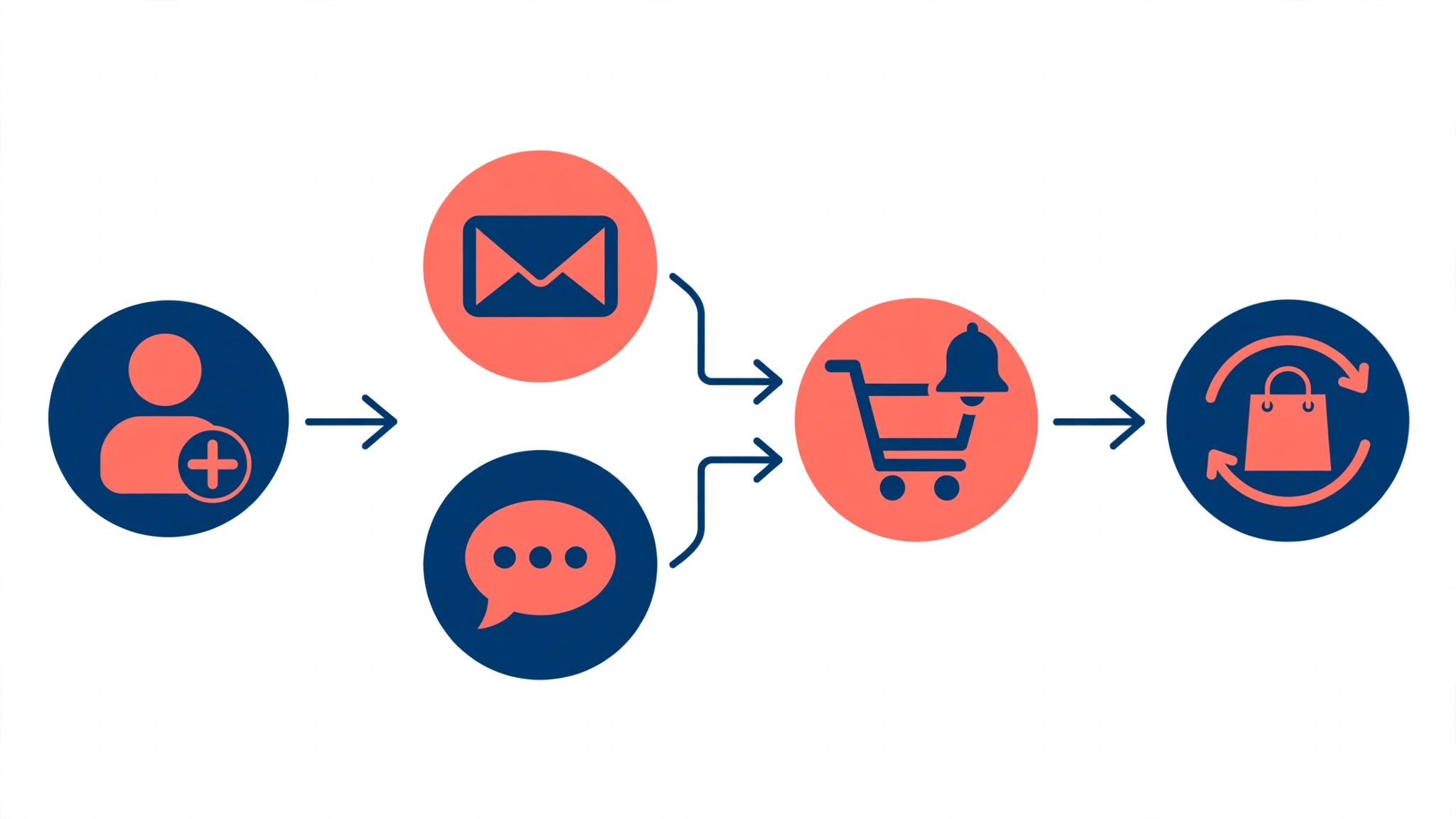
This section tests the best ai tools for ecommerce marketing against the same three jobs. A welcome flow that turns a new subscriber into a first buyer, an abandoned cart flow that recovers the sale, and a post-purchase flow that brings the customer back. Figures in this guide mean the lowest paid plan unless a sentence flags a different basis, all checked in November 2026.
1. Klaviyo
No tool in this list segments a store audience as deeply as Klaviyo, which is why it leads. Its flow builder, segmentation, and predictive data are the benchmark for Shopify stores, and it charges for that depth. A store can build a segment of customers who bought twice in ninety days, viewed a product three times without buying, and opened the last five emails, then send that segment a message no other customer sees. That precision is what turns email from a broadcast into a conversation.
The free plan covers up to 250 active profiles with 500 email sends a month and $5 of mobile message credit. The Email plan then costs $20 a month for 500 profiles, $30 a month at 1,000 profiles, and $150 a month at 10,000 profiles, with SMS billed separately as an add-on. Klaviyo bills on active profiles, which includes anyone the store can email, including non-opted-in checkout contacts unless they are suppressed, so keeping the list clean keeps the bill down. Among the best ai tools for ecommerce marketing, Klaviyo is the one that rewards a clean list most directly, because every suppressed contact is money saved every month.
The weakness is price and complexity. Klaviyo is the dearer tool here at every list size, and its depth can overwhelm a store that only needs a welcome email and a cart reminder. A store doing under a million in revenue may find Omnisend covers the same flows for less money. For a store that lives on repeat purchases and wants to predict who will buy next, the price is the cost of the data, and the data pays for itself in recovered carts.
2. Omnisend
Omnisend is the simpler, cheaper answer for most small and mid-size stores, and it covers the core store automations with far less setup than Klaviyo. It puts email, SMS, and web push in one place, with pre-built flows for welcome, abandoned cart, and post-purchase, so a store can launch its automation in an afternoon instead of a week. A founder who wants the flows running before the next sale, not after a month of configuration, will find Omnisend the faster route.
The free plan covers 250 contacts, 500 emails a month, and 500 web push notifications, with AI features including a segment builder, a subject line assistant, and an email assistant on every tier. Standard costs $16 a month for 500 contacts with 6,000 sends, and $20 a month at 1,000 contacts. Pro costs $59 a month for 2,500 contacts with unlimited emails and push, and SMS is bought separately from about $0.007 a message. Paying for three months upfront cuts Standard to $11.20 a month and Pro to $41.30 a month.
The limit is depth. Omnisend’s segmentation and reporting are good, but they do not match Klaviyo’s predictive models, and a large store with complex customer journeys will eventually feel the ceiling. For a store under 50,000 contacts, that ceiling rarely matters, and the price gap is wide. At 50,000 contacts, Omnisend costs $413 a month against Klaviyo’s $720, which is a saving worth taking for most stores.
3. Mailchimp
Mailchimp is the tool most store owners try first, and its strength is familiarity. The editor is easy, the templates are plentiful, and the Shopify and WooCommerce integrations connect in minutes. A small store that needs a newsletter, a welcome email, and a basic abandoned cart flow can launch all three in a day, and the free plan covers the first 500 contacts while the store learns what its audience actually opens.
The pricing scales by contacts, with a free plan for small lists and paid plans that add automation, segmentation, and AI writing help as the store grows. The AI features include subject line suggestions and send-time optimisation, which help a founder who writes their own emails but wants a second opinion on the wording. The template library is the largest in this list, and a store that sells visually, with food, fashion, or home goods, will find templates that look good without a designer.
The weakness is that Mailchimp is a general email tool wearing an ecommerce costume. Its store automation is thinner than Klaviyo or Omnisend, its SMS offering is weaker, and its pricing climbs steeply once the list passes a few thousand contacts. A store that outgrows the basics will migrate, and that migration is a real cost. For a store starting out, though, it remains the easiest first step.
4. Yotpo
Yotpo earns its place by owning the part of ecommerce marketing that email tools ignore, which is what customers say about the store. It collects reviews, photos, and videos from buyers, then turns that content into marketing, showing star ratings on product pages, review requests after delivery, and user photos in emails and ads. A store whose customers trust other customers more than they trust the brand needs this layer, and no email tool in this list does it as well.
The platform covers reviews, loyalty, and SMS alongside the review engine, so a store can run a points program, a referral program, and a review request flow from one account. The loyalty tools reward repeat purchases with points and perks, and the referral tools turn happy customers into a channel that brings in new buyers at a lower cost than ads. A free plan covers the basics, and paid plans are listed on the vendor site for stores that need more review volume and loyalty features.
The limit is that Yotpo is not an email platform first. It needs an email tool beside it, and the two must be integrated properly or the review content never reaches the inbox. The right setup is Yotpo for reviews and loyalty plus Klaviyo or Omnisend for email, with the review stars flowing into the email templates. Used that way, it lifts conversion on every channel it touches.
5. Attentive
Attentive is the SMS-first pick, built for stores where text messages drive more revenue than email. It grows the SMS list with two-tap signup, sends messages timed to each subscriber’s behaviour, and uses AI to write and test message variants. A store with a young audience that reads texts within minutes and ignores email for days will make more money from Attentive than from any email tool here.
Pricing is quote only, with no published entry price, and the sales process is built around a demo and a custom plan based on list size and message volume. That is normal for an SMS platform, where the cost depends on how many messages go out and where the subscribers live, but it means a small store cannot judge the price without a sales conversation. The platform is built for stores doing real volume, not for a side project with a hundred subscribers.
The limit is the single-channel focus. Attentive does SMS brilliantly and email barely, so a store still needs an email tool for the customers who prefer the inbox. The right setup pairs Attentive for SMS with Klaviyo or Omnisend for email, and the two share the customer data so a subscriber never gets the same offer twice. For a store where SMS is the main channel, that pairing is worth the extra subscription.
6. Seguno
Seguno is built only for Shopify, and that narrow focus is its strength. It lives inside the Shopify admin, so a store owner never leaves the dashboard to build an email, and it reads the store data directly, which makes segmentation by purchase history, product views, and discount use fast and accurate. A Shopify store that wants email without learning a second platform will find Seguno the most comfortable tool here.
The pricing is listed on the vendor site, with a free trial for testing the editor and the flows before paying. The AI features include subject line help and send-time suggestions, and the template library is built for Shopify stores, with product blocks that pull live prices and images from the catalogue. A store that changes its prices often will appreciate that the email always shows the current price, because the template reads it at send time rather than at design time.
The limit is the platform lock-in. Seguno only works on Shopify, so a store that moves to WooCommerce or another platform must start over with a new email tool. It also lacks the deep predictive models of Klaviyo and the multi-channel reach of Omnisend. For a Shopify store that plans to stay on Shopify, those limits rarely matter, and the comfort of working inside the admin is worth more than the extra features.
7. SmartrMail
SmartrMail automates the email flows that make a store money while the owner sleeps. It builds welcome, abandoned cart, browse abandonment, and win-back flows from the store data, with AI product recommendations that pick the items each customer is most likely to buy next. A store with a large catalogue and many one-time buyers will find the recommendation engine more useful than another template library, because the right product in the email matters more than the design around it.
The pricing is listed on the vendor site, with a free plan for small stores and paid plans that scale by list size. The setup is deliberately light, with pre-built flows that can be switched on in minutes and tuned later, which suits a founder who wants revenue from email this week rather than after a month of configuration. The reporting shows revenue per flow, so the owner can see exactly which automation earned its keep and which one needs work.
The limit is range. SmartrMail is an email automation tool, not a full marketing platform, and it does not cover SMS, push, loyalty, or reviews. A store that needs those channels must add them separately. For a store whose email flows are the main revenue lever, that focus is a strength, because every feature serves the same job. For a store that wants one tool for everything, it is too narrow on its own.
8. Marsello
Marsello combines loyalty and marketing in one account, so the points program and the email campaigns share the same customer data. A customer earns points for a purchase, gets an email when they are close to a reward, and receives a VIP offer when their spending crosses a threshold, all without the store owner stitching two tools together. A store that depends on repeat customers will find that combination more valuable than a standalone email tool or a standalone loyalty app.
The pricing is listed on the vendor site, with a free trial for testing the loyalty flows and the email campaigns before paying. The platform covers email, SMS, and loyalty, with automation that triggers on loyalty events as well as on purchase behaviour. A store can build a flow that rewards a customer’s fifth purchase automatically, and another that win back a VIP who has not bought in ninety days, and both run without manual work.
The limit is depth in each channel. Marsello’s email is good but not as deep as Klaviyo, and its SMS is good but not as deep as Attentive. A store that needs the best email and the best SMS will still buy those separately. For a store that wants loyalty and marketing in one place with one bill, the trade is worth it, because the shared data makes the loyalty program actually drive purchases instead of sitting as a badge on the site.
9. PushOwl
PushOwl owns the channel most stores forget, which is the web push notification. A visitor who allows notifications can be reached with a short message the moment a sale starts, a product comes back in stock, or a cart is abandoned, and the message appears on their screen without an email address or a phone number. A store with heavy traffic and a low email signup rate will find push notifications reach customers that email never touches.
The pricing is listed on the vendor site, with a free plan for small stores and paid plans that scale by subscriber count. The AI features include send-time optimisation and message suggestions, and the back-in-stock and price-drop alerts are the two flows that earn the most revenue per message. A store that sells products that go out of stock often will find the back-in-stock alert alone pays for the subscription.
The limit is the channel itself. Push notifications are short, easy to ignore, and easy to switch off, so they work best as a complement to email rather than a replacement. A store that relies on push alone will reach fewer customers than a store that pairs push with email and SMS. Used as the third channel beside the other two, PushOwl catches the customers who never open their inbox.
Email, SMS, or Both
The question that decides the tool is not which channel is best, but which channel the store’s customers actually read. A store with an older audience that checks email every morning will make more money from Klaviyo than from Attentive, and a store with a younger audience that reads texts within minutes will make more from Attentive than from any email tool. The best ai tools for ecommerce marketing cover both channels, or pair cleanly with a tool that covers the other one, so the store can reach each customer where they already are.
The second question is timing. An abandoned cart email sent an hour after the cart is left recovers more sales than the same email sent a day later, and a back-in-stock alert sent the moment the product returns beats a weekly newsletter that mentions it days after it sold out again. The tools in this list all offer behavioural triggers, but the quality of the timing varies, and the flows that trigger on real behaviour are worth more than the campaigns that go out on a calendar. A store should build the behavioural flows first, and only then worry about the newsletter.
The third question is the list itself. A store that buys a list, or adds every checkout contact without permission, will pay for subscribers who never open anything, and on Klaviyo that inflates the bill directly, because the price follows active profiles. The honest practice is to suppress the contacts who never engage, to ask for permission clearly at checkout, and to let the unengaged go. A smaller list that opens is worth more than a larger list that ignores, and it costs less on every tool in this list.
The fourth question is measurement. Every tool here reports revenue per email, per flow, and per campaign, and the store owner should read those numbers weekly. A welcome flow that earns $500 a month deserves more attention than a newsletter that earns $50, and a win-back flow that earns nothing should be rewritten or switched off. The tools make the measurement easy, but the owner still has to look at it, and the stores that do look are the ones whose email revenue grows every quarter. The best ai tools for ecommerce marketing all report revenue per flow, so the difference between them is not whether the numbers exist, but whether the owner builds the habit of reading them every Monday morning before doing anything else.
What the Best AI Tools for Ecommerce Marketing Cost as Your List Grows
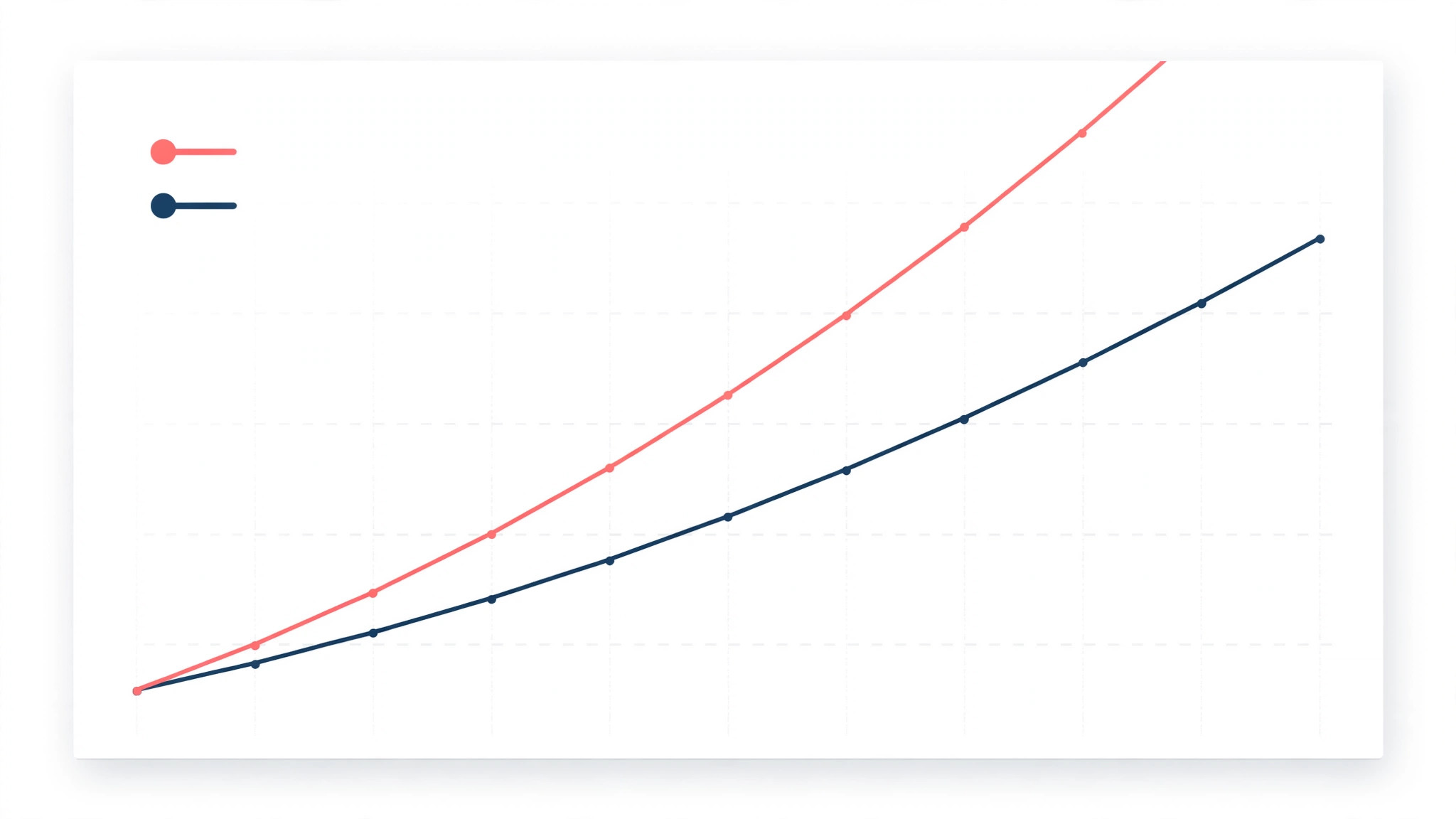
The price that matters is not the entry price but the price at the list size the store will reach in a year. Omnisend Standard costs $16 a month at 500 contacts, $20 at 1,000, $132 at 10,000, and $413 at 50,000. Klaviyo Email costs $20 a month at 500 profiles, $30 at 1,000, $150 at 10,000, and $720 at 50,000. The gap widens as the list grows, and a store that expects fast growth should model the price at 10,000 contacts before choosing, not at 500.
The free plans deserve a second look. Klaviyo and Omnisend both offer a free plan for up to 250 contacts with 500 emails a month, and both include enough automation to run a real welcome flow and a cart flow before paying anything. A new store can launch on the free plan, learn which flows earn money, and only pay when the list outgrows the free tier. The cost that matters is not the first month. It is the month the list crosses 1,000 contacts and the bill jumps, and that month arrives faster than most store owners expect.
A second cost hides in the add-ons. Klaviyo bills SMS separately, Omnisend sells SMS credits on top of the plan, and Yotpo and Attentive each add their own subscription. A store that wants email, SMS, and loyalty should add the three bills together before comparing tools, because a cheap email plan plus two add-ons can cost more than a dearer platform that includes them. Count the channels the store will actually use, price them together, and the right tool usually picks itself.
Best Pick by Job
| Job | Best pick | Why |
|---|---|---|
| Deep segmentation | Klaviyo | Predictive data and the best flow builder |
| Simple store automation | Omnisend | Email, SMS and push in one place |
| Small stores starting out | Mailchimp | Easiest editor and largest template library |
| Reviews and loyalty | Yotpo | Review content that lifts conversion |
| SMS-first stores | Attentive | Text messages timed to behaviour |
| Shopify email | Seguno | Lives inside the Shopify admin |
| Automated email flows | SmartrMail | AI product recommendations in every flow |
| Loyalty and marketing | Marsello | Points and email share one customer record |
| Web push notifications | PushOwl | Reaches visitors without an email address |
Questions to Ask Before You Pick an Ecommerce Tool
How many contacts will I have in a year?
Price the tool at the list size you expect in twelve months, not at the size you have today. Omnisend costs $413 a month at 50,000 contacts against Klaviyo’s $720, and that gap is the real cost of choosing the deeper tool. A store that grows fast will pay the difference every month, so the growth forecast belongs in the decision.
Does the tool price by contacts or by sends?
Klaviyo and Omnisend both price by contacts, which means an unengaged subscriber costs money every month even if they never open an email. Suppressing the contacts who never engage keeps the bill down, and a tool that prices by sends instead would reward a different habit. Know which meter you are on before the list grows.
Will the AI features actually help, or just decorate the dashboard?
Subject line suggestions, send-time optimisation, and product recommendations are the AI features that earn money, because they change what the customer sees. A tool whose AI only writes a report nobody reads is not worth paying extra for. Test the AI on a real campaign and compare the open rate against the same campaign written by hand. The best ai tools for ecommerce marketing prove their AI in the open rate and the revenue per send, and a feature that cannot move either number is decoration, however impressive it looks in a demo.
Can the tool show revenue per flow?
Every tool in this list reports revenue per flow, and the store owner should read those numbers weekly. A welcome flow that earns $500 a month deserves more attention than a newsletter that earns $50. If a tool cannot show which flow made money, it cannot tell the owner where to spend their time.
Do I need SMS as well as email?
A store whose customers read texts within minutes will make more money from SMS than from email, and a store whose customers prefer the inbox will waste money on texts nobody reads. The answer comes from the audience, not from the tool. Start with the channel the customers already use, then add the second channel once the first one earns.
How hard is it to leave?
Moving an email list and a set of flows to a new tool takes days, not hours, and the flows must be rebuilt by hand. A store that picks a tool should assume it will live with that choice for at least a year. Check the export options before signing up, and keep a copy of the list outside the tool, so a future move is a project rather than a crisis.
Pick the Tool That Matches Your Best Customers
The best ai tools for ecommerce marketing do not win on feature count alone. They win on the three tests that decide whether a store makes money from its list, messages that reach the right customer, flows that trigger on real behaviour, and a price that stays fair as the list grows. Klaviyo passes all three for a store that lives on repeat purchases, Omnisend passes them for a store that wants the flows running this week, and Yotpo passes the review test that neither email tool can pass on its own.
Start with the free plan of the tool that matches the store size, and build the three flows that earn money first, welcome, abandoned cart, and post-purchase. The first month shows which flow recovers the most sales, which segment buys again, and whether the price at the next list size still makes sense. A tool that passes that month earns the subscription, and a tool that fails it costs nothing to walk away from. Pick the tool that matches the job your best customers must do, build one messaging routine, and reuse it until every subscriber hears from the store at the moment they are ready to buy.