The verdict first. Upwork is the best place to find freelance work in 2026, Contra is the best place to keep what you earn, and ChatGPT is the best tool for writing proposals that win. The best ai tools for freelance job search do not replace your skills. They put your work in front of the right clients, cut the time you spend on proposals, and stop you undercharging for work you already do well.
This guide compares twelve tools for freelancers in 2026, from the big marketplaces to the AI writing assistants that draft proposals and check rates. Every price and fee comes from a vendor page or a published review of it, checked in late 2026, and every figure should be confirmed at checkout, because platform fees change often and without much warning.
Quick jump
The Short Answer. Where to Start
If you want work this week, join Upwork and Contra today. The best ai tools for freelance job search start with the marketplace, not the writing assistant, because the marketplace decides who sees your work. Upwork has the largest client pool, and Contra charges you nothing in commission, so the two together cover volume and margin. If you sell packaged services, add Fiverr, where buyers come to you instead of you chasing them. If you are a senior specialist, apply to Toptal, which accepts about the top three percent and pays premium rates.
For writing proposals, use ChatGPT or Claude. For checking whether a rate is fair, use the pricing guidance inside Upwork and the market data on Contra. For remote-first roles, check We Work Remotely and FlexJobs. The rest of this guide shows you the fee on every platform, because the fee is the real price of the work you win.
| Tool | Best for | What it costs freelancers |
|---|---|---|
| Upwork | Largest client pool | 0 to 15 percent service fee per contract |
| Fiverr | Packaged gigs, inbound buyers | 20 percent commission on earnings |
| Contra | Zero commission portfolio work | Free, clients pay the fee |
| Toptal | Premium vetted work | 0 percent freelancer fee |
| Guru | Low-fee ongoing projects | 5 to 9 percent fee |
| Freelancer.com | Contests and small projects | About 10 percent fee on most projects |
| PeoplePerHour | UK and European clients | 20 percent on the first 500 pounds per client |
| Braintrust | Vetted work, no commission | 0 percent freelancer fee |
| FlexJobs | Curated remote and flexible jobs | From $24.95 a month |
| We Work Remotely | Remote-first job listings | Free to browse and apply |
| ChatGPT | Proposals, rate drafts, outreach | Free, Plus $20 a month |
| Claude | Long proposals and portfolio writing | Free, Pro $20 a month |
How Freelance Platforms Use AI in 2026
AI now sits inside every large freelance marketplace, and it changes three things. Matching is first. Upwork uses AI-assisted matching to rank your profile against a job, Fiverr uses AI-driven search ranking to decide which gigs buyers see, and Contra surfaces portfolios to clients looking for a specific style. A complete profile with real work samples ranks higher on all three, so the profile is the product now, not the proposal.
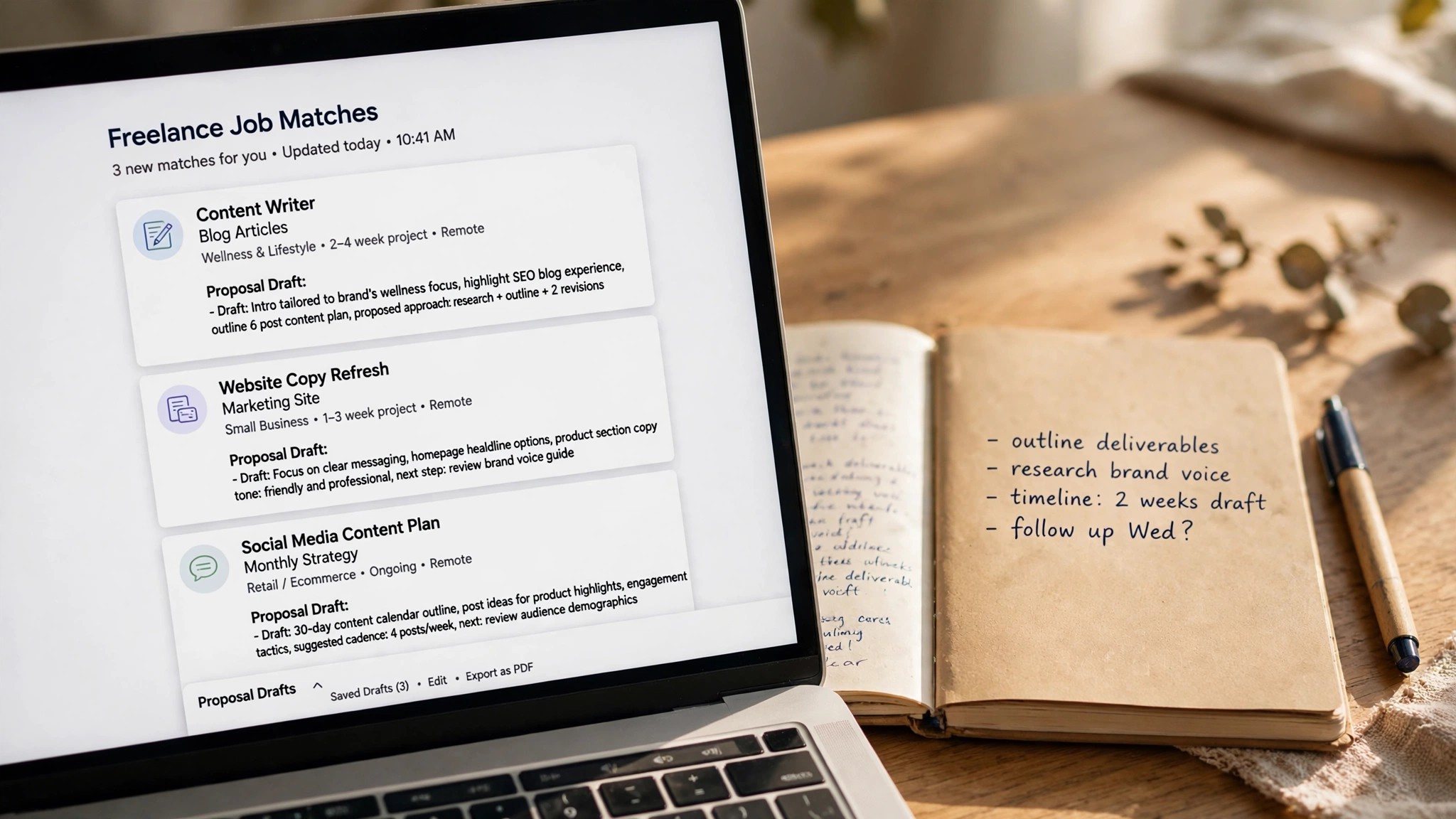
The second change is proposals. Upwork has Uma, an AI assistant that helps with messaging and admin tasks, and it offers an AI-based pricing advisor. ChatGPT and Claude draft proposals in minutes, and a good draft with a specific detail about the client beats a generic proposal every time. The third change is screening. Platforms use automated checks to catch fake profiles and fraudulent jobs, which helps honest freelancers and hurts nobody else.
Fees are the part most freelancers ignore until the first payment arrives. The best ai tools for freelance job search are the ones that earn their fee, and the fee is part of the decision, not an afterthought.
Fiverr takes a flat 20 percent of everything you earn, including tips. Upwork charges a variable fee between 0 and 15 percent per contract, locked in when you submit a proposal, and most freelancers report an effective rate near 10 percent. Freelancer Plus costs $19.99 a month and can reduce the fee to zero on qualifying contracts. Contra and Braintrust charge freelancers nothing, with the client paying instead.
1. Upwork. Best for the largest client pool
Upwork is the default freelance marketplace, and its scale is unmatched. Post a project and get proposals within hours, or browse jobs across every category from AI services to legal work. The platform handles escrow, contracts, hourly billing and milestone payments, and long-term contracts are the norm, which suits freelancers building recurring income.
Joining is free. The cost is the service fee, which runs from 0 to 15 percent per contract since the May 2025 restructure, and proposals cost Connects, roughly $0.15 each, with ten free a month on the Basic plan. Freelancer Plus costs $19.99 a month and adds real-time job alerts and the chance of a zero fee on qualifying contracts. Confirm the current rates on the official fee page before you bid, because Upwork adjusts the structure without notice.
What works is the volume. There is work in every category, every week, and the AI matching surfaces jobs that fit your past proposals. What to watch is the competition. A popular job attracts 15 to 40 proposals, so a generic proposal disappears. Write two sentences about the client, not about yourself, and you will stand out from most of the pile.
2. Fiverr. Best for packaged gigs and inbound buyers
Fiverr flips the freelance model. Instead of bidding on jobs, you package your service as a gig with a fixed price, and buyers come to you. It suits productised work with a clear deliverable, like a logo, a landing page, a voiceover or a short video. The platform also uses Neo, an AI business assistant that helps with gig setup and packaging, and AI-driven search ranking that decides which gigs buyers see first.
Joining is free, and the fee is a flat 20 percent commission on all earnings, including tips and extras, with no volume discount. That is the highest fee in this guide, and it is the price of inbound demand. There is also a 14-day payout hold on most orders. The fee is steep, but the buyers arrive without you bidding, which is worth a lot for a freelancer who hates pitching.
What works is the packaging. A clear gig with a clear price sells while you sleep, and the review system builds trust fast. What to watch is the race to the bottom on common services. Price your gig on the value of the result, not on the cheapest rate in the category, or you will work hard for very little.
3. Contra. Best for zero-commission portfolio work
Contra is the freelancer-friendly model done right. You keep 100 percent of what you earn, because the client pays the platform fee, not you. Profiles showcase work beautifully, with portfolios that look like a personal website rather than a job board listing. Clients hire directly, and contracts and payments are handled on the platform.
Joining is free, and there is an optional Pro subscription for extra features. The platform suits independents, designers, marketers and developers who already have work to show, and who want direct relationships with clients. Vetting is lighter than on Toptal or Braintrust, so diligence is on you, and you should check a new client before you start.
What works is the margin. Keeping the full fee changes the maths on every project, and the portfolio-first design helps visual work sell itself. What to watch is the buyer pool. It is smaller than Upwork or Fiverr, with less search visibility, so use Contra alongside a larger platform, not instead of one, until your own client list grows.
4. Toptal. Best for premium vetted work
Toptal accepts only about the top three percent of applicants, and it pays premium rates in return. It suits senior developers, designers, finance specialists and project managers who can pass a rigorous screening process, including skills tests and live interviews. Clients come with substantial engagements, not quick gigs, and the work is usually long-term.
Toptal charges freelancers no commission. Clients pay premium rates and, in some engagement models, a placement or membership fee. The price is the screening itself, which takes time and effort, and the process suits substantial work, not a quick first job. For a freelancer who passes, the rates and the client quality are the best in this guide.
What works is the client quality. Toptal clients pay for the best, and they treat the work accordingly. What to watch is the barrier. If you are early in your career, apply later, after you have a portfolio that proves the skill. A rejection now costs nothing, but the preparation takes weeks.
5. Guru. Best for low-fee ongoing projects
Guru is a long-running freelance marketplace that suits ongoing projects and repeat clients. It offers membership tiers, cashback on payments, and automatic payment handling, and its fees are among the lowest on a traditional open marketplace. The platform covers design, writing, development, admin and marketing work, and it rewards freelancers who build steady relationships.
Joining is free, and the fee runs from 5 to 9 percent depending on your membership tier, with the lowest rates for paid members. That is roughly half the effective rate most freelancers pay on Upwork, and a quarter of the Fiverr rate. The buyer pool is smaller than the big two, but the clients who use Guru tend to return, which makes it a good second platform.
What works is the fee and the repeat work. A client who comes back three times costs you less each time, in fees and in pitching. What to watch is the volume. There are fewer new jobs each day than on Upwork, so check it daily and respond fast when a good job appears.
Contests, Low Fees and Vetted Networks

6. Freelancer.com. Best for contests and small projects
Freelancer.com is one of the oldest freelance marketplaces, with a huge volume of small projects and contests. It suits freelancers who want to win work by showing it, because contests let you submit the actual work before the client chooses. The platform covers the same categories as Upwork, with a strong presence in design, writing and development.
Joining is free, and the fee is about 10 percent on most projects, with a minimum charge that varies by currency. Contests carry their own fee structure, so check the terms before you enter one. The volume is high, but so is the competition, and many jobs attract dozens of bids from around the world.
What works is the contest route. A strong contest entry can win a client who would never have found your profile. What to watch is the price pressure. Bidding low to win the first job is a trap, because the platform remembers your rate, and the next client will expect the same. Bid the rate you want to keep.
7. PeoplePerHour. Best for UK and European clients
PeoplePerHour is a UK-first marketplace with hand-reviewed talent and a strong base of British and European clients. It suits freelancers who want clients in the same time zone, and who work in design, writing, marketing and development. The platform reviews profiles by hand, which keeps the quality higher than on fully open marketplaces.
Joining is free, and the fee is 20 percent on the first 500 pounds billed to each client, dropping after that. That is the highest fee in this guide alongside Fiverr, and it is the price of the curated client base. For a freelancer in the UK or Europe, the time-zone fit and the client quality can justify it, especially on longer engagements where the fee falls.
What works is the client base. British and European clients pay on time and communicate in your working hours, which matters more than it sounds. What to watch is the fee on small jobs. A 500-pound project loses 100 pounds to the platform, so price small jobs with the fee in mind, or take them elsewhere.
8. Braintrust. Best for vetted work with no commission
Braintrust is a vetted talent network that charges freelancers no commission, like Toptal, but with a different model. Freelancers own a stake in the network through a token system, and clients pay the platform, not the talent. It suits experienced developers, designers, product managers and data specialists who can pass screening and want premium work without the fee.
Joining is free, and the freelancer fee is zero percent. Clients pay the network fee on top of your rate, so your quoted rate is your real rate. The network is smaller than Upwork, and the screening takes time, but the work that comes through is high quality, and the pay reflects it.
What works is the margin and the client quality together. Keeping the full rate on a premium project is the best deal in freelance work. What to watch is the screening. Braintrust is not a place to start a freelance career, it is a place to take one to the next level, after you have the portfolio to prove it.
9. FlexJobs. Best for curated remote and flexible jobs
FlexJobs is a paid job board that screens every listing for scams and filters for remote, hybrid, contract and part-time work. It suits freelancers who want flexible roles without wading through fake listings, and it covers writing, design, customer service, marketing and admin work. The curation is the product, and it is real.
Access costs from $24.95 a month, with cheaper rates on quarterly and yearly plans, so confirm the current figure at checkout. That is a subscription, not a commission, which means you keep everything you earn from a job you find there. For a freelancer who applies to many remote roles, the time saved on screening fake listings can pay for the subscription in a week.
What works is the trust. Every listing is checked, so you never waste a proposal on a scam. What to watch is the cost. If you find one job a month through it, the subscription pays for itself. If you find none, it is a cost, so set a time limit and judge it on results, not on the listings you browsed.
10. We Work Remotely. Best for remote-first job listings
We Work Remotely is a job board for remote-first companies, and it is free for job seekers to browse and apply. It lists design, development, marketing, customer support and operations roles, and the companies that post there are built for remote work, which means the roles are genuinely remote, not office jobs with a laptop at home.
There is no fee for freelancers, and no subscription. Employers pay to post, which keeps the job seeker side free. The listings are fewer than on Upwork, but the quality is high, and the roles tend to be full-time or long-term contract, which suits freelancers who want stable income without the pitching cycle.
What works is the focus. Every listing is remote, so you never filter out office jobs. What to watch is the competition. Remote roles attract applicants from everywhere, so your application needs a specific detail about the company, not a generic cover letter.
11. ChatGPT. Best for proposals and rate drafts
ChatGPT is the most flexible proposal tool a freelancer can use. It drafts proposals, rewrites them for different clients, drafts rate quotes, writes outreach messages, and summarises a job post so you can see what the client actually wants. The free tier handles most of this well, and the Plus plan adds heavier daily use.
The free tier covers most freelance writing tasks. ChatGPT Plus costs $20 a month, and it is worth it only if you use it daily across several tasks. For proposals, the workflow is simple. Paste the job post, ask for three proposal angles, pick the best lines, and rewrite the draft in your own words with one specific detail about the client.
What works is the speed. A proposal that would take 30 minutes takes five, and you can apply to more jobs in the same hour. What to watch is the generic output. A proposal that reads like every other AI-written proposal gets skipped, so edit every draft and add the detail that proves you read the job post.
12. Claude. Best for long proposals and portfolio writing
Claude is the best AI tool for long-form freelance writing, from detailed proposals to portfolio case studies and client reports. It handles long documents better than most rivals, and it keeps a consistent tone across a long piece, which matters when a proposal runs to two pages. It also drafts contracts, scopes of work and project plans.
The free tier covers most freelance writing tasks. Claude Pro costs $20 a month, and it adds heavier use and faster responses. For a freelancer who writes long proposals or case studies every week, the Pro plan pays for itself in saved hours. For occasional use, the free tier is enough.
What works is the long-form quality. A two-page proposal that stays coherent from start to finish is hard to write, and Claude does it well. What to watch is the same as with any AI writer. Edit every draft, check every claim, and add the specific detail about the client that no AI can know. The best ai tools for freelance job search speed up the writing, and your judgement wins the job.
Which of the Best AI Tools for Freelance Job Search Keeps the Most of Your Fee
The fee is the real price of a freelance platform, so compare it before you compare the features. Contra and Braintrust charge freelancers nothing, which makes them the best margin in this guide, but their buyer pools are smaller than Upwork or Fiverr. Guru charges 5 to 9 percent, which is the lowest fee on a traditional open marketplace. Upwork charges 0 to 15 percent, and most freelancers report an effective rate near 10 percent. Freelancer.com charges about 10 percent. Fiverr and PeoplePerHour charge 20 percent, which is the highest in the guide.
The right choice is not always the lowest fee. A platform with a 20 percent fee and a steady flow of buyers can earn you more than a platform with a zero fee and no buyers. The test is simple. Track your earnings per hour on each platform for a month, including the time spent pitching, and keep the platform that pays best per hour. The fee is a number, and the hourly rate is the truth.
A freelancer starting out should join Upwork and Contra, because the two together cover volume and margin. That pairing is the cheapest way to test the market, and the best ai tools for freelance job search are the ones you actually use every week.
Keep the stack small and check both platforms daily. A third platform adds work without adding income, and a fourth adds confusion. A freelancer with a portfolio should add Fiverr for inbound work. A senior specialist should apply to Toptal or Braintrust. A freelancer who wants remote roles should check FlexJobs and We Work Remotely weekly. That combination covers the market without spreading you across eight platforms you never check.
How to Win Work Without Undercharging
Step 1. Set your rate from the market, not from fear. Use Upwork pricing guidance and the rates on Contra to see what clients pay for your skill, then price at the middle of that range, not the bottom. A rate that is too low signals low quality, and it attracts the worst clients. Raise it after every five-star review.
Step 2. Write proposals about the client, not about yourself. Open with the client problem, name one specific detail from the job post, and say what you will deliver in the first week. Use ChatGPT or Claude to draft, then edit every line in your own words. Two sentences about the client beat two paragraphs about your experience.
Step 3. Build a portfolio that sells while you sleep. Contra is built for this, and a strong portfolio on any platform does the same work. Show three projects with a result, not ten projects with a description. A result is a number, a screenshot, or a client quote, and it is worth more than a paragraph of adjectives.
Step 4. Track every proposal and follow up. A short message three days after a proposal doubles your reply rate, because most freelancers never follow up. Keep a simple tracker, and note the rate, the client, and the date, so you can see which platform actually pays. The best ai tools for freelance job search help you find the work, and the follow-up wins it.
Step 5. Raise your rate every quarter. Add 10 percent, and see who stays. The clients who stay are the ones who value the work, and the ones who leave were the ones who would have haggled anyway. A freelancer whose rate never rises is a freelancer whose skills never rise, and clients can tell.

Best Pick by Job
No single platform wins for every freelancer. The right pick depends on how you work, how you charge, and where your clients are.
| Job | Pick | Why |
|---|---|---|
| New freelancer who wants the largest client pool | Upwork | The most jobs posted every day, across almost every skill, so a beginner can find work fast. |
| Selling a fixed service at a fixed price | Fiverr | Packaged gigs bring buyers to you, and the price is set before the work starts. |
| Keeping every dollar you earn | Contra | Zero commission on the work you win, with a portfolio that sells while you sleep. |
| Premium work for vetted clients | Toptal | The screening is strict, but the clients pay top rates and the projects are serious. |
| Low-fee ongoing projects | Guru | Lower fees than the big marketplaces, which matters when a client pays you every month. |
| UK and European clients | PeoplePerHour | The strongest client base in the UK and Europe, with hourly and project work both. |
| Proposals and rate drafts | ChatGPT | Drafts a tailored proposal in minutes, then you edit it in your own words before sending. |
If you are just starting, open Upwork and Contra together. Upwork brings the volume, Contra keeps the fee at zero, and the best ai tools for freelance job search work best when you compare them on real jobs, not on paper.
Related Guides
- Best AI Tools for Freelancers Finding Clients
- Best AI Tools for Finding Internships
- Best AI Tools for Job Application Tracking
Frequently Asked Questions
What is the best freelance platform for beginners?
Upwork is the best platform for beginners, because it has the largest client pool and work in every category. Contra is the best second platform, because it charges no commission and its portfolio design helps new freelancers look professional. Start with both, and add Fiverr once you have a packaged service to sell.
How much does Upwork really cost freelancers?
Upwork charges a variable service fee between 0 and 15 percent per contract, locked in when you submit a proposal, and most freelancers report an effective rate near 10 percent. Proposals cost Connects, roughly $0.15 each, with ten free a month. Freelancer Plus costs $19.99 a month and can reduce the fee to zero on qualifying contracts.
Is Fiverr worth the 20 percent fee?
It depends on how you get work. If buyers come to you through Fiverr and you would not have found them otherwise, the 20 percent fee is the price of that demand. If you already have clients, take them off the platform, or use Contra, where you keep the full fee. Judge it on earnings per hour, not on the fee alone.
Can AI write my freelance proposals?
AI can draft them, and ChatGPT and Claude both do it well, but you should never send an unedited AI draft. Edit every line in your own words, and add one specific detail about the client and the job. That detail is what gets the reply, and no AI can write it for you, because it comes from reading the job post properly.
Which freelance platform has no commission?
Contra and Braintrust both charge freelancers no commission, with the client paying the platform fee instead. Toptal also charges freelancers no commission, with clients paying premium rates. The trade-off is a smaller buyer pool on Contra, and a strict screening process on Toptal and Braintrust.
How do I avoid undercharging as a freelancer?
Set your rate from market data, not from fear, and raise it after every five-star review. Use the pricing guidance on Upwork and the rates on Contra to see what clients pay, then price at the middle of that range. A rate that is too low attracts the worst clients, and it signals low quality to the best ones.
The Bottom Line
Upwork is the best place to find freelance work, Contra is the best place to keep what you earn, and ChatGPT is the best tool for writing proposals that win. Fiverr suits packaged services, Toptal and Braintrust suit senior specialists, Guru offers the lowest fee on an open marketplace, and FlexJobs and We Work Remotely cover remote roles. The best ai tools for freelance job search work best as a combination, so join two platforms, build a portfolio that sells while you sleep, write proposals about the client, and raise your rate every quarter. Used well, these tools save hours every week, and the hours saved are the real return.
1 thought on “Best AI Tools for Freelance Job Search”