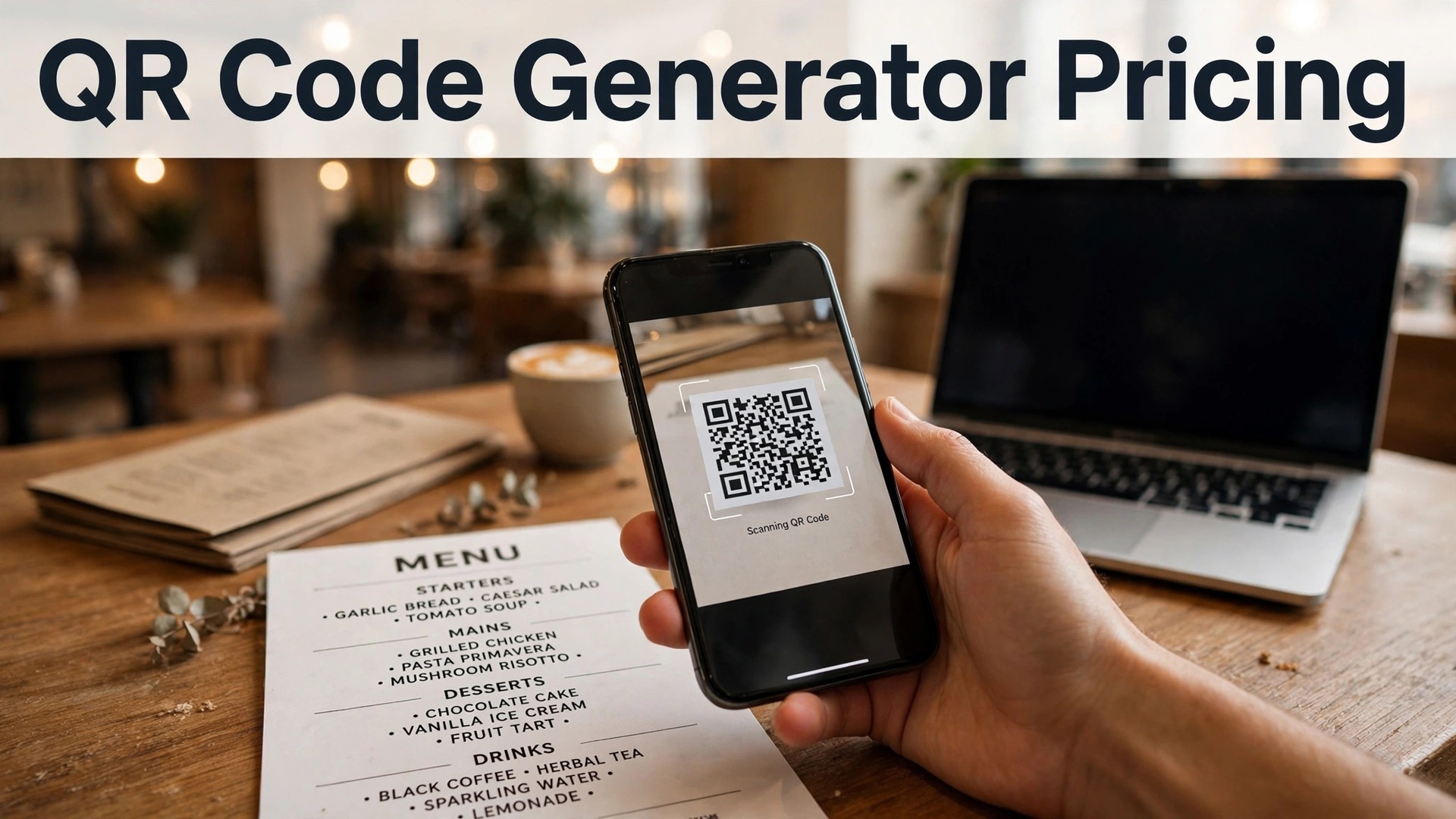
A restaurant prints a thousand menus with a QR code on the back, and three months later the code stops working. The menu is fine. The food is fine. The code points at a subscription that lapsed, and every menu in the building now leads nowhere. That is the failure mode nobody warns you about when they search for a free QR code, and it is the reason qr code generator pricing deserves a careful look before you print anything. A QR code is not a picture. It is a service, and the price you pay decides whether it keeps working after the first month.
The market splits into two kinds of code, and the price difference between them is the whole story. A static code is free forever, because the link is baked into the pattern. A dynamic code can be edited, tracked, and branded, but it only works while you pay, and the cheapest paid plan that covers your codes is the one that matters. That split is the first thing to understand about qr code generator pricing, because it decides whether you pay anything at all.
This guide compares the real prices across the generators that matter in 2026, works out the cost per code, and names the expiry traps, so the code you print still works a year from now.
Quick jump
- Quick Answer. QR Code Generator Pricing in 2026
- Static vs Dynamic. The Difference That Decides the Price
- The Generators, Priced One by One
- The Per Code Math. What Each Code Really Costs
- The Hidden Costs That Change the Total
- Free Static Codes. How to Make One That Lasts
- How to Choose the Right QR Generator for Your Business
- Related Guides
- Frequently Asked Questions
- The Bottom Line
Quick Answer. QR Code Generator Pricing in 2026
Here is the short version. In 2026, qr code generator pricing starts at free for static codes that never expire, and at 7 dollars a month for dynamic codes with tracking. QR Tiger Regular costs 7 dollars a month, or 65 dollars a year, for 12 dynamic codes with unlimited scans. Uniqode Essential costs 9 dollars a month for 15 codes, and Flowcode Pro Plus costs 25 dollars a month billed yearly for 50 codes. For most small businesses, QR Tiger Regular at 7 dollars a month is the sweet spot, because it covers a menu, a business card, a flyer, and a few campaign codes with tracking included.
If you only need one code that never changes, a free static code costs nothing and never stops working.
The rule that saves the most money is simple. Count your codes before you pick a plan. A plan that allows 12 codes costs 7 dollars a month, while a plan that allows 250 codes costs 49 dollars a month, and most small businesses never use more than 12. Pay for the codes you have, not the codes you might have one day.
| Tool | Free plan | First paid plan | Dynamic codes on first paid plan |
|---|---|---|---|
| QR Tiger | 3 dynamic codes, 500 scans each | Regular 7 dollars a month, 65 dollars a year | 12 codes, unlimited scans |
| Uniqode, formerly Beaconstac | 14 day trial, no free tier | Essential 9 dollars a month, billed yearly | 15 codes, 60 days of analytics |
| Flowcode | 2 dynamic codes, unlimited scans | Pro Plus 25 dollars a month, billed yearly | 50 codes |
| QR Code Generator Pro | 14 day trial only | About 9.99 dollars a month | Dynamic codes with tracking |
| Bitly | 10 links a month free | From about 29 dollars a month | QR codes included on paid plans |
| Canva | Free static codes in designs | Pro about 120 dollars a year | Static codes only, no tracking |
Static vs Dynamic. The Difference That Decides the Price
Every QR code is either static or dynamic, and the difference decides everything about the price. A static code stores the link inside the pattern itself. You print it once and it works forever, for free, with no account and no subscription. You cannot change where it points, you cannot see how many people scanned it, and you cannot put your own branding on the landing page. A static code is right for a link that will never change, such as a WiFi password, a vCard, or a link to a homepage that will exist for years.
A dynamic code stores a short link on the generator’s server, and the pattern points at that short link. You can change the destination any time without reprinting, you can see scan counts, locations, and devices, and you can brand the code with your colours and logo. The catch is that the code only works while the subscription is active. Stop paying, and the code stops working, which is exactly how a restaurant ends up with a thousand dead menus.
Dynamic codes are right for anything you might need to change, such as a menu, a price list, a campaign landing page, or a code printed on packaging that will sit on a shelf for a year.
The price follows the difference. Static codes are free on every tool in this guide. Dynamic codes start at 7 dollars a month and run to 399 dollars a month, depending on how many codes you need and how deep the analytics go. The mistake most buyers make is paying for dynamic codes they do not need, or using free static codes for a link they will need to change. Decide which kind each code is before you pick a plan, and the price becomes obvious.
That split is the core of qr code generator pricing, and every plan below is priced around it. A business with one permanent link needs no plan at all. A business with ten changing links needs the cheapest plan that covers ten codes.
The Generators, Priced One by One
The generators below are the ones worth comparing in 2026. Prices come from the vendors’ own pricing pages as published in October 2026, in US dollars, billed yearly unless noted. Prices vary by country and change often, so confirm the current number on the plan page before you pay.
QR Tiger. The Best Low Cost Start
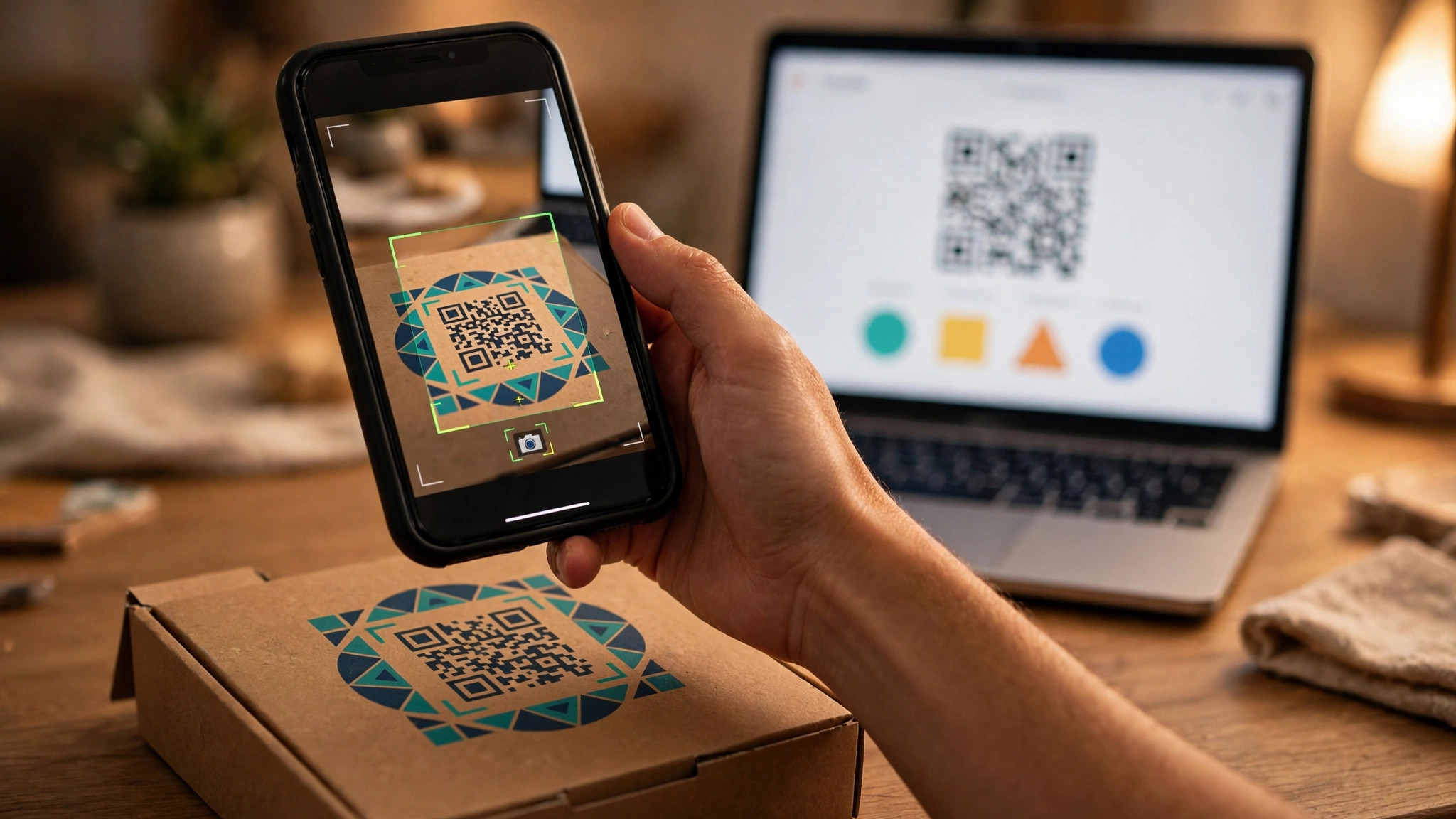
QR Tiger is the best low cost self serve generator in 2026, and its pricing is the simplest to understand. The free plan gives you three dynamic codes with 500 scans each, though free codes show a QR Tiger logo popup and ads on the scan page, and a code stops when its 500 scans are used. Regular costs 7 dollars a month billed monthly, or 65 dollars a year, for 12 dynamic codes with unlimited scans, 500 API requests a month, and a Canva integration.
Advanced costs 16 dollars a month billed yearly for 200 codes with bulk creation, Google Analytics, Zapier and HubSpot integrations, and password protection. Premium costs 37 dollars a month billed yearly for 600 codes, a custom domain, and 10,000 API requests.
The strength of QR Tiger is the entry price. At 7 dollars a month, or about 5.42 dollars a month on the yearly plan, it is the cheapest paid start among the serious generators, and 12 codes covers most small businesses with room to spare. The per code cost works out to about 58 cents per code per month on Regular, which is the lowest in this comparison for a small batch. The design studio is strong too, with more than 20 code types and deep customisation for colours, shapes, and logos. That entry price is why QR Tiger leads most qr code generator pricing comparisons for small businesses.
The weakness is the free tier. Three free dynamic codes sounds generous until the 500 scan cap and the ads on the scan page are taken into account, and the free tier does not include dynamic codes in any serious sense, because a code that stops at 500 scans is not a business tool. Treat the free plan as a test, not a solution. For a small business that needs tracked, branded codes, Regular at 7 dollars a month is the pick, and Advanced at 16 dollars a month is the pick when the code count passes 12 or bulk creation matters.
Uniqode. The Enterprise Pick, From 9 Dollars
Uniqode, formerly Beaconstac, is the most enterprise focused platform in this comparison, and its pricing reflects that. There is no free dynamic tier. You start on a paid plan from 9 dollars a month for Essential, billed yearly, which includes 15 dynamic codes and 60 days of analytics. Pro costs 49 dollars a month for 250 codes, 90 days of analytics, the API, GPS data, and integrations. Plus costs 99 dollars a month for 500 codes, 180 days of analytics, and three seats. Business Plus costs 399 dollars a month for 2,000 codes, lifetime analytics, five seats, a custom domain, single sign on, and retargeting.
The per code cost tells the story. Essential works out to 60 cents per code per month, which is close to QR Tiger. Pro works out to about 20 cents per code per month, because 250 codes for 49 dollars is cheap per unit. The value is in the depth, not the entry price. Uniqode offers the deepest analytics, CRM integrations, team workflows, and compliance certifications in this comparison, including SOC 2 Type 2, HIPAA, GDPR, and CCPA. A regulated business, a franchise with many locations, or a team that needs approval workflows will find those features worth paying for.
The trade off is that the cheapest useful plan is not the cheapest plan. Essential only includes 60 days of analytics and 15 codes, so a business that wants a year of data or more than 15 codes moves to Pro at 49 dollars a month fast. Uniqode suits enterprise teams, regulated industries, and multi location businesses. It does not suit a small business that needs 12 codes and a scan count, because QR Tiger does that job for 7 dollars a month instead of 9, with a free tier to test on. That is the trade that defines Uniqode’s place in qr code generator pricing, deep features at a higher minimum spend.
Flowcode. The Design First Pick
Flowcode is the design first platform in this comparison, and it is the one marketers pick when the code itself has to look good. The free plan offers two dynamic codes with unlimited scans, which is unusually generous on the scan side, though the codes carry a watermark. Pro Plus costs 25 dollars a month billed yearly, or 60 dollars a month billed monthly, for 50 codes. Growth costs 250 dollars a month billed yearly, and Enterprise is uncapped with custom pricing. Flowcode’s signature is its branded code patterns, which look distinct from a standard QR code and carry the brand in the pattern itself.
The strength is the design and the scan allowance. Two free codes with unlimited scans is the best free offer in this comparison for a business that wants to test dynamic codes without a cap, and the paid plans keep the unlimited scan model. The weakness is the price jump. Pro Plus at 25 dollars a month is more than three times the price of QR Tiger Regular for a similar code count, and Growth at 250 dollars a month is a big step up from Pro Plus. The per code cost on Pro Plus works out to 50 cents per code per month, which is fair, but the minimum spend is higher.
Flowcode suits marketing teams that care about how the code looks, brands that print codes on packaging and want the code to carry the brand, and businesses that need unlimited scans without worrying about caps. It does not suit a small business on a tight budget, because the same 12 codes cost 7 dollars a month at QR Tiger. If design is the deciding factor, Flowcode wins. If price is the deciding factor, it does not.
QR Code Generator Pro and Bitly. The Other Options
QR Code Generator Pro is the plain name that confuses buyers, because it is a specific product, not a generic description. Its Starter plan costs about 6.99 dollars a month, and Pro costs about 9.99 dollars a month, with dynamic codes, tracking, and branding. There is a 14 day trial and no free tier. It suits a low budget team that needs dynamic codes and does not need the depth of Uniqode or the design of Flowcode. The trade off is a smaller feature set and a lower profile in the market, which matters when you need support or integrations.
Bitly is worth a mention because many businesses already use it for short links, and its paid plans include QR codes. The free plan covers 10 links a month, and paid plans start around 29 dollars a month. Bitly’s QR codes are a side feature rather than the main product, so the design tools are thinner than QR Tiger’s, but the link management and analytics are strong. A business that already pays for Bitly should use its QR codes rather than buying a second tool. A business that only needs QR codes should buy a dedicated generator instead, because 29 dollars a month buys more codes elsewhere.
The Per Code Math. What Each Code Really Costs
The monthly price is not the cost that matters. The cost per code per month is, because it tells you whether you are paying for codes you use or codes you do not. The math is simple. Divide the monthly price by the number of dynamic codes on the plan, and you get the real unit cost.
QR Tiger Regular costs 7 dollars a month for 12 codes, which is about 58 cents per code per month, or about 45 cents on the yearly plan at 65 dollars a year. Uniqode Essential costs 9 dollars a month for 15 codes, which is 60 cents per code per month. Flowcode Pro Plus costs 25 dollars a month for 50 codes, which is 50 cents per code per month. Uniqode Pro costs 49 dollars a month for 250 codes, which is about 20 cents per code per month, and that is the cheapest per code price in this comparison, but only if you actually use 250 codes.
The lesson is that a cheap per code price on a big plan is not cheap if most of the codes sit empty. A business with 12 codes pays 7 dollars a month at QR Tiger and 49 dollars a month at Uniqode Pro, and the per code math does not change that. Count your codes first, then pick the smallest plan that covers them with a little room to grow. A plan that allows 12 codes when you have 10 is right. A plan that allows 250 codes when you have 10 is 42 dollars a month of waste.
| Plan | Monthly price | Codes included | Cost per code per month |
|---|---|---|---|
| QR Tiger Regular | 7 dollars | 12 | About 58 cents |
| Uniqode Essential | 9 dollars | 15 | 60 cents |
| Flowcode Pro Plus | 25 dollars | 50 | 50 cents |
| QR Tiger Advanced | 16 dollars | 200 | 8 cents |
| Uniqode Pro | 49 dollars | 250 | About 20 cents |
| Uniqode Business Plus | 399 dollars | 2,000 | About 20 cents |
The Hidden Costs That Change the Total
The plan price is the start of the bill, not the end of it, and four extras catch most buyers by surprise. The first is expiry. Dynamic codes stop working when the subscription lapses, and that is the most expensive hidden cost in this guide, because it is measured in reprinted menus, packaging, and signs rather than dollars. A restaurant that prints a thousand menus with a dynamic code and then cancels the plan has to reprint a thousand menus. The fix is to use static codes for anything printed in volume that will never change, and to keep the dynamic subscription active for as long as the printed material exists.
Expiry is the hidden cost that matters most in qr code generator pricing, because it is paid in reprints, not dollars.
The second is scan limits. QR Tiger’s free codes stop at 500 scans, and some plans cap scans per month or per year. Uniqode’s plans cap scans per year, and the cap is easy to miss on the pricing page. A code on a popular menu or a viral flyer can hit a cap in days, and the code stops working or the account gets charged for overages. Check the scan limit on the plan you buy, and pick a plan with unlimited scans if the code will be seen by the public.
The third is the custom domain. A branded short link, such as go.yourbusiness.com, looks professional and builds trust, but it costs extra on most plans. Uniqode lists a custom domain as a 500 dollar a year add on on some plans and 2,000 dollars per domain in its FAQ, and includes it free only on Business Plus at 399 dollars a month. QR Tiger includes a custom domain on Premium at 37 dollars a month. If a branded link matters to you, price it before you pick a plan, because it can cost more than the plan itself.
The fourth is white labelling and team seats. Removing the generator’s branding from the scan page, adding team members, and getting approval workflows usually sit on higher tiers. A solo business does not need them. A team of five does, and the jump from a 9 dollar plan to a 99 dollar plan for three seats is the kind of step that surprises buyers. Count the seats you need before you pick a tier, and the price will not surprise you later.
Free Static Codes. How to Make One That Lasts
If your link will never change, a free static code is the best deal in this whole guide, and making a good one takes ten minutes. Use a trusted generator, such as QR Tiger’s free static option, Canva, or Adobe Express, and paste the final link, not a shortened link that depends on another service. A shortened link inside a static code adds a point of failure, because the shortener can break even when your site is fine. Use the direct link to the page, and test it before you print.
Size and contrast decide whether the code scans. Print the code at least 2 by 2 centimetres, or about 0.8 inches, for a code that will be scanned from a normal reading distance, and larger for a code on a sign or a poster that people scan from metres away. Keep the code dark on a light background, with a clear quiet zone, which is the empty margin around the pattern, of at least four modules wide. A light code on a dark background, or a code with no margin, fails on many phones.
Use the highest error correction setting the generator offers, because it lets the code scan even when part of it is scratched, dirty, or partly covered by a logo in the centre.
Test the printed code with at least two different phones, one iPhone and one Android, in normal light and in dim light, from the distance a real customer will stand. If either phone struggles, make the code bigger, raise the contrast, or remove the logo from the centre. A code that scans nine times out of ten is a code that fails one customer in ten, and that customer will not try twice. The test takes three minutes and it is the difference between a code that works and a code that only looks like it works.
How to Choose the Right QR Generator for Your Business
The choice is not about finding the best generator in the world. It is about matching the generator to the codes you actually print. A business with one permanent link needs a free static code and no plan at all. A small business with up to 12 codes that change needs QR Tiger Regular at 7 dollars a month. A marketing team that cares about design needs Flowcode Pro Plus at 25 dollars a month. A regulated business or a multi location team that needs deep analytics, compliance, and seats needs Uniqode, starting at Pro at 49 dollars a month when the code count justifies it.
Ask three questions before you pay. First, will the link ever change? If the answer is no, use a free static code and spend nothing. If the answer is yes, you need a dynamic plan, and the code count decides the tier. Second, how many people will scan it? A code on a menu in a busy restaurant needs unlimited scans, while a code on a business card does not. Third, what happens if the subscription lapses? If the code is printed on a thousand menus, the answer is a reprint, so keep the subscription active or use a static code. Those three answers pick the plan for you.
The best pick by job is straightforward. QR Tiger wins for most small businesses because of its 7 dollar entry and its 12 code allowance. Uniqode wins for enterprise teams because of its analytics and compliance. Flowcode wins for design led marketing because of its branded patterns and unlimited scans. QR Code Generator Pro wins for low budget teams that want a simple paid plan. There is no wrong answer among them, only a more expensive one, and the more expensive one is the plan you pay for after your codes have already stopped working.
Related Guides
- Best Free Resume Builders for Job Seekers: Complete 2026 Guide
- Best QR Code Generators for Small Business
- How to Create a Professional Email Signature
Frequently Asked Questions
How much does a QR code generator cost per month?
In 2026, dynamic QR code generators start at 7 dollars a month for QR Tiger Regular, 9 dollars a month for Uniqode Essential, and 25 dollars a month for Flowcode Pro Plus, all billed yearly. Static codes are free on every major generator and never expire. The plan you need depends on how many dynamic codes you have, with 12 codes covered for 7 dollars a month and 250 codes covered for 49 dollars a month. Count your codes before you pick a plan. That count is the whole story of qr code generator pricing in one number.
Are free QR codes really free?
Static codes are free forever, because the link is baked into the pattern and no server is involved. Free dynamic codes are not really free in the long run. QR Tiger gives you three free dynamic codes with 500 scans each, and Flowcode gives you two free dynamic codes with unlimited scans, but both show branding or ads on the scan page, and the codes stop working if the limits are hit. A free code is right for a test. A printed code that has to work for a year needs a paid plan.
What happens to my QR codes if I cancel my subscription?
Dynamic codes stop working when the subscription lapses, because the code points at a short link on the generator’s server, and that server stops redirecting when you stop paying. Static codes keep working forever, because the link is inside the pattern itself. That is why printed material in volume, such as menus, packaging, and signs, should use static codes unless you are certain the subscription will stay active for the life of the print run.
How many QR codes do I need for a small business?
Most small businesses need between 5 and 12 dynamic codes, which covers a menu, a business card, a flyer, a storefront sign, and a few campaign codes. That count fits QR Tiger Regular at 7 dollars a month, which allows 12 codes. A business with a single location and a single menu may need only one or two codes, and a franchise with many locations needs hundreds, which is where Uniqode Pro at 49 dollars a month for 250 codes makes sense. Count the places a code will appear, not the codes you think you might need one day.
Can I track who scans my QR code?
Yes, but only with a dynamic code on a paid plan. Dynamic codes report scan counts, locations, devices, and times, with the depth of the data depending on the plan. Uniqode Essential includes 60 days of analytics, Pro includes 90 days, and Business Plus includes lifetime analytics. QR Tiger Advanced adds Google Analytics integration. Static codes cannot be tracked at all, because no server is involved in the scan. If tracking matters, budget for a dynamic plan.
Do I need a custom domain for my QR codes?
No, not for most small businesses. A custom domain, such as go.yourbusiness.com, looks professional and builds trust, but it costs extra on most plans, and it can cost more than the plan itself. QR Tiger includes a custom domain on Premium at 37 dollars a month. Uniqode lists it as a paid add on on lower plans and includes it free only on Business Plus at 399 dollars a month. Start without one, and add it when the brand is established enough for the cost to make sense.
The Bottom Line
QR code generator pricing in 2026 is simple once you know the difference between static and dynamic codes. Static codes are free forever and never expire, and they are right for links that will never change. Dynamic codes start at 7 dollars a month for 12 codes at QR Tiger, 9 dollars a month for 15 codes at Uniqode, and 25 dollars a month for 50 codes at Flowcode, and they are right for links that change and for tracking. Count your codes, check the scan limits, and keep the subscription active for as long as the printed material exists. The cheapest code is the one that still works a year after you print it.
1 thought on “QR Code Generator Pricing”