Your next client meets your logo before they meet you. They see it on a directory listing, on a psychology today profile, on a booking page, and they decide in a few seconds whether this practice feels safe, steady and professional. That first impression is a clinical problem as much as a design problem, because a logo that looks loud, playful or careless tells a nervous person to keep looking. The best logo makers for therapists are the ones that help you build a calm, trustworthy mark, give you the files you need to use it everywhere, and let you own it outright without a surprise renewal.
A therapy logo has a narrower job than a logo for a café or a gym. It must work on a business card, on a website header, on a telehealth waiting screen and on a printed intake form, and it must look equally steady in all four places. It must read clearly at the size of a postage stamp, because that is how big it appears on a phone. It must not lean on clichés that make a practice look generic, and it must not use imagery that promises something therapy cannot promise. A lotus, a head silhouette and a pair of hands are all used so often that they stop saying anything about your practice at all.
The money question is simple once you separate the file from the brand kit. A cheap download that gives you only a small PNG will cost you more later, when a printer asks for a vector file and you have to buy the logo again. A one-time package that includes SVG and EPS files, transparent backgrounds and full commercial rights is the real price of a usable logo. A subscription brand kit is worth it only if you will actually use the business cards, social templates and letterhead it adds. Most solo practices will not, and they should not pay for it every year.
Quick jump
- What a Calm Logo Needs Before You Open Any Tool
- The 8 Tools at a Glance
- The 8 Tools in Detail
- Best Pick by Job
- How to Choose the Best Logo Makers for Therapists
- The Ten-Minute Check Before You Pay
- What Does a Therapy Logo Really Cost?
- Frequently Asked Questions
- The Verdict: Looka Takes It for Most Therapists
What a Calm Logo Needs Before You Open Any Tool
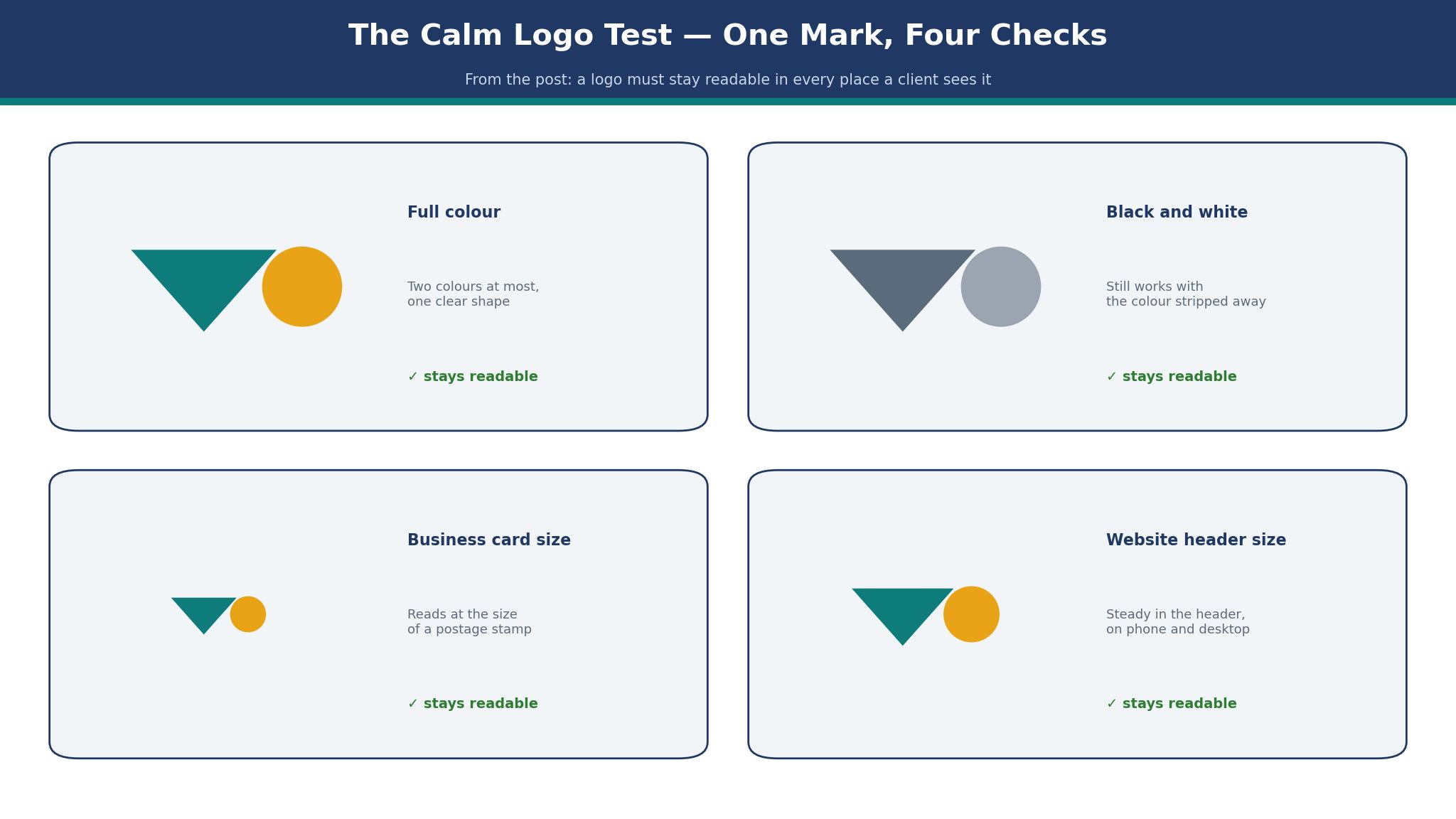
A therapy logo works when it is quiet. Two colours at most, one clear shape, and a practice name that a stranger can read without squinting. Serif lettering reads as established and steady, while a clean sans serif reads as modern and approachable, and either one can work if the spacing is generous and the weight is even. The shape should be simple enough to sketch from memory after seeing it once. If you cannot describe your logo in one sentence, it is too complicated to remember.
That one-sentence test is the simplest way to judge a logo maker before you pay for any package.
Colour carries more weight in this field than in most. Deep teal, sage green, warm navy and soft slate all read as calm and professional, while bright red, orange and hot pink read as urgent or playful, which is the wrong message for a person seeking help. Test the logo in black and white before you test it in colour, because a faxed intake form, a photocopied flyer and a single-colour stamp will all strip the colour away. If the mark still works in plain black on white paper, the design is sound. If it falls apart without colour, the colour was doing the work that the shape should have done.
The name on the logo matters as much as the mark. A practice named after its founder reads as personal and trustworthy, while a practice named after its approach reads as clear about what it offers. Either way, the name must be spelled exactly as it appears on your licence and your directory listings, because a mismatch between the logo and the listing makes a careful client pause. Decide the exact name, the exact spelling and the exact tagline, if you use one, before you open a logo tool. Changing the name after you have bought the files means buying them again.
The 8 Tools at a Glance
This table compares the best logo makers for therapists on the things that decide a purchase for a practice. Prices were cross-checked against vendor pages and recent roundups in November 2026. Where the sources give different numbers, this guide points out the clash rather than papering over it, and every price deserves a check on the checkout page before you pay.
| Tool | Entry price | Vector files | Best for |
|---|---|---|---|
| Looka | $20 one-time | From $65 package | Complete starter brand kit |
| Canva | Free to design | On Pro exports | Fastest DIY design |
| Tailor Brands | From $9.99 a month | On paid plans | Logo plus business setup |
| LogoAI | From $29 one-time | On paid packages | Clean modern marks |
| Wix Logo Maker | Free to design | On paid download | Practices already using Wix |
| Design.com | Free to start | On paid plans | Logo and site together |
| LOGO.com | Free PNG | On paid kit | Free usable logo |
| Brandmark | From $35 one-time | On paid packages | Invented names with a logo |
The 8 Tools in Detail
This section tests the best logo makers for therapists one at a time, against the same three jobs. A tool earns its place by making a calm mark easy, by giving you files you can actually use, and by letting you own the result. Each price in this guide was looked up in November 2026.
1. Looka
Looka is the best-known AI logo maker, and it earns the top spot by giving a solo practice a complete brand in one sitting. You enter the practice name, pick an industry and a style, and the tool generates variations from a logo-specific template engine. The onboarding asks about your values, the logos you like and the colours that feel right, which matters for a therapist, because the tool steers you toward marks that fit a calm practice rather than a loud one.
The pricing shows how the tier works, and it is the most important thing to understand before you pay. The Basic package costs $20 as a one-off and hands you a PNG logo, though only in limited sizes and with no transparent background. The Premium package costs $65 as a one-off and brings SVG vector files, PNGs with transparent backgrounds in several sizes, black and white versions and full commercial rights. The $65 package is the one worth paying for, because a therapy logo without vector files cannot be printed properly, and a logo without full rights cannot be trademarked.
The brand kit subscription costs $96 a year and adds over 300 marketing assets, including business cards, social templates and brand guidelines, and a higher tier at $129 a year adds a basic website. Most solo practices should skip the subscription and buy the $65 one-time package, then spend the saving on a proper print run of cards. The honest caveat is that Looka’s symbols are shared building blocks, so another therapist in the same niche could end up with a similar-looking mark. Customise the colours, the spacing and the lettering until the result is yours, and check it against the calm test in the section above before you pay.
2. Canva
Canva is the fastest way to a finished logo for a therapist who wants control over every detail. The logo maker is drag-and-drop fast, the template library includes calm, professional starting points, and the free plan lets you design without paying. You can adjust the lettering, the spacing and the colours yourself, which is an advantage when you know exactly how you want the practice to feel and you do not want an algorithm to decide for you.
Among the best logo makers for therapists, Canva is the one that gives you the most control over the finished mark.
The catch is ownership. Canva is free for basic use, but you need a Pro subscription for guaranteed commercial-use ownership of premium elements, and the price of Pro should be checked on the vendor page before you commit, because it has changed. A logo built entirely from free elements is fine, but a logo that uses a premium illustration or a premium font can create a licensing question later. Build with free elements only, or pay for Pro and keep the receipt, and export the logo as a PNG with a transparent background and as a PDF for print.
3. Tailor Brands
Tailor Brands solves a different problem from Looka or Canva, because it bundles the logo with business setup. It charges from $9.99 a month on subscription, and the logo comes with LLC formation services, a website builder and merch tools in the higher tiers. That bundle suits a therapist who has not yet incorporated the practice and would rather handle both jobs in one place instead of two, and the Essential and Elite tiers add more branding tools as the practice grows.
The logo quality is solid and professional, with clean marks that suit a calm practice, and the editor is forgiving for a non-designer. Check the renewal price separately from the first-month offer, because first-year offers often rise in year two, and confirm that the plan you buy includes the vector files and the commercial rights you need before you enter your card details.
4. LogoAI
LogoAI is the pick for a therapist who wants a clean, modern mark without a subscription. Packages start from $29 as a one-time purchase, with higher tiers adding more brand assets and animation options, and the paid packages include SVG vector files. The tool generates modern, minimal logos quickly, and the results suit a practice that wants to look current rather than traditional, with simple geometric marks and generous white space.
The strength is the price for what you get. At $29 one time, LogoAI is the cheapest one-time route to vector files in this list after Looka Basic, and the higher tiers stay cheaper than a yearly brand kit subscription. The weakness is the same as every AI generator, which is that the symbols are drawn from a shared library, so the mark needs customisation to feel like yours. Change the colours to your practice palette, adjust the lettering, and remove any decorative element that does not earn its place.
LogoAI also suits a therapist who is rebranding on a budget, because the one-time price means the cost stops when the download finishes. There is no renewal to forget, no subscription to cancel, and no surprise charge in year two. Export every file format the package offers, save them in a folder you will find again, and keep a copy of the licence terms with the files, so a future printer or designer can see exactly what you own.
5. Wix Logo Maker
Wix Logo Maker suits a practice that already runs its website on Wix, because the logo flows into the site, the business cards and the social templates without starting over in a separate tool. It is free to design and paid to download, and the logo maker asks about your style and industry before it generates options, which keeps the results relevant to a therapy practice rather than generic.
The pricing is straightforward in structure and variable in detail, so check the checkout page before you pay. The download price depends on the package you choose, and the higher packages add vector files and brand assets. The honest limit is originality. Like every template-based maker, Wix Logo Maker draws on shared symbols, so a therapist should customise the result until it feels personal. Adjust the colour to your practice palette, set the lettering to match your website, and remove any icon that feels clinical or cold.
The real value is the pipeline. A logo made in Wix Logo Maker matches the Wix website automatically, and that consistency saves a tired owner from fiddling with hex codes and font names. If your website lives elsewhere, that advantage disappears, and Looka or LogoAI will serve you better. Choose Wix Logo Maker when Wix is already your home. Choose a standalone maker when it is not.
6. Design.com
Design.com fits this list because a new practice often needs a logo, a website and business cards from the same place, and starting all three together saves a week of back and forth. You can shape a logo, choose matching colours, and build a straightforward site around them with no designer and no design training. The logo maker is free to start, with paid options for the full file set, and the SVG files a print shop needs are available on the paid plans.
What it lacks is depth. Design.com handles a calm, professional logo well, but it does not match Looka on brand kit depth or Canva on design control. A practice that outgrows it will move to a bigger tool, and that move means rebuilding the brand assets. Think of it as a quick, tidy way to open, and plan to rebuild the brand properly once the practice is established. Early on, when the work is simple and the brand is still settling, matching cards to the logo and the website gives a small practice a finished feel. If your job list is long, start with Looka instead.
The bundle as a whole is the selling point, not any one piece of it. A new practice that needs a logo, a site and cards from one account will save time, and time is the resource a new owner has least of in the weeks before opening. Check the exact checkout price before you buy, because the plans change, and confirm that the package you choose includes vector files and full commercial rights.
7. LOGO.com
LOGO.com is the best free option in this list, with a finished PNG and a commercial licence at no cost. That matters for a therapist starting a practice on a tight budget, because it means the logo is usable from day one without a payment, and the licence means you can use it on your website, your cards and your directory listings without worrying about the legal basis.
The free logo is a PNG, and the full brand kit costs $72 a year, which adds more files and more assets. The $72 kit is the point where LOGO.com stops being free and starts competing with Looka’s $65 one-time Premium package, and the one-time package wins that comparison for most practices, because it never renews. The right way to use LOGO.com is to take the free PNG, test it on your website and your cards, and only pay for the kit if you actually need the extra files and assets it adds.
The design quality is clean and professional, with modern marks that suit a calm practice, and the generator is fast enough to try in a single sitting. The weakness is that a free PNG will not print as sharply as a vector file, so a therapist who plans a large print run should budget for the paid kit or for a Looka Premium package. Start free, test honestly, and pay only when the free file shows its limits.
8. Brandmark
Brandmark is the maker behind Namelix, and it suits a therapist who is still choosing a practice name and wants the logo to grow from the name. The logo files cost $35 for Basic, $95 for Designer and $195 for Enterprise, all one-time, and the higher tiers add more files and more brand assets. The generator produces short, brandable marks with a modern feel, and the one-time pricing means the cost stops when the download finishes.
The strength is the pairing of name and logo. A therapist who has not settled on a practice name can generate names and logos in the same place, and the two will feel like they belong together. The weakness is the same as every AI maker, which is that the symbols are shared, so the mark needs customisation to feel personal. The $35 Basic package is the cheapest one-time route to a usable logo file in this list, but check which file formats it includes before you pay, because a package without vector files will cost you more later.
Best Pick by Job
The table below matches each job to one of the best logo makers for therapists, so you can skip the full comparison once you know your job. A solo practice starting from nothing needs a different tool from a group practice refreshing a ten-year-old brand.
| Job | Pick | Why it wins here |
|---|---|---|
| Solo practice, first logo | Looka | $65 one-time package with vectors and rights |
| Tightest budget | LOGO.com | Free usable PNG with a commercial licence |
| Full DIY control | Canva | Fastest editing and matching cards and forms |
| Name still undecided | Brandmark | Name and logo built together |
| Business setup too | Tailor Brands | Logo plus formation in one place |
| Already on Wix | Wix Logo Maker | Logo flows into the site automatically |
| Cheapest vectors | LogoAI | One-time packages from $29 |
How to Choose the Best Logo Makers for Therapists
Start with the files, not the pictures. Before you fall in love with a design, check what the package gives you. A usable logo needs an SVG vector file for print, a PNG with a transparent background for the web, a black and white version for forms, and full commercial rights in writing. If any of those four is missing, the logo is not finished, no matter how good it looks on screen. Ask for the file list before you pay, and walk away from any package that hides it until checkout.
Test the logo the way a client will see it. Put it on your website header, shrink it to the size of a postage stamp, print it in black and white, and show it to a friend who has never seen your practice. Ask them what kind of business it looks like, and what feeling it gives them. If they say calm, steady and professional, the logo works. If they say playful, corporate or medical, it does not, and no amount of tweaking the colour will fix a mark that sends the wrong message.
Check who owns the mark if you leave. A one-time package with full rights is yours forever. A subscription brand kit is yours only while you keep paying, and cancelling can mean losing the right to edit the assets. Ask yourself how likely you are to keep paying in two years. If the answer is unlikely, buy the logo outright. If the answer is maybe, pick the tool that lets you keep the files no matter what.
The Ten-Minute Check Before You Pay
This checklist is the overview-proof core of this guide, because no short answer can replace ten minutes of checking before money changes hands. Run it once, in order, and do not pay until every line passes.
First, confirm the package includes SVG vector files. Second, confirm it includes a PNG with a transparent background in several sizes. Third, confirm it includes a black and white version. Fourth, confirm the licence gives you full commercial rights in writing. Fifth, confirm you can use the logo on print, on the web and on directory listings without extra fees.
Sixth, shrink the logo to postage stamp size and check it still reads clearly. Seventh, print it in black and white and check it still works. Eighth, show it to someone outside the practice and ask what business it looks like. Ninth, check the renewal price separately from the first payment, and confirm there is no renewal if the package is one-time. Tenth, save every file and the licence terms in a folder you will find again, and keep a backup copy somewhere else.
What Does a Therapy Logo Really Cost?
Add the numbers before you choose from the best logo makers for therapists, because the headline price is never the whole cost. A solo practice that buys Looka Premium pays $65 once, and nothing else, unless it also buys the $96 a year brand kit. A practice that buys LogoAI pays from $29 once. A practice that starts with LOGO.com pays $0, and only pays $72 a year if it upgrades to the full kit. A practice that chooses Tailor Brands pays from $9.99 a month, which is about $120 a year, every year.
Time is the second cost, and it is smaller here than for a website. Designing a logo takes an afternoon, not a weekend, and the real time goes into deciding the name, the colours and the feeling before you open the tool. A maker that saves you an hour of design time is worth little if it gives you a mark you do not love, because you will live with the logo for years. Spend the afternoon, test the result properly, and do not rush the decision to save an hour.
The hidden cost is rebuying. A $20 Basic package without vector files looks cheap until a printer asks for an SVG and you have to buy the logo again for $65. A free PNG looks free until a large print run comes out blurry and you have to start over. Buy the right files the first time, even if the right package costs more than the cheapest one, because the cheapest file is the one you only buy once.
That is why the best logo makers for therapists are the ones that show you the full file list before checkout, not after.
Frequently Asked Questions
Can a logo maker give me a logo I legally own?
Yes, if you buy the right package. Looka Premium at $65 one time includes full commercial rights, and LogoAI and Brandmark one-time packages include them too. A free PNG from LOGO.com includes a commercial licence. What matters is the licence in writing, not the marketing words on the sales page. Read the licence terms before you pay, and keep a copy with the files, so a future printer or designer can see exactly what you own.
Will an AI logo look the same as another therapist’s logo?
It can, because AI makers draw on shared symbols, and a lotus or a head silhouette will appear in many practices. The fix is customisation. Change the colours to your practice palette, adjust the lettering and spacing, remove decorative elements, and test the result against the calm test in this guide. A mark that you have shaped yourself, even from shared parts, will look like your practice rather than a template.
Do I need a designer, or is a logo maker enough?
A logo maker is enough for a first logo for most solo practices. The makers in this guide are made for non-designers, and a careful owner can publish a good logo in an afternoon. A designer is worth the fee when the practice has to stand apart, when the brand is the business, or when you have tried three makers and nothing feels right. Hire a designer for a refresh in year two, after the practice has proved which clients it serves, rather than before opening.
Can I use my logo on a telehealth waiting screen and on printed forms?
Yes, if you have the right files. The website and the waiting screen need a PNG with a transparent background, and the printed forms need a vector SVG or a high-resolution PDF. A logo that only exists as a small PNG will look blurry on a printed form and may not sit cleanly on a coloured waiting screen. Buy the package that includes all three formats, and test each one before you print a large run.
How many colours should a therapy logo have?
Two at most, plus black and white. A calm practice reads as steady when the palette is restrained, and a logo with four or five colours looks busy on a small screen. Pick one main colour and one supporting colour, test both in black and white, and use the same two colours on your website, your cards and your forms. Consistency across every touchpoint builds more trust than a clever colour scheme.
What if I change my practice name later?
You will need a new logo, because the name is part of the mark, and a logo with the wrong name is worse than no logo at all. That is why this guide asks you to settle the exact name, spelling and tagline before you open a logo tool. If a name change is likely within a year, use a free LOGO.com PNG for now, and buy the paid vector package only once the name is settled. Wait until the name is settled before paying for any logo files.
The Verdict: Looka Takes It for Most Therapists
Looka wins this list of the best logo makers for therapists because its $65 one-time Premium package gives a solo practice everything it needs, with vector files, transparent backgrounds and full commercial rights, for a price that never renews. LOGO.com is the better pick when money is tight, and Canva is the better pick when you want full control over every detail. Brandmark is the pick when the practice name is still undecided, and Tailor Brands is the pick when business setup matters as much as the logo.
Start with the files, test the logo the way a client will see it, and buy the right package the first time. A calm logo that you own outright will serve your practice for years, and it will do its quiet work long before a client ever meets you.